5 Oven Cleaning Hacks That Make The Job Easy
Nothing makes me put off kitchen chores faster than opening the oven and seeing baked-on grease that seems impossible to remove. That’s exactly why I started looking for oven cleaning hacks that actually save time without filling my kitchen with harsh chemical smells. After trying different methods over the years, I found a few simple tricks that make cleaning much less frustrating.
I used to wait until my oven looked terrible before cleaning it, which only made the job harder. Now I clean small messes before they turn into stubborn stains, and it takes far less effort. If you’ve been wondering how to remove grease, burnt food, and grime without spending hours scrubbing, these practical tips have worked well for me.
Save For Later
Key Takeaways
- Remove grease before it hardens for easier cleaning.
- Use simple household ingredients instead of harsh cleaners.
- Let cleaning solutions sit to loosen stubborn grime.
- Clean oven racks separately for better results.
- Wipe spills quickly to prevent burnt-on residue.
- Regular maintenance keeps your oven fresh and smoke-free.
Pro Tip
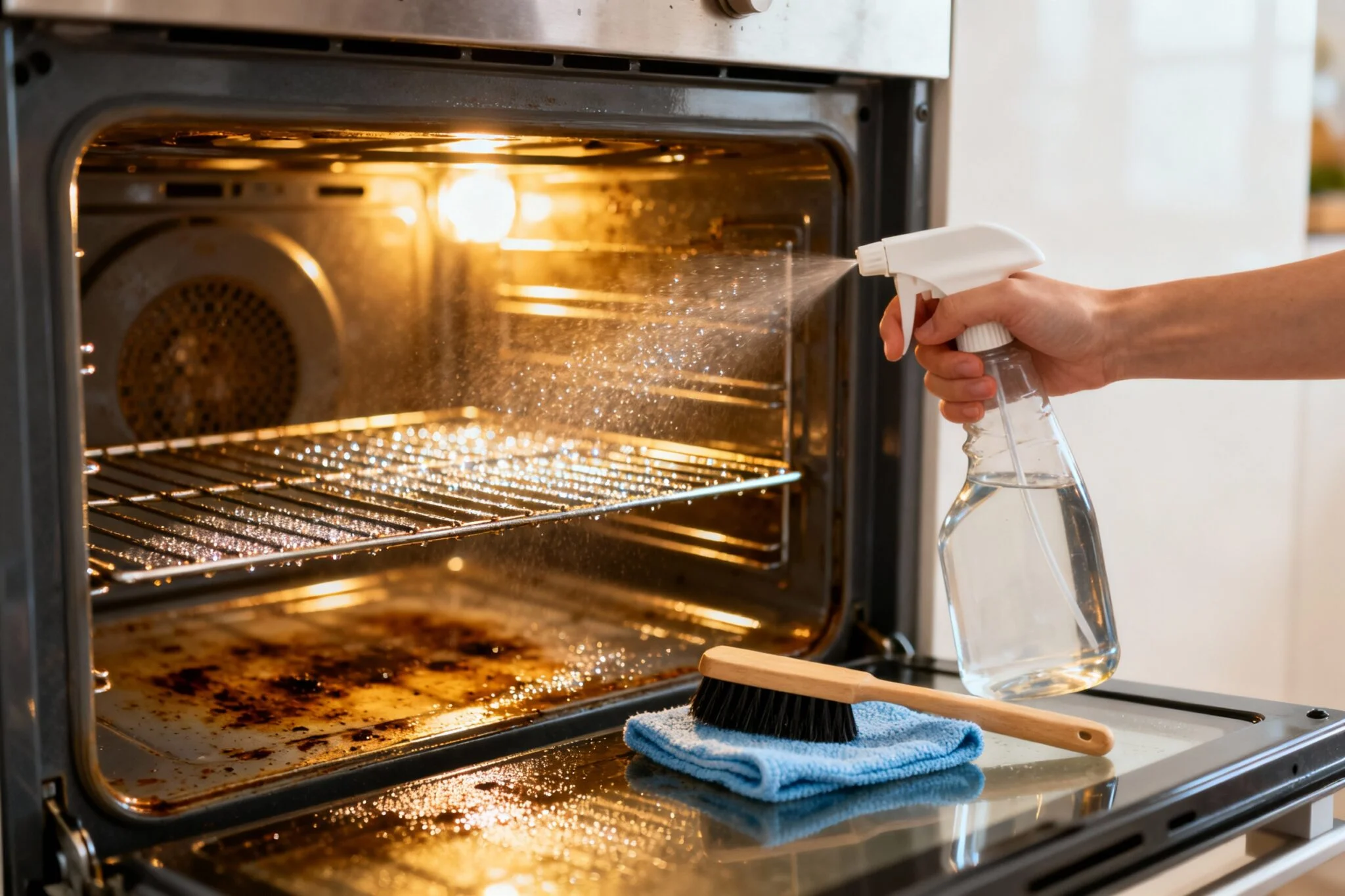
One habit that has made the biggest difference for me is cleaning the oven while it’s slightly warm, not hot. The leftover warmth helps soften grease without making the surface unsafe to touch. I always place an old towel under the oven door to catch drips and crumbs during cleaning. For stubborn spots, I let my cleaner sit for at least 20 minutes before wiping. This saves a lot of scrubbing and leaves the oven looking much cleaner with less effort.
Other Posts
Hack #1: The Overnight Baking Soda Paste That Does the Heavy Lifting
When an oven has heavy buildup, the smartest thing you can do is let time and chemistry work for you. Baking soda is gentle but effective, and when left long enough, it softens grease and baked-on food so cleaning becomes manageable.
Start by mixing baking soda with a small amount of water until you get a smooth, spreadable paste. Remove the oven racks so you can reach all surfaces easily. Spread the paste across the interior walls and floor of the oven, but avoid heating elements and lights. Once applied, leave it overnight so it can slowly break down hardened grime.
In the morning, lightly spray vinegar over the paste. The bubbling reaction helps lift residue from the surface. Use a damp microfiber cloth to wipe everything clean. If you find stubborn patches, a plastic scraper works well without damaging the oven coating.
Quick Fix If You Don’t Have Time
Sometimes you need results faster. In that case, warm the oven slightly, then turn it off before applying the paste. The leftover heat speeds up the process and helps soften grease. Let it sit for about one to two hours before wiping clean.
Hack #2: Steam-Clean with a Lemon Spa
Not every cleaning session needs to be deep or intense. When your oven has light buildup or smells unpleasant, steam cleaning is an easy refresh that works surprisingly well.
Fill an oven-safe dish with water, add lemon juice, and drop the lemon peels in too. Heat the oven until steam forms, then turn it off and let the steam sit inside for several minutes. The moisture loosens grime while the lemon helps reduce odors.
Afterward, wipe the interior with a cloth. You’ll notice that grease comes off more easily because the steam has softened everything first. The added bonus is a fresh, clean smell in your kitchen instead of lingering food odors.
When to Use Lemon Steam vs Baking Soda
Use lemon steam when:
- The oven has light grease or smells stale
- You want a quick refresh between deep cleans
- You need fast results with minimal effort
Use baking soda when:
- Grease is dark and baked on
- There are heavy stains or burnt spots
- You haven’t cleaned the oven for a while
Hack #3: The Dishwasher and Bathtub Rack Cleaning Method
Oven racks often feel like the hardest part because they’re awkward to scrub and collect layers of baked grease. Instead of cleaning each bar by hand, let soaking do most of the work.
Dishwasher Assist
If your oven manual allows it and the racks fit, place them on the bottom rack of the dishwasher and run a heavy cycle. This usually won’t remove everything, but it softens grime enough that finishing by hand becomes quick and easy.
Deep Soak Method
For heavily soiled racks, place them in a large bag with a small amount of ammonia and leave them overnight in a ventilated space. The fumes help loosen stuck-on residue, making rinsing much easier the next day. Always handle this method carefully and never mix chemicals.
Gentle Bathtub Soak
If you prefer a softer approach:
- Fill a bathtub with very hot water
- Add dish soap and washing soda
- Place an old towel underneath to protect the tub
- Soak racks for a few hours
Once soaked, grease loosens and wipes away with far less effort.
Hack #4: Cleaning the Glass Door Without Scratching It
The oven door is the part you see most, and cloudy glass instantly makes the whole appliance look dirty. The key is removing grease without scratching the surface.
Make a paste using baking soda and a little hydrogen peroxide. Spread it across the glass, especially near the bottom where splatters settle. Let it sit for ten to fifteen minutes so it can break down grease. Wipe using a damp microfiber cloth in straight motions to avoid streaks.
Finish by buffing with a dry cloth and a light spray of vinegar for a clear, polished look. Avoid harsh tools unless your oven manual clearly says they are safe.
Cleaning Between Glass Panels
Some oven doors allow you to remove screws and separate the glass for deeper cleaning. If yours does, clean gently with warm soapy water and dry completely before reassembling. If not, a thin microfiber wand can help reach inside through the vent openings.
Hack #5: Salt for Fresh Spills — The Oops Protocol
The best way to prevent heavy cleaning later is to handle spills while they’re still fresh. Acting quickly makes a huge difference.
When food spills during cooking:
- Turn the oven off and let it cool slightly
- Sprinkle table salt over the warm spill
- Let it cool completely
- Scrape away the hardened mess with a plastic scraper
- Finish with a vinegar and water wipe
Salt absorbs moisture and helps the spill harden into a crumbly texture that lifts easily.
Bonus Habits That Keep Your Oven Cleaner Longer
Small habits reduce the need for deep cleaning and save you effort over time.
- Use a reusable oven liner on a lower rack
- Place sheet pans under dishes likely to overflow
- Wipe spills quickly while the oven is still warm
- Run a quick steam clean after strong-smelling meals
These simple steps prevent buildup before it becomes a problem.
What About the Self-Clean Cycle?
Self-cleaning cycles use extremely high heat to burn residue into ash. While effective, they can create strong smells and put stress on oven parts if used too often. If you choose to use it, open windows for ventilation and remove racks first to prevent discoloration.
It works best as an occasional reset rather than your regular cleaning method.
Tools You’ll Actually Use
You don’t need complicated equipment. A small set of reliable tools makes cleaning faster and more manageable:
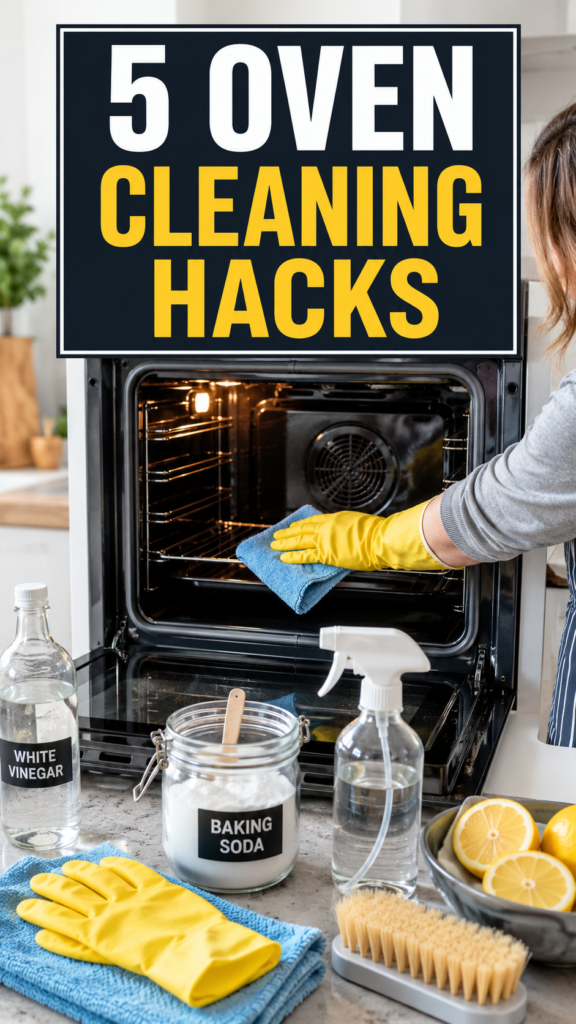
- Microfiber cloths
- Plastic scraper or old card
- Spray bottle with vinegar and water
- Baking soda
- Dish soap
- Hydrogen peroxide for glass
- Gloves
- Old towel for soaking racks
Keeping these nearby makes quick cleaning feel easy instead of overwhelming.
Safety Notes You Should Always Follow
Before cleaning, always make sure the oven is turned off and cool enough to touch. Avoid mixing strong chemicals, especially bleach and ammonia. Test cleaners on a small spot if you’re unsure, and check your oven manual when working around removable parts or coated interiors.
Frequently Asked Questions
Can I use store-bought oven cleaners?
Yes, they work quickly but often contain strong fumes. If you use them, ventilate the kitchen well and wear gloves. Many people prefer gentler methods because they’re easier to use regularly.
How often should I deep clean my oven?
If you cook most days, a light monthly clean combined with a deep clean every few months keeps buildup under control and prevents smoke or odors.
Is aluminum foil safe as a liner?
It’s better to avoid foil because it can interfere with airflow and heat distribution. Reusable liners or sheet pans are safer options.
Why does my oven still smell after cleaning?
Odors often hide in seals, corners, or between glass panels. Running a lemon steam session and wiping hidden spots usually removes lingering smells.
Can gas and electric ovens be cleaned the same way?
Mostly yes, but be careful around gas ports and igniters. Avoid pushing cleaning paste into openings and use gentle wiping near sensitive areas.
What’s the fastest last-minute clean?
Run a short lemon steam session, wipe visible splatters, and clean the door glass. Even a quick refresh makes the oven look significantly cleaner.
Conclusion of Oven Cleaning Hacks
A clean oven doesn’t come from one big effort — it comes from simple habits and smart cleaning methods that work with you instead of against you. When you use baking soda for deep cleaning, steam for quick refreshes, and small maintenance habits after cooking, buildup never gets out of control. Your kitchen smells better, cooking feels more enjoyable, and you stop dreading the moment you open the oven door.
All content on this site is written and reviewed by our experienced team to ensure it is accurate, reliable, and helpful for our readers. Our Our Process page explains how we carefully research and create high-quality content, while our Team page introduces the professionals behind our work. We also provide clear guidelines for content or image concerns on our Image Removal page, so you can trust that we prioritize transparency, quality, and reader safety.