5 Dog Bath Tips For Puppy Owners
Bathing a puppy can feel like a challenge, but over my 12+ years of grooming and training dogs, I’ve learned that with the right approach, bath time can actually be a bonding experience.
With patience, preparation, and some smart tricks, you can make it calm, efficient, and even enjoyable—for both you and your pup. Puppies have delicate skin and sensitive ears, so understanding their needs is key to keeping them healthy, happy, and confident.
Key Takeaways:
- Prepare all supplies before bath time for a stress-free routine.
- Use lukewarm water and puppy-safe shampoo to protect sensitive skin.
- Introduce water and sounds gradually to build positive associations.
- Dry carefully to avoid mats and reduce post-bath chaos.
- Keep baths infrequent—over-bathing can harm the coat and skin.
Set the Stage Before You Turn on the Tap
I always stress that a smooth bath starts with preparation. Gathering everything you need prevents panic moments mid-bath and helps your puppy feel secure. I keep towels, cotton balls, a soft brush, treats, and a non-slip mat right by the tub. Puppies read your energy, so being calm and organized sets the tone.
My go-to bath setup includes:
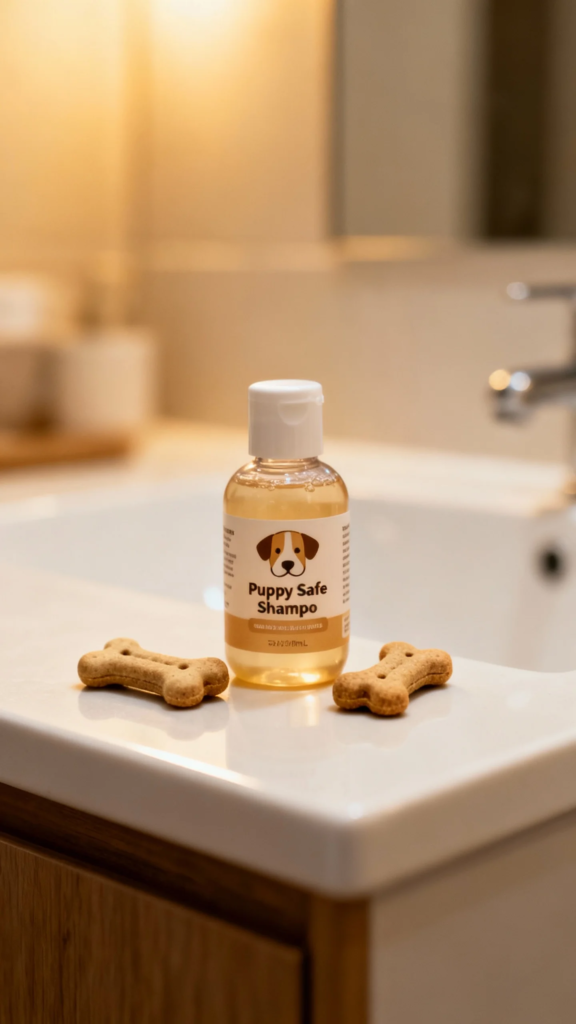
- Puppy-safe shampoo
- A large cup or gentle spray hose
- 2 soft towels
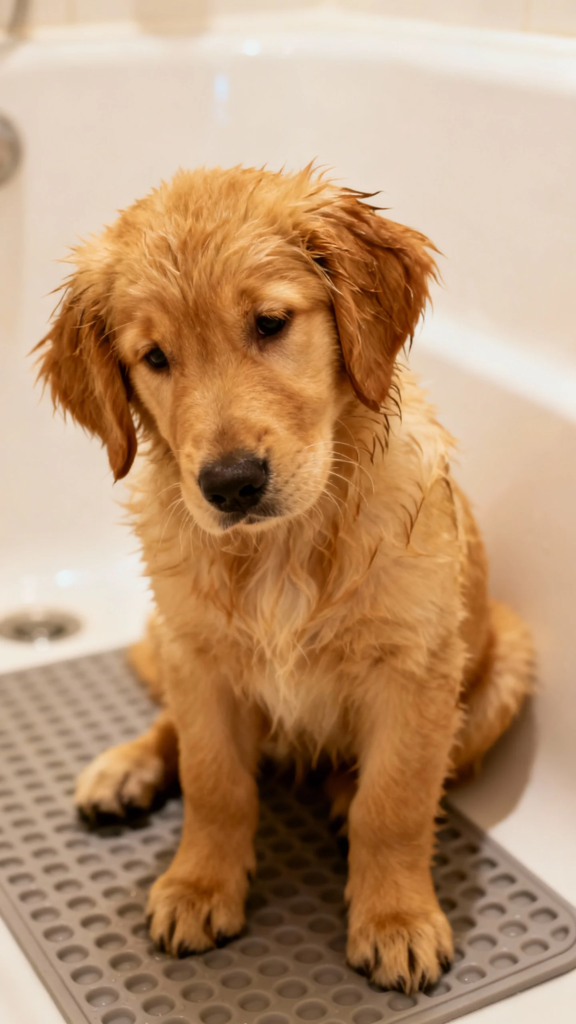
- Non-slip bath mat
- Cotton balls for ears
- Soft brush
- Treats for positive reinforcement
Also, make sure the room is warm and cozy. Puppies can shiver if it’s too cold, and that just adds stress to bath time.
Warm Water: The Goldilocks Rule
From my experience, lukewarm water is crucial. Not too hot, not too cold—just right. I test the water on the inside of my wrist to ensure it’s comfortable. Hot water can irritate their delicate skin, and cold water can cause stress and tension. Studies show puppies bathed in lukewarm water tend to settle faster and cooperate better.
Train the Vibes: Make Bath Time Feel Safe
Puppies are incredibly sensitive to your mood. I always approach bath time with calm energy, soft speech, and plenty of encouragement. Positive associations can make a huge difference. I like to toss treats in the tub before even turning on the water and practice touching their paws, ears, and belly outside of bath day.
Tips from my experience:
- Keep initial baths short (5–10 minutes).
- Reward curiosity and bravery throughout.
- Use calm, gentle touch instead of rushing.
Desensitize the Noisy Stuff
Running water, splashing, and spray hoses can intimidate puppies. I gradually introduce these noises, offering treats for calm behavior. Think of it as a “confidence-building” session: let them sniff, watch, and get curious without pressure. Puppies exposed gently to new sensations are less likely to panic in future baths.
Choose the Right Shampoo (And Use Less Than You Think)
Puppies’ skin is sensitive and easily irritated. Over the years, I’ve found that mild, tearless shampoos designed specifically for puppies work best. Human shampoos can be harsh, with a pH not suited for their skin.
Pro tips:
- Use a diluted mix of shampoo and warm water to cover more fur efficiently.
- Avoid heavy fragrances; they can irritate or trigger sneezing.
- For double-coated breeds, brush before and after bathing to prevent mats.
Coat-specific tips:
- Short coats: Quick lather and rinse.
- Double coats: Focus shampoo on the skin, not just the fur.
- Curly coats: Comb post-bath to prevent tangles and mats.
Master the Wash-Rinse-Repeat
I rarely repeat shampoo unless the puppy rolled in mud. A gentle, thorough first wash is usually enough. Start at the neck and work down the back and legs, avoiding blasting the face. For the face, I use a damp cloth to wipe around the eyes and muzzle—no soap near sensitive areas. Rinsing thoroughly is critical; residue can cause itching or flaking.
Ear Safety 101
Water in the ears can lead to infections. I always place a small cotton ball in each ear canal (never deep) and remove it afterward. If my puppy shakes, that’s fine—it actually helps remove residual water. Ear care is often overlooked, but in my experience, it prevents a lot of vet visits.
Dry Like a Pro (And Protect the Zoomies)
Most puppies experience a “zoomies” explosion after baths. I use towels to gently squeeze-dry before rubbing to minimize friction and tangling. If using a dryer, I keep it on low heat and speed, introducing it gradually with treats. Containing them in a warm, safe area during drying prevents slips and keeps bath time under control.
Brush While Damp
Brushing while the coat is still slightly damp helps prevent mats, especially for longer-haired breeds. I work in sections, reward generously, and take breaks if the puppy gets restless. This step is where grooming habits truly form.
How Often Should You Bathe a Puppy?
Over-bathing can strip natural oils and dry the skin. I generally bathe puppies every 3–4 weeks, but mud-loving or allergy-prone pups might need gentle rinses in between. Spot-cleaning with dog wipes and regular brushing keeps them clean without overdoing it. According to veterinary dermatology studies, unnecessary baths are a common cause of dry, irritated skin in young dogs.
Watch the Skin and Coat
I always observe my puppy’s skin after baths. Redness, dandruff, or scratching signals a problem—either too frequent baths, insufficient rinsing, or an incompatible shampoo. One change at a time is key, and persistent issues should be checked by a vet.
Turn Bath Time Into a Confidence Builder
Baths aren’t just for cleaning; they’re for socializing your puppy and helping them handle new experiences. Keeping a consistent routine, rewarding calm behavior during the process, and ending on a positive note makes bath time a confidence booster. Puppies thrive on predictability, so same tools, same steps, and same rewards each time help them feel secure.
Make It a Two-Person Operation (When Possible)
If you can, involve a second person. One can gently hold and reward your pup while the other washes and rinses efficiently. Teamwork reduces stress, speeds up the process, and keeps your puppy comfortable.
FAQ
When can I give my puppy their first bath?
As early as 8 weeks, once they’ve settled at home and your vet confirms it’s safe. Start short, gentle, and warm.
What temperature should the water be?
Lukewarm, comfortably warm to your wrist. Hot water dries skin; cold water causes tension.
Can I use human shampoo on my puppy?
No, it can irritate skin. Always use puppy-specific shampoo with mild ingredients.
How do I clean my puppy’s face safely?
Use a soft, damp cloth. Avoid soap near eyes and nose; dab gently with tearless shampoo if needed, then rinse.
My puppy hates baths—what now?
Take it step by step. Reward progress at each stage. Use short sessions and a lick mat to encourage calm behavior.
How do I stop the wet dog smell?
Thorough rinsing, complete drying, and regular ear checks prevent lingering odor. Persistent smell may indicate infection—call your vet.
Conclusion
Bathing a puppy doesn’t have to be stressful. With preparation, patience, and gentle handling, it can become a bonding experience that sets the foundation for a confident, happy adult dog.
Keep it warm, positive, and consistent, and you’ll enjoy a healthier coat, fewer vet visits, and a calmer pup—plus, your home will smell less like wet dog.
All content on this site is written and reviewed by our experienced team to ensure it is accurate, reliable, and helpful for our readers. Our Our Process page explains how we carefully research and create high-quality content, while our Team page introduces the professionals behind our work. We also provide clear guidelines for content or image concerns on our Image Removal page, so you can trust that we prioritize transparency, quality, and reader safety.