
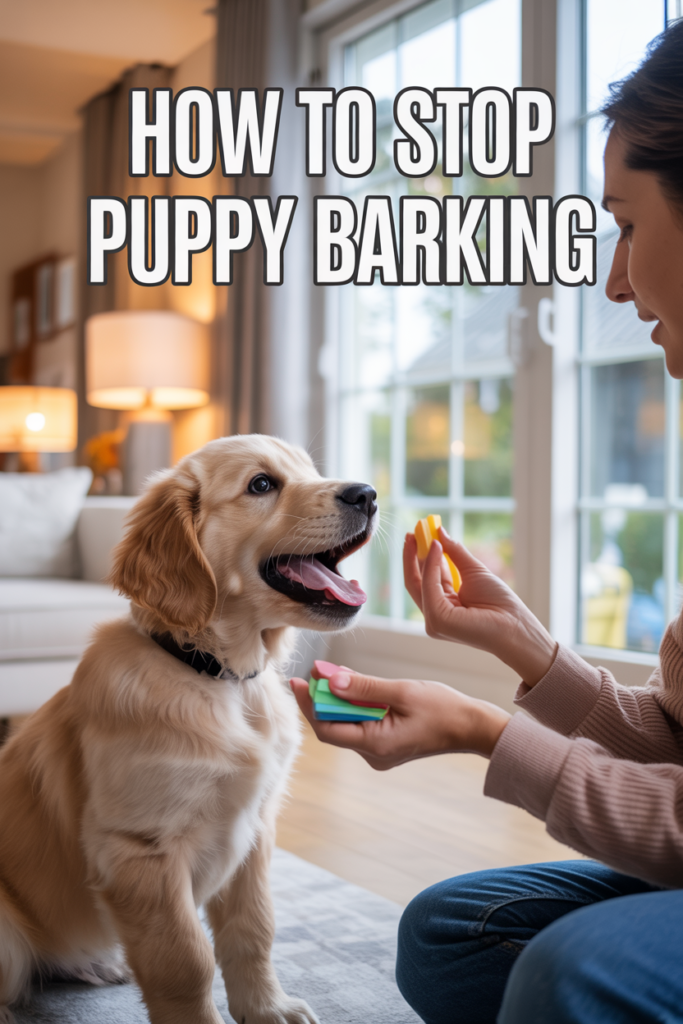
How To Stop Your Puppy From Barking: Ultimate Guide
Living with a young puppy can get noisy fast, especially when barking starts happening all day over every little sound or movement. I remember feeling frustrated during the first few weeks because I wasn’t sure if the barking was normal or something I was accidentally encouraging. Learning how to stop puppy barking became one of the biggest parts of early training in my home.
What helped me most was understanding that barking usually happens for a reason. My puppy barked when he wanted attention, felt bored, got overstimulated, or heard unfamiliar noises outside. Once I focused on identifying the trigger instead of simply reacting to the noise, training became much more effective and far less stressful for both of us.
Save For later
Key Takeaways
- Puppy barking is often linked to excitement, boredom, or attention-seeking
- Consistent training helps reduce excessive barking over time
- Puppies respond better to calm correction than yelling
- Daily exercise and mental stimulation can lower barking behavior
- Teaching focus commands helps redirect your puppy’s attention
- Identifying barking triggers makes training more effective
Pro Tip
I noticed my puppy barked the most during times when he had extra energy and no clear routine. Short walks, food puzzles, and short training sessions throughout the day reduced barking much faster than constant verbal correction. I also stopped rushing to respond every time he barked for attention because that accidentally rewarded the behavior. Covering part of the front window helped reduce reaction barking at people walking outside. One thing that made a big difference was rewarding quiet moments before barking even started. I kept treats nearby and praised calm behavior consistently during the day. Over time, my puppy learned that staying relaxed brought more attention than barking loudly.
Related Posts
- How to Clean Makeup Brushes the Right Way
- How to Stop Your Dog From Eating Poop Naturally
- Easy Ways to Teach Your Dog to Focus During Training
Understanding Why Puppies Bark
Before trying to stop the barking, it’s crucial to understand the reasons behind it. Puppies bark for many natural and valid reasons:
- Attention-Seeking: Barking to get playtime, food, or a potty break.
- Boredom: Puppies left alone too long may bark out of restlessness.
- Anxiety or Fear: New surroundings, loud noises, or separation can trigger barking.
- Territorial Behavior: Barking to alert you about perceived intruders or to mark their space.
- Excitement: Meeting new people, dogs, or experiencing playtime.
- Discomfort or Pain: Barking can signal that your puppy is uncomfortable or in pain.
Understanding the root cause is critical—it informs the right training method.
Effective Techniques to Stop Puppy Barking
1. Consistent Training
Consistency is the foundation of success. Teaching your puppy commands like “quiet” or “enough” sets clear expectations.
How to implement:
- Use a firm, calm voice to give the command.
- Reward immediate compliance with treats or praise.
- Repeat daily, but never reward barking—it must be clear that silence brings rewards.
Tip: Positive reinforcement encourages repetition of the behavior you want.
2. Provide Exercise and Mental Stimulation
A tired puppy is a quiet puppy. Physical and mental activity reduces barking caused by boredom or excess energy.
- Physical exercise: Walks, playtime, and outdoor adventures.
- Mental stimulation: Puzzle toys, treat-dispensing toys, and interactive games.
- Toy rotation: Keep engagement high and boredom low.
Fun fact: Puppies with at least 30–60 minutes of combined mental and physical stimulation are up to 50% less likely to develop nuisance barking habits.
3. Socialization
Proper socialization helps reduce anxiety-related barking.
- Introduce your puppy gradually to new people, animals, sounds, and environments.
- Controlled exposures help build confidence.
- Visit dog parks, meet friends, or expose your pup to household sounds in a calm way.
A confident puppy is a quieter puppy.
4. Create a Calm Environment
Your puppy picks up on environmental cues. Creating a calm space helps minimize stress-triggered barking.
- Keep noise levels low in the home.
- Use white noise machines or calming music to mask sudden sounds.
- Provide a cozy bed in a quiet corner for safe retreat.
5. Avoid Reinforcing Bad Behavior
Never give in to barking demands.
- Don’t respond to barking with attention or treats.
- Wait until the puppy is calm, then reward.
- Apply the same rule for crate training or alone-time scenarios.
Consistency teaches your puppy that silence is more rewarding than noise.
6. Use Distractions
Redirect attention when barking starts.
- Offer a toy, treat, or game.
- Shift focus from the trigger to something positive.
Redirection interrupts barking without punishment.
7. Desensitization
Gradually expose your puppy to barking triggers at low intensity.
- Example: If your puppy barks at the doorbell, play a recording at low volume.
- Reward calm behavior.
- Slowly increase exposure intensity while reinforcing quiet.
Over time, triggers become less stressful and barking decreases.
8. Seek Professional Help
If barking persists despite your efforts, consider a certified dog trainer or behaviorist.
- Personalized guidance can address stubborn or anxiety-related barking.
- Professionals may recommend structured programs or tools for specific cases.
9. Consider Anti-Bark Devices (Last Resort)
Ultrasonic collars or mild static collars can help with persistent barking, but:
- Use only under professional guidance.
- Ensure the device is safe for your puppy’s age and size.
- Should never replace consistent training and enrichment.
Frequently Asked Questions
Q: Why does my puppy bark so much?
A: Puppies bark to seek attention, express excitement, mark territory, relieve boredom, or communicate fear or discomfort.
Q: How do I teach my puppy to stop barking on command?
A: Use consistent commands like “quiet” paired with immediate rewards when they obey.
Q: How can I prevent barking when leaving my puppy alone?
A: Provide exercise and mental stimulation beforehand, gradually increase alone time, and ensure they have engaging toys.
Q: Are anti-bark collars safe for puppies?
A: They can be safe if used under professional supervision, but only as a last resort.
Q: Can socialization reduce barking?
A: Yes. Gradual exposure to people, dogs, and sounds reduces fear-related barking.
Q: How can I create a calm environment?
A: Keep noise low, use calming sounds, and provide a safe, cozy space for your puppy.
Q: How much exercise does my puppy need?
A: Depending on breed and age, 30 minutes to 2 hours daily, including walks, play, and mental games.
Final Thoughts
Excessive barking is a normal part of puppy behavior, but it can be managed. Focus on understanding the cause, training consistently, and providing mental and physical stimulation.
Patience, positive reinforcement, and structured routines will help your puppy develop calmer habits. Remember, the goal isn’t to eliminate barking entirely—it’s to teach your puppy when barking is appropriate.
With time and persistence, your puppy can enjoy a calmer, more peaceful environment, and your home will be quieter. Happy training!
All content on this site is written and reviewed by our experienced team to ensure it is accurate, reliable, and helpful for our readers. Our Our Process page explains how we carefully research and create high-quality content, while our Team page introduces the professionals behind our work. We also provide clear guidelines for content or image concerns on our Image Removal page, so you can trust that we prioritize transparency, quality, and reader safety.