12 Puppy Obedience Training Tips For New Dog Owners
If you just brought home a puppy, you already know the truth: that tiny fluffy tornado chews shoes, has accidents on the rug, and looks at you like you are the one causing the chaos. It is completely normal, and it is fixable.
With steady obedience training, that wild little furball grows into a calm, well-behaved companion. These twelve tips will save your sanity, your furniture, and your favorite pair of sneakers.
1. Start Early (Like, Yesterday Early)
Puppies soak up everything around them, good habits and bad ones alike, including the occasional stolen sock. The sooner training begins, the easier it sticks, so do not wait until your pup is six months old and already running the house. Start the day they arrive home.
Want a Better-Trained, Happier Dog?
Get practical guidance for obedience, behavior, and everyday dog training with a collection of helpful training guides designed for dog owners.
This post may contain affiliate links. If you purchase through our link, we may earn a commission at no additional cost to you.
Begin with the basics: sit, stay, and come. Those three commands are the foundation everything else builds on.
2. Be Consistent (Or Your Dog Will Call Your Bluff)
Dogs need the same rules every single day. If jumping on the couch is fine on Monday and forbidden on Tuesday, your puppy will simply decide you are unpredictable. Set clear rules and hold them every time.
Take begging at the table as an example. If it is against the rules, it has to be against the rules always, even when those puppy-dog eyes are doing their best work.
3. Use Positive Reinforcement (Bribes Work, Okay?)
Rewarding good behavior is the golden rule of training. A treat, praise, or a quick game teaches your puppy that listening brings good things, and they will offer good behavior more often.
One caution: keep treats in check. You do not want a puppy who only obeys when food is visible. Mix in praise and play so the reward is not always edible.
4. Keep Training Sessions Short (Puppies Have the Attention Span of a Goldfish)
Young puppies lose focus fast. Five to ten minutes per session is plenty. A half-hour lesson will end with a zoned-out puppy chewing your shoelaces instead of learning anything.
Short, sharp sessions beat long, boring ones every time. Quality over quantity is the whole game here.
5. Socialize Early (A Confident Puppy Is a Happy Puppy)
A well-socialized puppy grows into a confident adult dog. Introduce your pup gradually to different people, animals, sounds, and places so everyday things like the vacuum cleaner do not become scary events.
Go slowly and keep each new experience positive. Flooding a puppy with too much at once will overwhelm them, which is the opposite of what you want.
6. Teach Bite Inhibition (Because Puppy Teeth Are Razor Blades)
Puppies explore the world with their mouths, and that means nipping at everything, including you. When a bite is too hard, let out a sharp yelp, just like a littermate would. That sound tells your puppy they went too far.
If the biting continues, end playtime right away. Puppies learn quickly that hard biting makes the fun stop.
7. Crate Training Is Your Friend (No, It’s Not a Doggy Jail)
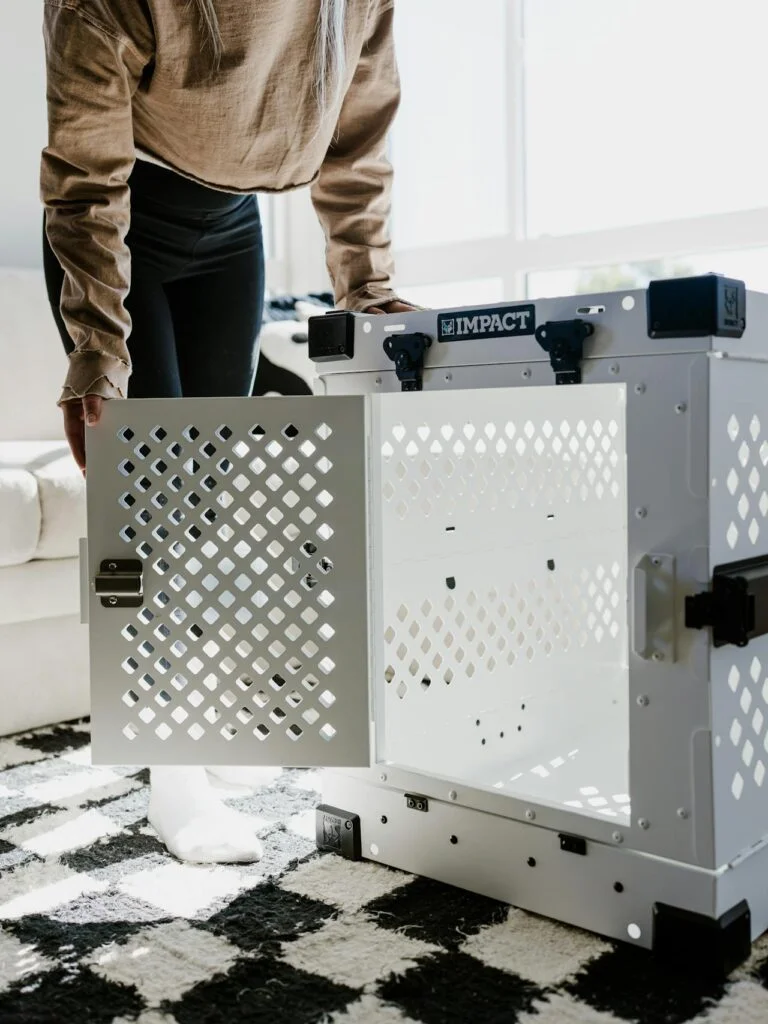
A crate gives your puppy a safe, cozy den of their own, and it makes housebreaking much easier. It also keeps them out of trouble when you cannot watch them.
Make it inviting with a soft bed and a few toys, and never use it as punishment. The crate should feel like your puppy’s happy place, not a time-out cell.
8. Potty Training Takes Patience (And a Lot of Paper Towels)
Accidents will happen, many of them. The formula is simple but demanding: take your puppy out often, especially after meals, naps, and play, and celebrate every outdoor success with praise and a treat.
When an accident happens indoors, skip the scolding. Clean it up calmly and move on. Your puppy is still learning, and frustration only slows that down.
9. Leash Training Is Non-Negotiable (Unless You Enjoy Being Dragged Down the Street)
Without leash training, your puppy will genuinely believe they are a sled dog. Start indoors by letting them get used to the collar and leash, then practice in a quiet spot with few distractions.
When they pull, stop walking. Move forward only when the leash goes loose. It feels tedious in the moment, but this one rule, applied consistently, is what produces a dog that walks nicely.
10. Ignore Bad Behavior (Yes, Really)
Puppies want attention, and they will take negative attention if that is all they can get. When your puppy jumps, barks, or nips to get a reaction, give them nothing: turn away, fold your arms, and avoid eye contact.
The moment they settle down, reward them with attention. That contrast teaches them fast that calm behavior is what earns them what they want.
11. Be Patient (Rome Wasn’t Built in a Day, and Neither Is a Well-Trained Dog)
Training takes time, and no puppy masters stay overnight. Celebrate the small wins and do not let setbacks discourage you.
Remember the reframe that helps on hard days: your puppy is not giving you a hard time, they are having a hard time. Patience is part of the training.
12. Have Fun (Because Training Shouldn’t Be a Chore)
Training should be enjoyable for both of you. Keep your tone playful, turn lessons into games, and do not take every mistake seriously. If you are having fun, your puppy will be too.
Watching your puppy finally understand a command is one of the most rewarding parts of dog ownership. Enjoy it.
FAQs
Q: How long does it take to train a puppy?
A: It depends on the puppy and how consistent you are. Some pick up commands within a few weeks, while others need months. Stay patient and keep going.
Q: What if my puppy doesn’t respond to treats?
A: Try their favorite toy or enthusiastic praise instead. Some puppies care far more about play than food.
Q: Can I train my puppy myself, or should I hire a professional?
A: Most new owners can handle basic training on their own. If you are stuck or want to work on advanced skills, a professional trainer can make a big difference.
Q: My puppy is stubborn. What do I do?
A: A stubborn puppy is usually just testing boundaries. Stay consistent, use high-value rewards, and do not give up. They come around.
Final Thoughts
Puppy obedience training is about much more than sit and stay. It builds a strong bond and lays the foundation for a lifetime of good behavior. Yes, it is a lot of work, but the payoff is worth every minute.
So grab some treats, put on your patient pants, and get to work. Your future self, and your shoes, will thank you.