The Secret to Perfect This Allergy-Friendly Dog Food With Pumpkin Is Easy On Digestion
Your dog’s digestive issues don’t have to turn every meal into a guessing game. If you’re dealing with loose stools, sensitive digestion, or recurring skin concerns, choosing an allergy-friendly dog food with pumpkin can be one option worth exploring. Pumpkin adds fiber and moisture to the bowl, while a carefully selected protein source can make the overall ingredient list easier to understand.
The important part is looking beyond the word “allergy-friendly” on the package. No single food works for every dog, and pumpkin itself isn’t a treatment for food allergies. The goal is to choose a nutritionally complete food that fits your dog’s individual needs and, when an allergy is suspected, makes it easier to identify ingredients your dog does and doesn’t tolerate.
Why Pumpkin Plays So Nicely With Sensitive Stomachs
Pumpkin has become a popular ingredient for dogs with occasional digestive ups and downs because it provides dietary fiber without contributing a lot of fat. Fiber can influence stool consistency, which is why plain pumpkin is sometimes used as a simple food topper.
The trick is moderation. A small amount may be useful for some dogs, while too much can create another digestive problem. Pumpkin also shouldn’t be used to mask persistent diarrhea, constipation, vomiting, weight loss, or appetite changes. Those symptoms can have many causes and may need veterinary attention.
Pumpkin contains different types of fiber, and fiber interacts with water and the digestive tract in different ways. That makes it useful as part of an appropriate diet, but it doesn’t mean pumpkin will automatically solve every stomach problem.
Key benefits of pumpkin
- Gentle fiber: Pumpkin can add dietary fiber to your dog’s meal and may help support more consistent stools when used appropriately.
- Prebiotic support: Some of the fiber in pumpkin can be utilized by intestinal microorganisms, making it a useful part of a varied, balanced diet.
- Low fat, nutrient-dense: Plain pumpkin contributes relatively little fat while providing nutrients such as beta-carotene and potassium.
Always choose plain pumpkin puree, not pumpkin pie filling. Pie filling can contain added sugar, spices, and other ingredients that dogs don’t need.
What Makes a Dog “Allergy-Friendly” Anyway?
“ Allergy-friendly” sounds reassuring, but it isn’t a guarantee that a particular food will work for every sensitive dog. A formula that suits one dog may contain an ingredient that causes a reaction in another.
When food allergy is genuinely suspected, the protein source deserves particular attention. Dogs can develop reactions to many different dietary proteins, with ingredients such as beef, dairy, chicken, wheat, and lamb among those commonly identified in veterinary literature.
That doesn’t mean chicken, beef, dairy, or grains are inherently bad for dogs. It means an individual dog may need to avoid a specific ingredient if it has been identified as a trigger.
A limited-ingredient food can make the diet easier to understand, but ingredient simplicity alone does not diagnose an allergy. The most reliable approach for confirming a food allergy is a properly managed elimination diet followed by a controlled dietary challenge.
Disclosure: As Amazon Associates, we earn from qualifying purchases at no extra cost to you.
Common culprits to avoid
- Chicken and beef: These are among the proteins commonly associated with food allergies in dogs. They only need to be avoided when they are inappropriate for your individual dog.
- Dairy and eggs: Some dogs can react to particular animal-derived ingredients, so these may need to be considered when tracking a suspected food reaction.
- Multiple proteins: Several proteins in one recipe aren’t automatically unhealthy, but they can make it much harder to determine which ingredient your dog tolerates.
- Artificial colors and preservatives: These aren’t automatically responsible for allergies, but a straightforward ingredient list can make it easier to understand exactly what your dog is eating.
Ingredients That Actually Help (Not Hype)
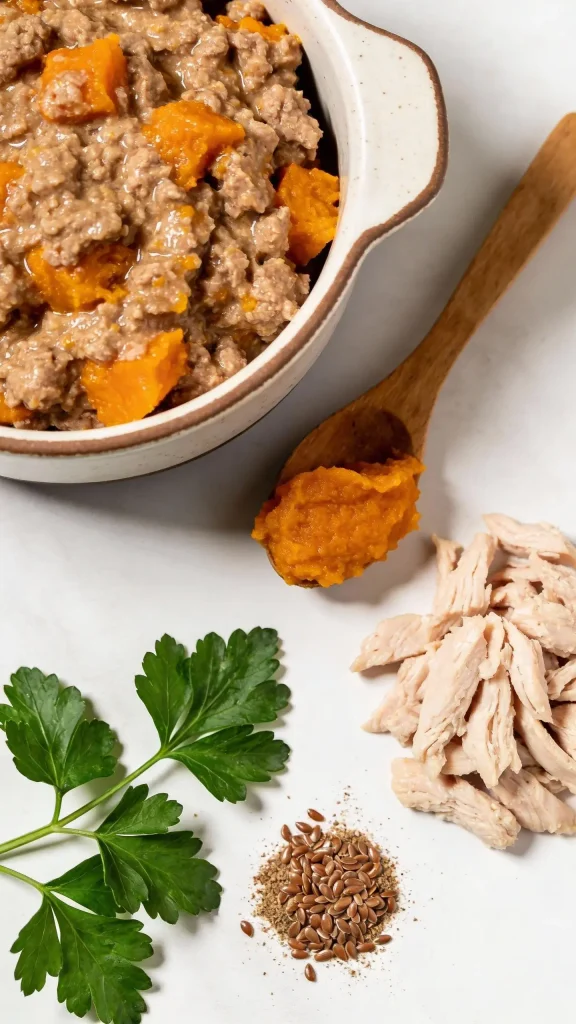
[Close-up overhead shot of a ceramic dog bowl filled with soft, moist allergy-friendly dog food mixed with visible chunks of bright orange pumpkin puree, next to a small wooden spoon with a smear of pumpkin, surrounded by a few simple ingredients: a small pile of plain cooked turkey, a pinch of ground flaxseed, and a couple of fresh parsley leaves; neutral light, clean kitchen countertop, shallow depth of field, natural color tones, no labels or text.]
When you’re shopping for allergy-friendly dog food with pumpkin, don’t let one ingredient on the front of the bag make the entire decision for you. Look at the protein source, nutritional adequacy, ingredient transparency, and whether the formula actually suits your dog’s life stage.
Pumpkin can be a useful addition, but it shouldn’t distract from the bigger nutritional picture.
- Single-source protein: Turkey, salmon, duck, lamb, rabbit, or another protein may be appropriate depending on your dog’s previous diet and individual tolerance. If you’re conducting a formal food-allergy trial, the protein should be selected with your veterinarian based on your dog’s dietary history.
- Pumpkin: Plain pumpkin provides fiber and can add moisture to a meal. Think of it as a supporting ingredient rather than the star treatment for allergies.
- Digestible carbs: Sweet potato, rice, and oats can provide useful sources of carbohydrate when they’re appropriate for your dog’s individual diet.
- Omega-3s (fish oil or flax): These ingredients provide fatty acids that contribute to normal skin and coat health. They should not be viewed as a substitute for identifying and avoiding an actual food allergen.
- Probiotics: If a food contains probiotics, look for clearly identified organisms and useful information about the amount provided. A probiotic isn’t automatically necessary simply because a dog has a sensitive stomach.
Red flags on the label
- “Meat by-product” without a specific source: The issue is ingredient transparency when you’re trying to track dietary proteins. A clearly identified animal source is easier to evaluate.
- Vague “natural flavors” with no protein specified: Unclear flavoring ingredients can make an elimination diet much harder to manage.
- Five or more proteins in one recipe (chaos mode): A multi-protein food isn’t automatically a poor-quality food, but it can be inconvenient when you’re trying to identify a particular dietary trigger.
How Pumpkin Helps With Both Diarrhea and Constipation
It may seem strange that the same ingredient gets mentioned for two very different stool problems, but fiber can affect stool consistency in different ways.
Pumpkin contains both soluble and insoluble fiber. Depending on the overall diet and the dog’s individual digestive system, fiber can help influence water content and stool bulk. That can be useful when a dog has a mild, temporary change in stool consistency.
But more pumpkin isn’t necessarily better. Increasing fiber too quickly or feeding too much can cause gas, loose stools, or other digestive discomfort.
If diarrhea or constipation keeps returning, don’t keep adding pumpkin and hoping for a different result. Persistent digestive problems can have dietary, infectious, inflammatory, parasitic, or other medical causes. Fiber alone isn’t an appropriate solution for every case.
Practical serving tips
- Dry food with pumpkin: Mix a modest amount of plain pumpkin into the meal and monitor how your dog responds.
- Wet food toppers: Pumpkin can be mixed into wet food when your dog enjoys the taste and the additional calories fit within the daily diet.
- Pure pumpkin puree: Choose plain pumpkin with no added sugar, spices, or pie-filling ingredients.
There isn’t one universal pumpkin dose that is perfect for every dog. Start with a small amount and monitor stool quality rather than automatically following a fixed weight-based recipe.
If your dog has a medical condition, is overweight, or eats a prescription diet, check with your veterinarian before adding regular toppers. Treats, snacks, and toppers should generally remain around 10% or less of daily calories so the main diet continues providing most of the nutrition.
Transition Without Drama: A Simple 7-Day Plan
Changing foods overnight can be rough on a sensitive digestive system. A gradual transition gives your dog time to adjust to the new formula.
- Days 1–2: 75% old food, 25% new.
- Days 3–4: 50/50 mix.
- Days 5–6: 25% old, 75% new.
- Day 7: 100% new food.
That’s a useful starting schedule, but it isn’t a race. If your dog’s stool becomes noticeably softer, slow the transition and spend additional time at the previous ratio before increasing the new food.
And there’s an important distinction if you’re dealing with a suspected food allergy. A veterinary elimination diet is much stricter than an ordinary food transition. During an elimination trial, the prescribed diet generally needs to be fed exclusively, including avoiding unauthorized treats, snacks, and other food-based extras.
Real-World Signs It’s Working
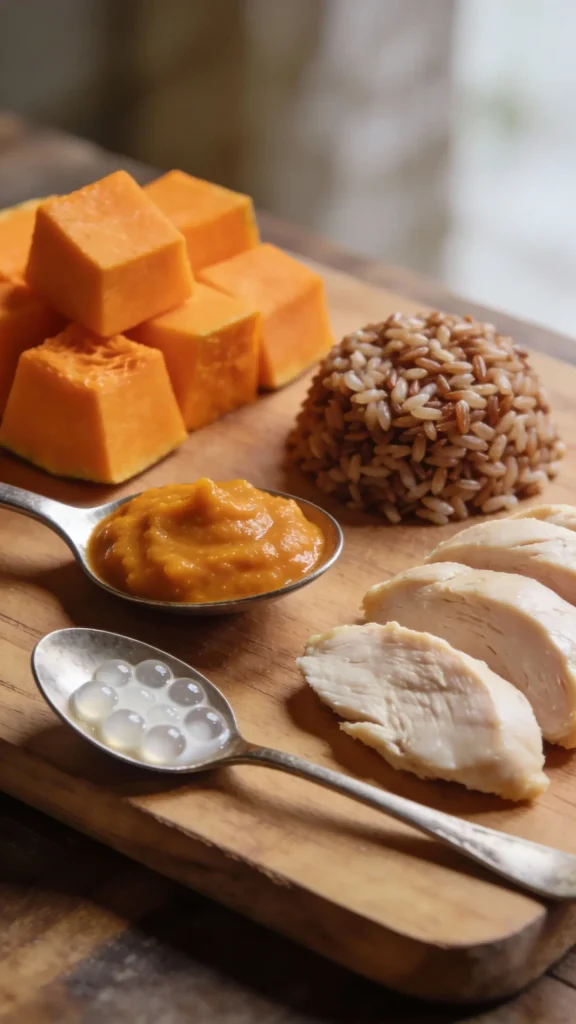
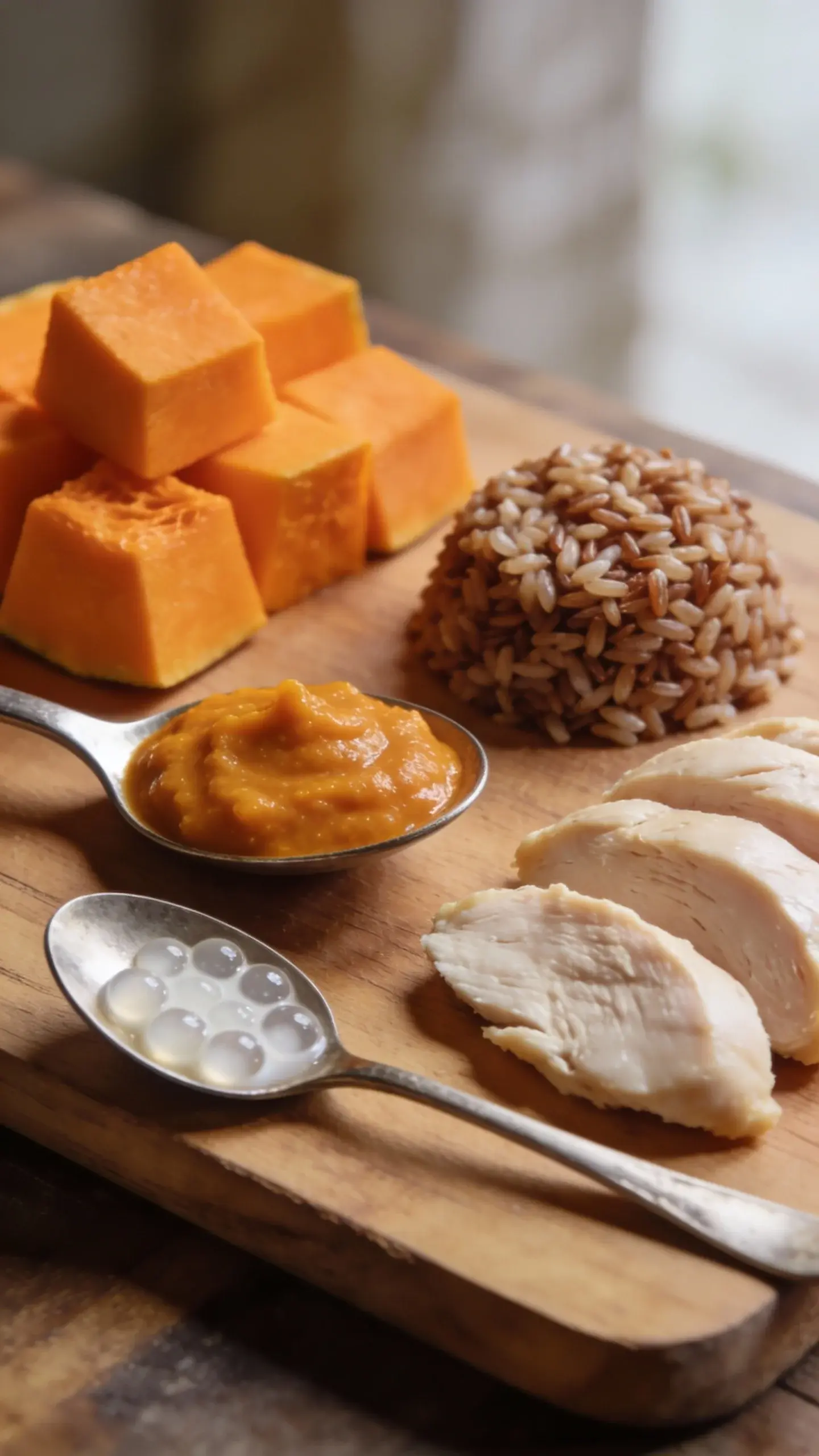
[Macro close-up of raw ingredients neatly arranged on a wooden board: vivid orange pumpkin cubes and a spoonful of smooth pumpkin puree, a small mound of cooked brown rice, slices of plain boiled chicken breast, and a few probiotic-rich kefir drops beaded on a spoon; soft daylight from the side, minimal rustic styling, blurred background, simple and appetizing, no text.]
You don’t need to turn every bathroom trip into a scientific experiment, but paying attention to patterns can help you decide whether a dietary change is actually helping.
Here are some things worth watching:
- More consistent stools: Your dog’s stools may become better formed and easier to pick up.
- Less itching and licking: If food was contributing to an allergic reaction, the right elimination diet may eventually reduce those signs. However, pumpkin itself should not be credited with treating an allergy.
- Better breath and less gas: Improved digestive tolerance may coincide with less gas for some dogs, although persistent digestive odors can have other causes.
- Happier mealtimes: A suitable food should provide complete nutrition while also being something your dog willingly eats.
Don’t judge a food solely by one good day. Look for consistent changes over time, and keep other diet changes to a minimum when you’re trying to figure out what is actually helping.
Top Mistakes People Make (So You Don’t)
A well-intentioned food change can become surprisingly complicated when too many variables are introduced at once.
- Switching too fast: Even an appropriate food can cause digestive upset when introduced abruptly.
- Adding too many extras: Treats, chews, toppers, supplements, and table scraps can make it difficult to identify what is helping—or what is causing the problem.
- Ignoring portion sizes: Pumpkin is relatively low in calories, but everything added to a meal contributes something to the overall diet. Portion control still matters.
- Assuming grain-free fixes everything: Food allergies are reactions to specific ingredients, and grains are not automatically the culprit. Removing grains without identifying an actual trigger isn’t necessarily helpful.
This becomes especially important during an elimination diet. Even a small unapproved treat can introduce another protein and interfere with the process.
FAQ
Can I just add canned pumpkin to my dog’s current food?
You can add a small amount of plain pumpkin to the food of many healthy dogs, provided the ingredient is simply pumpkin and your dog tolerates it.
However, adding pumpkin does not transform an ordinary diet into an allergy-friendly diet. If your veterinarian has prescribed an elimination diet, don’t add pumpkin unless it is specifically permitted as part of that diet.
Start conservatively and monitor your dog’s stool. If diarrhea, constipation, vomiting, poor appetite, or other symptoms continue, it’s better to investigate the underlying problem than continually increase the pumpkin.
How fast will I see improvements?
That depends on what you’re trying to improve.
A mild dietary digestive upset may settle relatively quickly after the underlying cause is addressed. Skin problems associated with suspected food allergy require a much more controlled approach and generally cannot be judged after just a few days.
A proper food-allergy elimination trial may take several weeks, and veterinary guidance is important when skin symptoms are involved. Food allergy is confirmed through improvement during elimination followed by recurrence during a controlled challenge—not simply because a dog looks better after switching foods.
What protein should I choose if my dog has allergies?
There isn’t one magic protein that’s best for every allergic dog.
The important question is which proteins your dog has previously eaten. A protein is only genuinely “novel” if your dog has had little or no meaningful previous exposure to it. That’s why choosing salmon, turkey, duck, or rabbit simply because it sounds allergy-friendly isn’t enough.
Your veterinarian can help select an appropriate novel-protein or hydrolyzed diet based on your dog’s history. During a formal trial, the selected diet needs to be fed consistently and without unauthorized extras.
Is grain-free better for allergies?
Not automatically.
Dogs can develop food allergies to different ingredients, and removing grains doesn’t automatically solve a protein-related allergy. A grain-free formula can still contain several animal proteins that your dog may not tolerate.
If your dog does well with rice, oats, or another grain, there is generally no reason to remove it simply because the package says “grain-free” is better. Focus on the ingredients your individual dog actually tolerates and choose a nutritionally complete formula.
Can puppies or seniors eat pumpkin-inclusive diets?
Pumpkin itself can be included in an appropriate diet for many dogs, but the more important question is whether the complete food is formulated for the dog’s particular life stage.
Growing puppies have different nutritional requirements from adult dogs, while senior dogs may have individual dietary considerations based on their health, weight, activity, and medical history.
Check the nutritional adequacy statement on the food label to make sure the formula is intended for your dog’s life stage. In the United States, AAFCO standards are commonly used for these nutritional adequacy statements.
And if you’re feeding a homemade diet long-term, don’t assume that meat, pumpkin, and a few vegetables automatically create a complete diet. Homemade diets need careful formulation to meet all nutritional requirements.
Should I add probiotics too?
Not necessarily.
Some complete dog foods already contain probiotics, while others don’t. A dog doesn’t automatically need a probiotic simply because its food contains pumpkin or because it has occasional digestive changes.
If you decide to use one, look for a dog-specific product that clearly identifies the microorganisms and provides useful information about the amount supplied. More ingredients aren’t always better.
Most importantly, don’t introduce pumpkin, a new food, a probiotic, several supplements, and new treats simultaneously. Changing one variable at a time makes it much easier to determine what your dog actually responds to.
If your dog has chronic digestive problems, a suspected food allergy, or is eating a veterinary therapeutic diet, discuss supplementation with your veterinarian first.
The Bottom Line
If your dog has a sensitive stomach or you’re looking for a simpler ingredient profile, an allergy-friendly dog food with pumpkin may be worth considering—but pumpkin shouldn’t be treated as a cure-all.
Look at the entire formula: choose an appropriate protein, check that the food is nutritionally complete for your dog’s life stage, use plain pumpkin when appropriate, and introduce dietary changes gradually.
And if itching, digestive problems, or recurring skin issues are making life difficult, don’t rely on food labels alone. A veterinarian can help determine whether food is actually involved and, when necessary, guide a properly controlled elimination diet.
Sometimes the best dietary strategy isn’t the fanciest ingredient list. It’s a simple, consistent routine that your dog tolerates well—and that you can actually stick with.