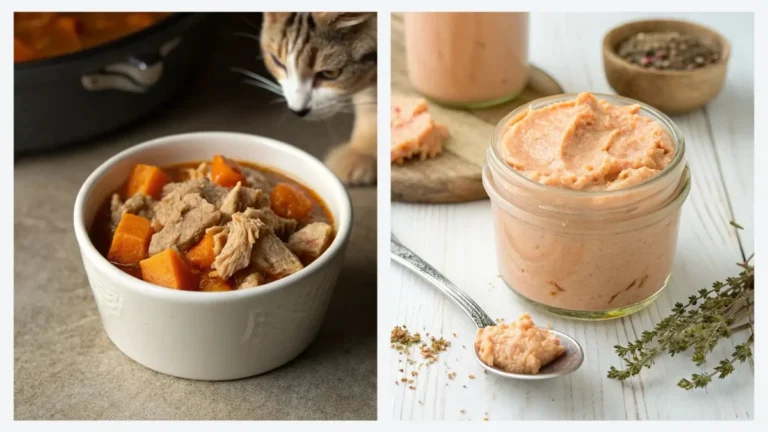
Ground Beef and Egg for Cats – A Simple, Balanced Homemade Meal
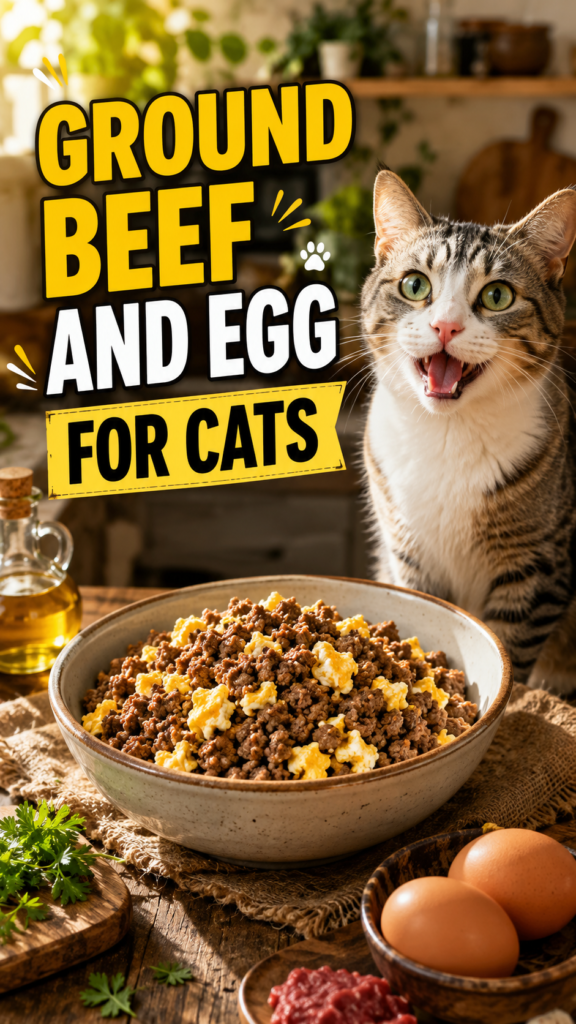
As someone who has spent years caring for cats with different personalities and dietary preferences, I’ve learned that certain foods instantly grab their attention. Ground Beef and Egg for Cats is one of those combinations that always gets my cats waiting patiently near the kitchen. The smell alone seems impossible for them to ignore.
I started preparing this simple homemade mix when I wanted an easy way to add fresh protein to their regular feeding routine. It requires only a few ingredients, takes very little time to make, and can be served as a meal topper or occasional homemade treat. While I still rely on complete commercial cat food as the foundation of their diet, this recipe has become a favorite addition in my household.
Save For later
Key Takeaways
- Ground beef and eggs supply protein that helps maintain lean muscle mass.
- Cooking ingredients thoroughly makes them safer and easier for many cats to digest.
- Adding extra moisture can support daily hydration needs.
- Proper portion sizes help prevent unnecessary weight gain.
- Homemade mixtures work best as supplements rather than complete long-term diets.
- Nutritional balance should always be discussed with a veterinarian before regular feeding.
Pro Tip
When I make beef and egg recipes for my cats, I cook the beef separately first and drain excess grease before combining it with the egg. This helps create a lighter mixture that sits better in sensitive stomachs. I also divide the finished food into small daily portions immediately after cooling. That prevents accidental overfeeding and makes mealtime much easier during busy days. If your cat is trying homemade food for the first time, start with a spoonful mixed into their usual food rather than serving a full portion. Gradual introductions typically lead to better acceptance and fewer digestive surprises.
Other Posts
- Beef Sardine Cat Food Recipe for Protein-Rich Nutrition
- Beef Chicken Broth Cat Food for Extra Hydration and Flavor
- Ground Beef Cat Food Ideas for Easy Homemade Meals
What Makes This Recipe So Good
High-quality protein: In my experience, cats thrive on the complete amino acids found in beef and egg. Their coats become shinier, energy levels increase, and lean muscle is maintained.
Easy to digest: Lightly cooked, unseasoned beef is gentle on most feline stomachs. I’ve fed this to older cats and kittens alike without any digestive issues when prepared properly.
Fast and flexible: You can cook a small batch in just 15–20 minutes. It’s perfect as a topper for regular meals or an occasional standalone dish.
Cat-safe ingredients: I never add onions, garlic, spices, or oils. My cats’ digestive and organ health benefits from keeping things simple.
Customizable: If your veterinarian recommends, you can add a little moisture or supplements to make it nutritionally more complete.
What You’ll Need
- 8 ounces (225 g) lean ground beef (90–95% lean)
- 1 large egg (whole egg for complete amino acids)
- 2–4 tablespoons water or low-sodium, onion- and garlic-free broth (optional for moisture)
- Cat-safe fish oil or omega-3 supplement (optional, follow label dosing)
- Taurine supplement (optional but recommended if serving more than occasionally)
Step-by-Step Instructions
Prep your pan: Heat a nonstick skillet over medium heat. I never add oil—there’s enough natural fat in the beef for cooking.
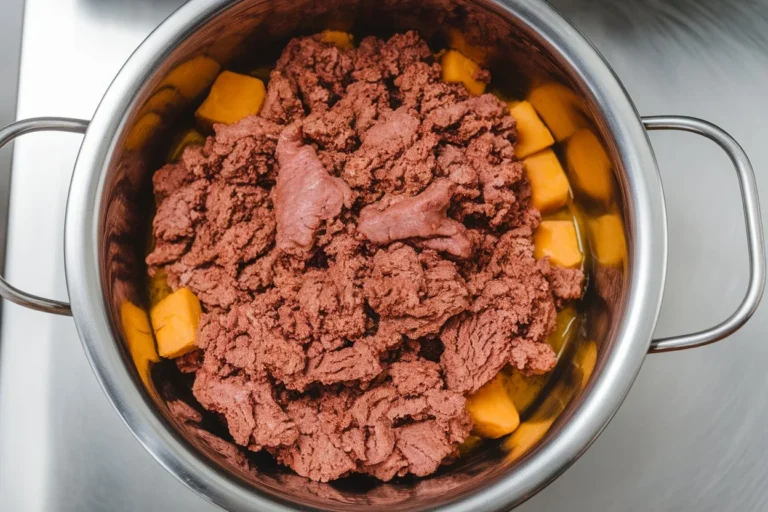
Cook the beef: Add the ground beef, breaking it into small crumbles. Cook 6–8 minutes until fully browned with no pink remaining.
Drain excess fat: I tilt the pan and spoon off extra fat. Cats can’t handle too much fat at once, and it can also lead to unnecessary calories.
Add moisture: Stir in 2–4 tablespoons of water or cat-safe broth. Keeping the meat tender and juicy improves palatability.
Cook the egg: Beat the egg and pour it into the pan, stirring continuously 1–2 minutes until fully set.
Cool completely: Spread the mixture on a plate to cool faster. Food should be at room temperature before serving.
Optional supplements: If using fish oil or taurine, mix them into the cooled portion. Follow your vet’s or the product’s dosing instructions carefully.
Serve the right amount: 1–2 tablespoons as a topper over complete cat food, or 2–3 ounces as an occasional standalone meal for an average adult cat. Adjust based on size, age, and activity level.
How to Store
Refrigerator: Airtight container for up to 3 days.
Freezer: Portion into small containers or silicone trays for up to 2 months. Thaw overnight in the fridge.
Reheat safely: Bring to room temperature. Never serve hot and do not leave at room temperature for more than 2 hours.
Health Benefits
Complete proteins: Beef and egg together provide essential amino acids critical for muscle and overall health.
B vitamins and iron: Beef provides B12, niacin, and iron for energy, healthy blood, and metabolism.
Healthy fats: Egg yolk contains fats that promote skin and coat health. A small addition of omega-3 can reduce inflammation and support joints.
Hydration boost: Adding water or broth helps maintain urinary tract health, which is especially important for adult cats prone to urinary issues.
Pitfalls to Watch Out For
Not complete on its own: Without careful supplementation, this recipe should be a topper or occasional meal, not a full diet.
Too much fat: Lean beef and draining excess fat prevents digestive upset and weight gain.
Unsafe seasonings: No salt, onion, garlic, chives, or spices. These can be toxic to cats.
Raw risks: Raw eggs and meat carry biotin-binding and bacterial risks. Cooking eliminates these dangers.
Overfeeding: Keep portions in check. I track my cats’ weights to avoid excess calories.
Variations You Can Try
Turkey or chicken swap: Lean ground turkey or chicken can replace beef. Cook fully the same way.
Pumpkin mix-in: 1–2 teaspoons of plain canned pumpkin adds fiber if recommended by your vet.
Bone-free calcium source: Ask your vet about calcium supplementation if feeding more than occasionally to balance phosphorus.
Omega-3 boost: Salmon oil or a vet-approved omega-3 supplement supports coat, skin, and joints.
Taurine top-up: Taurine is critical. Include a supplement if this replaces more than 10–20% of daily calories.
FAQ
Can cats eat ground beef and egg safely?
Yes, when cooked plainly, unseasoned, and served in sensible portions.
How often can I feed this to my cat?
A few times a week as a topper, or as an occasional meal. For more frequent feeding, consult your vet for complete balancing.
Do I have to cook the egg?
Yes. Raw egg whites bind biotin, and raw eggs may carry bacteria. Cooked eggs are safe.
What lean percentage is best for ground beef?
90–95% lean. Provides protein without too much fat.
Can kittens eat this?
Small tastes are okay as a topper, but for regular feeding, consult your vet for a kitten-safe, balanced recipe.
Can I add vegetables or rice?
Cats are obligate carnivores. Fiber should only come from small amounts of pumpkin or vet-approved sources.
What if my cat has kidney or pancreas issues?
Always check with your vet. Cats with chronic conditions require specialized diets.
How much should I serve?
1–2 tablespoons as a topper or 2–3 ounces as an occasional meal for an average adult cat. Adjust based on size and calorie needs.
Wrapping Up
Ground beef and egg is a simple, tasty, and cat-approved way to add variety and moisture to your cat’s meals. When kept plain, cooked, and portioned correctly, it makes a great topper or occasional standalone meal. Start with small portions, monitor your cat’s digestion and weight, and enjoy a recipe that’s practical, safe, and loved by cats.
All content on this site is written and reviewed by our experienced team to ensure it is accurate, reliable, and helpful for our readers. Our Our Process page explains how we carefully research and create high-quality content, while our Team page introduces the professionals behind our work. We also provide clear guidelines for content or image concerns on our Image Removal page, so you can trust that we prioritize transparency, quality, and reader safety.