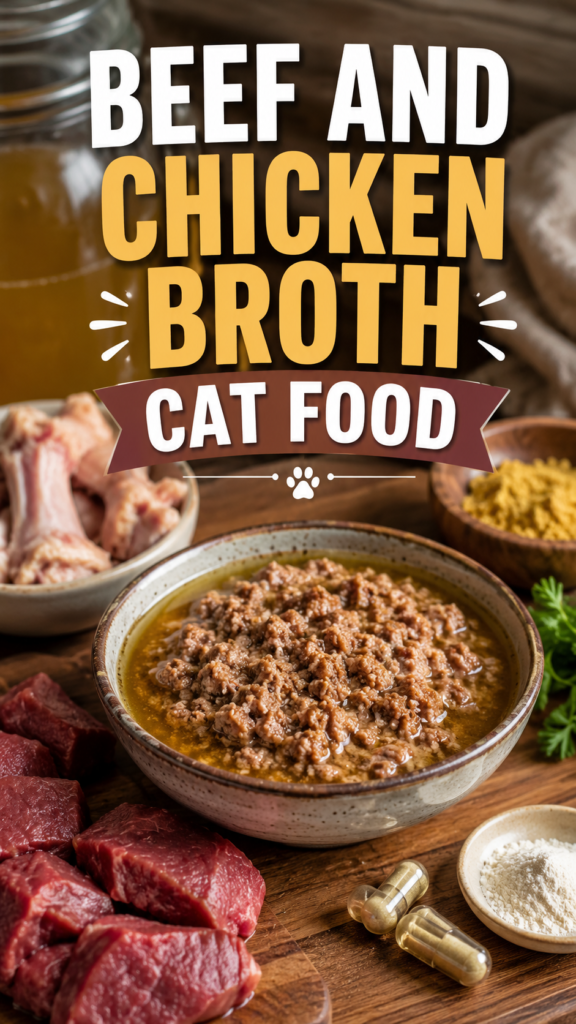
Beef and Chicken Broth Cat Food – Simple, Soothing, and Protein-Rich
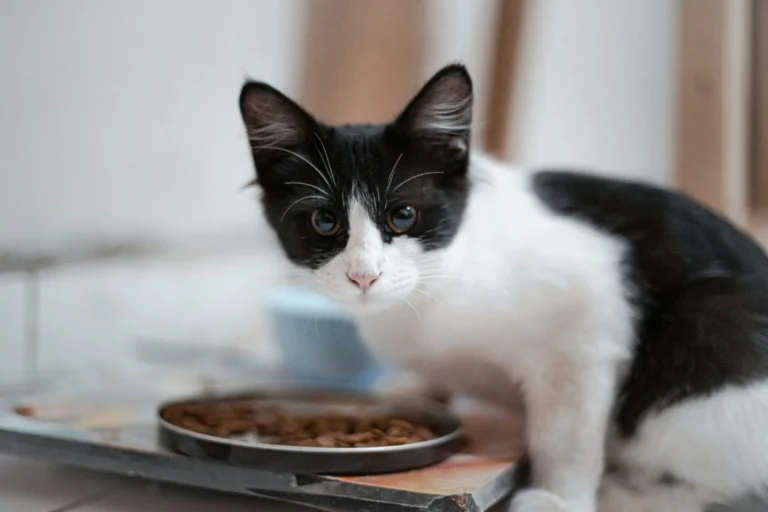
Many cats aren’t interested in dry food every day, and over the years I’ve cared for several that preferred softer meals. This beef and chicken broth cat food recipe has become one of my favorite options when I need something gentle, moist, and packed with animal-based nutrition. It works especially well for older cats, picky eaters, and those that struggle with harder textures.
After feeding homemade meals for years, I’ve noticed that simple recipes often cause fewer digestive issues than complicated ones. The combination of beef and homemade chicken broth creates a comforting meal with plenty of moisture, making it a practical choice for supporting daily hydration while providing quality protein.
Save For Later
Key Takeaways
- Beef supplies highly digestible protein that helps maintain muscle mass.
- Chicken broth adds moisture that can support healthy hydration habits.
- Soft food textures are easier for senior cats and cats with dental problems.
- Limited ingredients may be helpful for cats with sensitive digestion.
- Homemade recipes allow me to control seasoning and sodium content.
- Taurine and calcium supplementation should be considered for long-term feeding plans.
Pro Tip
When I prepare this recipe, I always cool the broth completely before mixing it with the beef. Warm broth can sometimes change the texture too quickly and make portioning difficult. I also blend a small amount of the finished meal for cats that prefer a smoother consistency. If I’m introducing this recipe to a picky eater, I start by mixing a spoonful into their regular food for several days. Freezing individual portions in silicone trays saves time and helps prevent waste. I label every batch with the preparation date so I can rotate meals properly. Small adjustments like these have helped me improve acceptance rates with even the fussiest cats.
Other Posts
- Shredded Chicken Thigh and Pumpkin Cat Food Recipe
- Beef Liver and Chicken Homemade Cat Meal Guide
- Homemade Beef Heart and Chicken Thigh Cat Meal
What Makes This Special
This recipe focuses on what cats truly need: animal-based protein and moisture. In my experience, cats that don’t drink much water respond very well to broth-based meals. The beef supplies rich protein and iron, while the chicken broth boosts hydration and aroma, which often improves appetite.
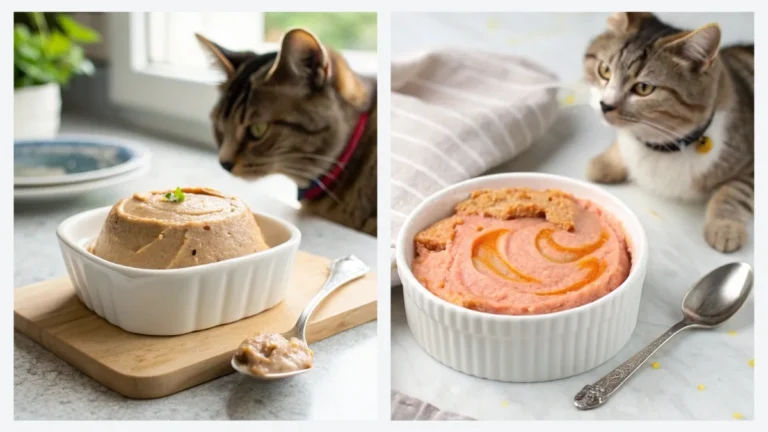
I also like how flexible this recipe is. I can blend it completely smooth for a pâté-style meal or leave it slightly chunky for cats that still enjoy a bit of texture. Unlike many store-bought broths, I can keep sodium extremely low and skip unnecessary additives.
Ingredients
- 8 oz (225 g) lean beef (stew meat, ground beef 90% lean, or beef heart)
- 1 cup low-sodium chicken broth (homemade preferred, onion- and garlic-free)
- 1 tsp plain gelatin powder (optional, for gentle gel texture and hydration)
- 1 tbsp chicken fat or beef tallow (optional; skip for low-fat needs)
- 1 egg yolk, lightly cooked (optional for nutrients and richness)
- Water as needed to adjust thickness
- Vet-approved taurine supplement (recommended if feeding frequently)
- Small pinch of calcium source (such as eggshell powder), if serving more regularly
Never use broth containing onion, garlic, chives, leeks, or added seasonings. Sodium should remain very low.
Related : 7 DIY Cat Food Recipes With Tuna (EASY!)
Looking for a recipe with fewer ingredients? Try pumpkin cat food.
How to Make It
Prepare the broth.
If using store-bought broth, I always double-check the label for onion or garlic. If homemade, skim excess fat if needed.
Cook the beef.
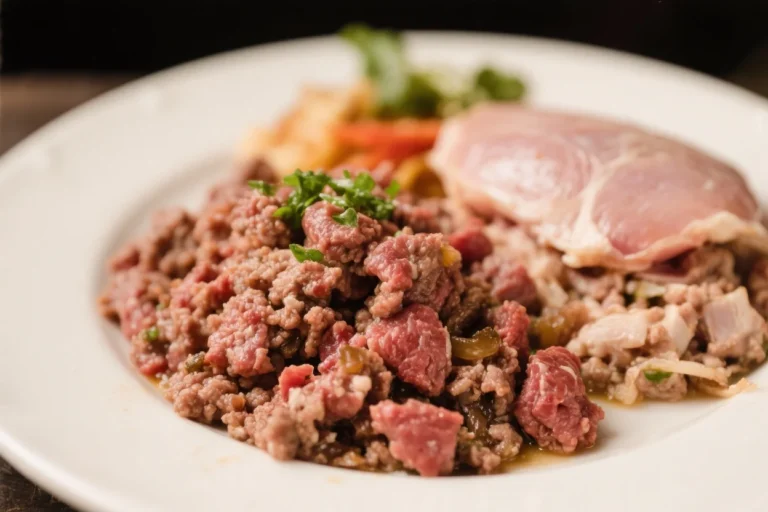
Poach or gently pan-sear the beef until just cooked through. I avoid heavy browning because it can dry the meat and reduce palatability. For ground beef, cook gently and drain excess fat if your cat is sensitive.
Optional: Add gelatin.
Warm 2–3 tablespoons of broth, sprinkle gelatin over it, let it bloom for 5 minutes, then stir until fully dissolved.
Combine ingredients.
Add the cooked beef to a bowl or blender. Pour in the broth (and gelatin mixture if using). Add egg yolk and optional fat.
Adjust texture.
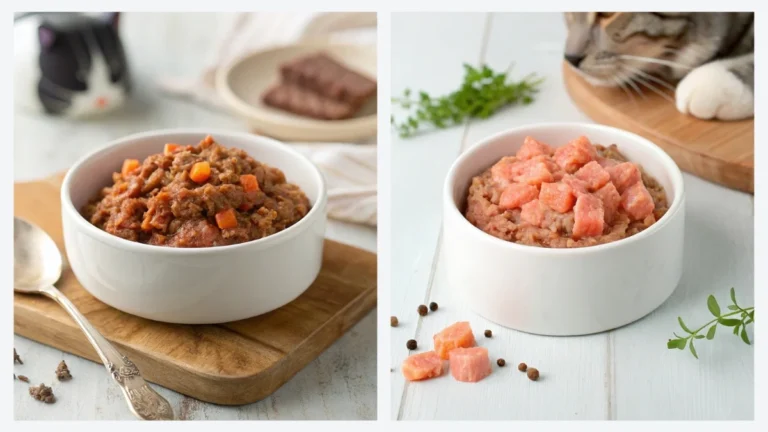
For a soft chew, finely chop the beef and stir.
For a smooth pâté, blend until creamy. Add warm water if you want a soupier consistency.
Add supplements.
Once the mixture cools to warm—not hot—stir in taurine and calcium if advised by your vet. Heat can damage supplements, so timing matters.
Portion and serve.
Offer a small amount first to check acceptance. Serve slightly warm to enhance aroma.
Storage Instructions
Refrigerator:
Store in an airtight container for up to 48 hours.
Freezer:
Freeze in small containers or silicone trays for up to 1 month. Thaw overnight in the refrigerator.
Reheat gently:
Warm to room temperature by placing the container in warm water. Avoid microwaving supplements.
Discard leftovers:
Remove uneaten portions after 30–45 minutes, especially in warm environments.
Health Benefits
High-quality protein:
Beef provides essential amino acids that support muscle mass and overall health.
Hydration support:
The broth increases moisture intake, which is important since studies show many cats consume less water than they need from drinking alone.
Gentle on teeth and gums:
Soft textures are ideal for senior cats and those with dental issues.
Nutrient boost:
Egg yolk adds healthy fats and choline, while taurine and calcium help round out the nutrition if used regularly.
Digestibility:
Minimal ingredients and no seasonings make this easier on sensitive stomachs.
Common Mistakes to Avoid
Using seasoned broth:
Onions, garlic, and high salt are unsafe for cats. Always choose plain broth.
Skipping taurine for frequent feeding:
Cats require taurine daily. If this recipe becomes a regular meal, supplementation is essential.
Serving too hot:
Hot food can burn your cat’s mouth. Always test the temperature.
Using this as a sole long-term diet without balance:
This recipe is nourishing but not complete unless properly supplemented under veterinary guidance.
Overdoing fat:
Too much fat can trigger digestive upset or pancreatitis. Adjust based on your cat’s needs.
Alternatives
Protein swap:
Turkey, rabbit, or chicken thigh can replace beef. I stick to one protein at a time to monitor sensitivities.
Different broth:
Turkey broth or unsalted homemade bone broth works well if it’s onion- and garlic-free.
Texture changes:
Blend smooth for maximum hydration or leave soft chunks for enrichment.
Allergy-friendly:
If beef is problematic, rabbit or duck paired with matching broth is a good alternative.
Supplement tweaks:
A complete feline supplement designed for homemade diets can simplify balancing, but only under vet guidance.
FAQ
Is this a complete and balanced meal for cats?
Not by default. This is a high-moisture, high-protein recipe. For regular feeding, work with your vet to add appropriate supplements or use a feline balancing mix.
Can I use store-bought chicken broth?
Yes, if it’s low-sodium and free of onion, garlic, and spices. Many boxed broths contain onion powder, so labels matter.
Can I serve it raw?
This recipe is designed to be cooked for safety. Raw feeding requires careful sourcing, handling, and supplementation. Consult your vet first.
How much should I feed?
Many adult cats eat about 2–4 ounces (55–110 g) per meal, twice daily. Adjust based on age, activity, and body condition.
My cat is picky. How can I make it more appealing?
Serve slightly warm, add extra broth, or drizzle a small amount of warmed chicken fat for aroma.
Can I add vegetables or grains?
Cats are obligate carnivores. Vegetables and grains are unnecessary unless your vet recommends fiber.
What if my cat has kidney or urinary issues?
Extra moisture can help, but protein and mineral needs vary. Always consult your vet and keep sodium very low.
How long does it keep?
Up to 2 days refrigerated or 1 month frozen. Thaw in the fridge and warm gently before serving.
Wrapping Up
This Beef and Chicken Broth Cat Food is comforting, flexible, and easy to adapt to your cat’s needs. It’s an excellent way to add hydration and quality protein without questionable ingredients. Whether used as a topper, a gentle meal for sensitive days, or a base you balance with your vet’s help, this recipe makes homemade feeding feel manageable and rewarding.
All content on this site is written and reviewed by our experienced team to ensure it is accurate, reliable, and helpful for our readers. Our Our Process page explains how we carefully research and create high-quality content, while our Team page introduces the professionals behind our work. We also provide clear guidelines for content or image concerns on our Image Removal page, so you can trust that we prioritize transparency, quality, and reader safety.