How To Make Homemade Cat Food With Ground Turkey (Full Guide)
If you’ve ever flipped over a commercial cat food bag and stared at the ingredient list wondering what half of it actually is, you’re definitely not alone. I’ve lived with cats for more than ten years, and between dealing with picky eaters, food sensitivities, hairball issues, and coat problems, I eventually realized that understanding what goes into my cats’ bowls matters just as much as how often I scoop the litter box.
More cat owners are switching to homemade meals because they want control over what goes into their cats’ bodies, and from my experience, it’s far less intimidating than it sounds. Ground turkey is one of the first proteins I ever used when experimenting with homemade food. It’s lean, easy to work with, and most cats accept it readily—even the stubborn ones who sniff new food and walk away.
Key Takeaways
- Ground turkey is a lean, highly digestible protein ideal for many cats
- Homemade cat food allows better control over ingredients and moisture
- Turkey alone is not nutritionally complete without supplements
- Taurine, calcium, and balanced nutrients are essential for long-term feeding
- Slow transitions and vet guidance help prevent digestive issues
🍗 Why Ground Turkey Is Good For Cats
After years of feeding different proteins and watching how my cats respond, ground turkey consistently stands out as a solid option. Cats are obligate carnivores, meaning their bodies are designed to get nutrients primarily from animal-based proteins. Studies show that adult cats require diets where protein provides the majority of calories to maintain lean muscle mass and metabolic health.
Ground turkey delivers high-quality protein without excessive fat, which I’ve found especially helpful for indoor cats that don’t burn as many calories. Compared to fattier meats, turkey is easier on digestion, and I’ve personally seen fewer vomiting episodes and firmer stools when turkey is used as a base.
Another advantage is flavor. Turkey has a mild taste, which makes it easier to introduce to cats that are sensitive to strong-smelling meats. In multi-cat households like mine, that matters. However, turkey alone isn’t nutritionally complete. Cats require essential nutrients like taurine, calcium, and certain vitamins that aren’t present in sufficient amounts in muscle meat alone. Taurine deficiency, for example, has been linked to heart disease and vision problems in cats, which is why balance is critical.
🛒 Ingredients You’ll Need
Here’s what I use when preparing a simple ground turkey meal for my cats:
- 1 pound ground turkey with no added flavorings or preservatives
- 1 egg to support protein intake and biotin levels
- 1/4 cup plain pumpkin puree or cooked sweet potato for gentle fiber
- 1/2 teaspoon fish oil for omega-3 fatty acids and coat health
- Optional taurine powder if feeding homemade food regularly
I never add salt, garlic, onions, or seasonings. Even small amounts of these can be harmful to cats and may cause long-term health problems.
Looking for a recipe with fewer ingredients? Try pumpkin cat food.
🍳 How To Make Homemade Cat Food With Ground Turkey
Step 1: Cook the Turkey
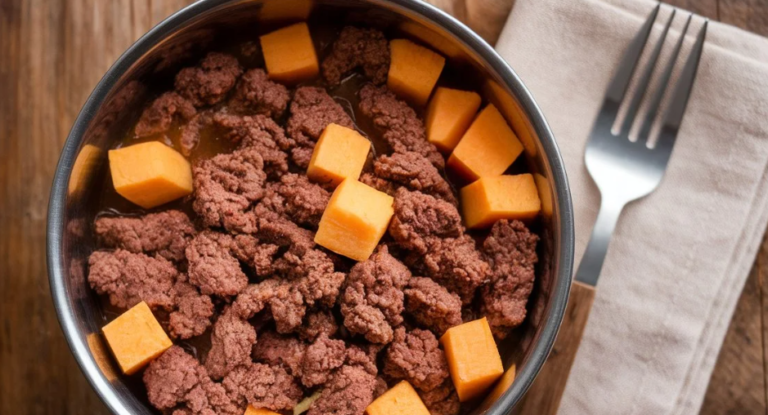
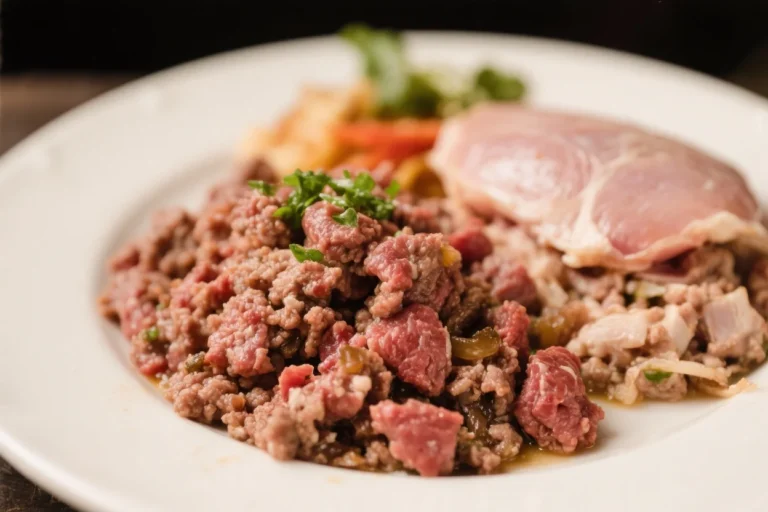
I place the ground turkey into a skillet over medium heat and break it into small pieces as it cooks. Smaller crumbles are easier for cats to chew and digest. I always cook it plain with no oil or seasoning.
Step 2: Add the Egg
When the turkey is mostly cooked but still slightly pink, I crack the egg directly into the pan and stir continuously. The egg cooks quickly and binds the mixture evenly. Fully cooking the egg also avoids issues with biotin absorption linked to raw egg whites.
Step 3: Mix in Fiber
Once the turkey and egg are fully cooked, I turn off the heat and stir in the pumpkin puree or sweet potato. From experience, a small amount of fiber can help regulate digestion and reduce hairball-related constipation without upsetting a cat’s carnivorous system.
Step 4: Add Healthy Fats
After the food cools to warm—not hot—I mix in the fish oil. Over time, I’ve noticed shinier coats, less dandruff, and improved skin condition when omega-3s are included consistently.
Step 5: Boost With Taurine (Optional but Recommended)
If this food is served more than occasionally, I always add taurine once the mixture cools. Cooking reduces natural taurine levels, and supplementation helps protect heart and eye health.
🥣 How To Serve It
I always let the food cool to room temperature before serving. Many cats refuse cold food straight from the fridge. Portion size varies, but I typically start with 1/4 to 1/2 cup per meal and adjust based on body condition, age, and activity level.
Leftovers are stored in airtight containers in the refrigerator for up to three days. When I batch-cook, I freeze individual portions, which makes daily feeding much easier.
⚡ Quick Tips For Better Results
From years of trial and error, slow transitions matter. I mix small amounts of homemade food into my cats’ regular meals over several days to avoid digestive upset. Rotating proteins occasionally, such as turkey and chicken, can also help reduce sensitivities and broaden nutrient exposure.
I always recommend checking with a veterinarian before switching to long-term homemade feeding. Cats with kidney disease, digestive disorders, or special nutritional needs require tailored diets. Cooking poultry thoroughly is also essential, as raw turkey can carry harmful bacteria.
🎯 Final Thoughts
Making homemade cat food with ground turkey isn’t just about saving money. For me, it’s about transparency, hydration, and feeding my cats in a way that aligns with their biological needs. After more than a decade of hands-on feline care, I’ve learned that simple, well-balanced homemade meals can be a valuable addition to a thoughtful feeding routine when done responsibly.