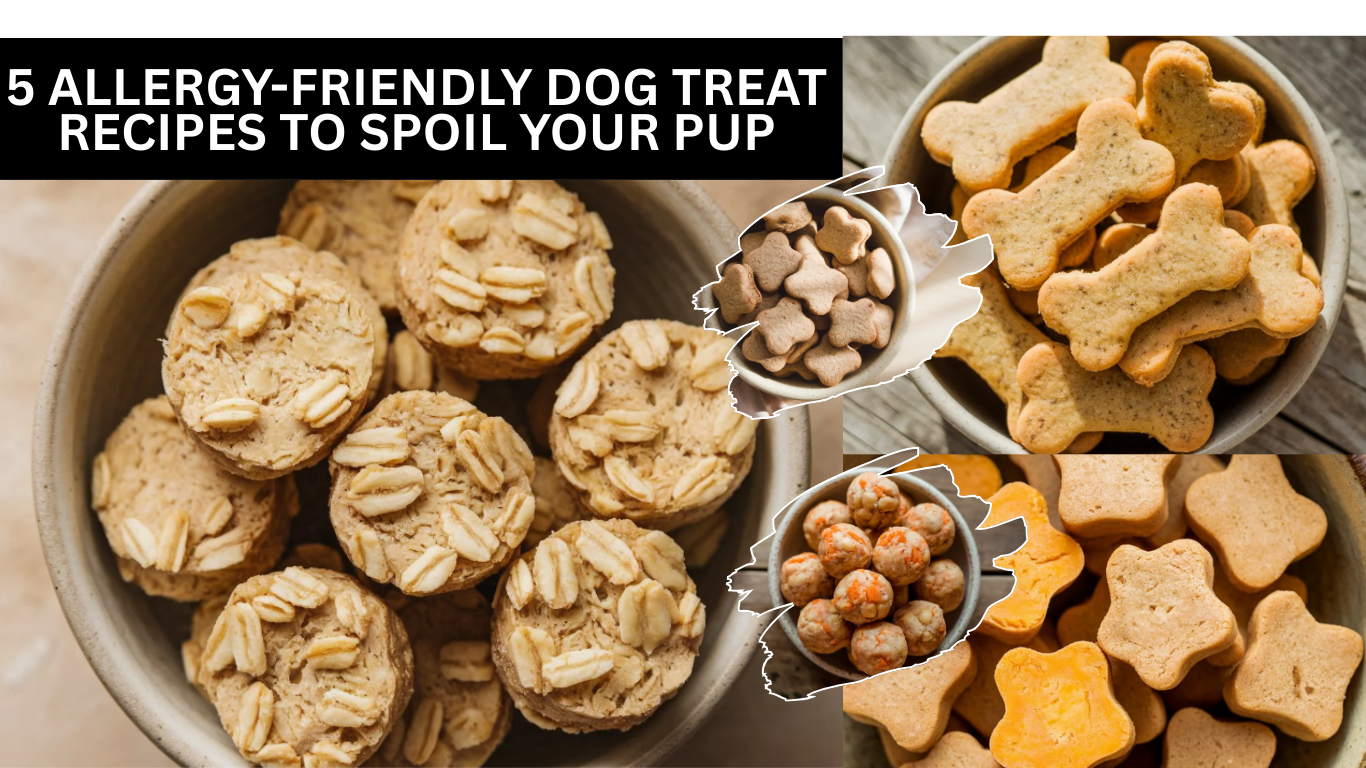
5 Easy Allergy-Friendly Dog Treat Recipes Your Pup Will Love
Finding treats for a dog with food sensitivities can take a little more thought than grabbing the first bag off the shelf. You may want to avoid certain ingredients, keep the recipe simple, or have better control over exactly what goes into your pup’s snacks.
Making treats at home gives you that control. These five homemade dog treat recipes use straightforward ingredients and are easy to prepare in your own kitchen.
Just remember that “allergy-friendly” does not mean allergy-proof for every dog. If your dog has a diagnosed food allergy, check every ingredient against your veterinarian’s recommendations and avoid ingredients your dog has been told to exclude.
Quick List: 5 Allergy-Friendly Dog Treat Recipes
- Sweet Potato & Coconut Chews
- Pumpkin & Flaxseed Biscuits
- Banana & Oat Bites
- Carrot & Chickpea Balls
- Apple & Buckwheat Cookies
1. Sweet Potato & Coconut Chews
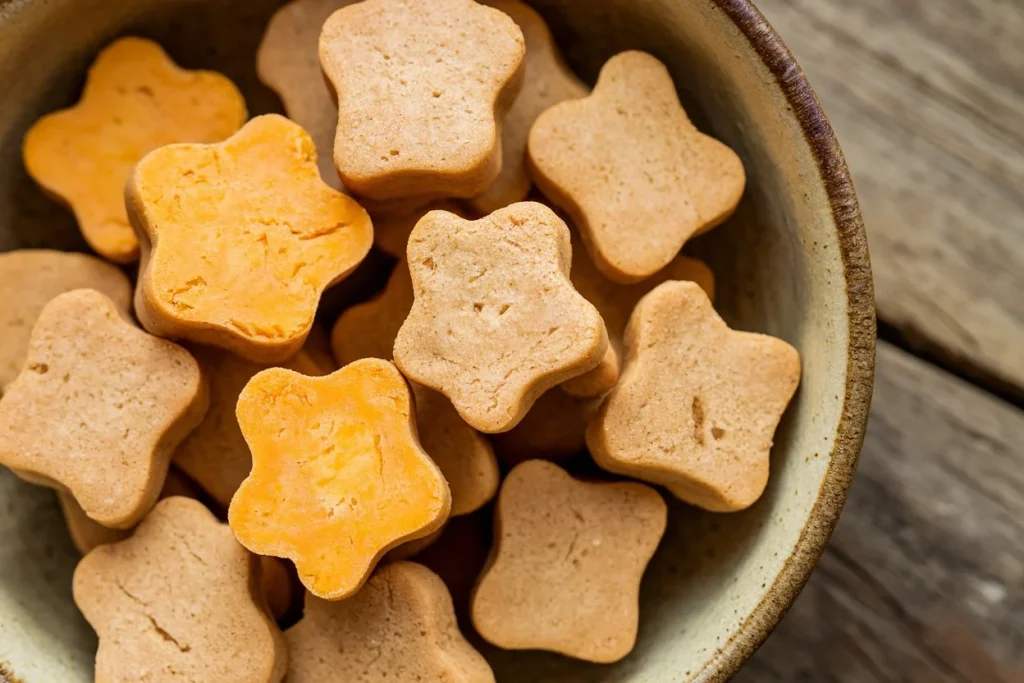
These soft homemade chews combine naturally sweet sweet potato with coconut flour to create a simple baked treat. They’re a nice option when you’re looking for a recipe with a short ingredient list and a softer texture.
Sweet potato also provides fiber and several vitamins, while coconut flour can help give the mixture structure without using traditional wheat flour.
Ingredients
- 1 large sweet potato, cooked and mashed
- 1 cup coconut flour
- 1 egg, optional
- 1–2 tablespoons water, as needed
Instructions
- Heat your oven to 350°F (175°C) and line a baking sheet with parchment paper.
- Cook the sweet potato until completely tender, then remove the skin and mash the flesh until smooth.
- Place the mashed sweet potato in a mixing bowl and add the coconut flour.
- Add the egg if you’re using it and mix everything together.
- If the mixture seems crumbly, add water a little at a time until you have a workable dough.
- Shape small portions into balls or flattened treats.
- Arrange them on your prepared baking sheet.
- Bake for approximately 20–25 minutes, or until the treats feel firm.
- Allow them to cool completely before offering one to your dog.
Storage Tip: Once completely cool, keep the treats in an airtight container. For longer storage, freeze individual portions and thaw them as needed.
2. Pumpkin & Flaxseed Biscuits
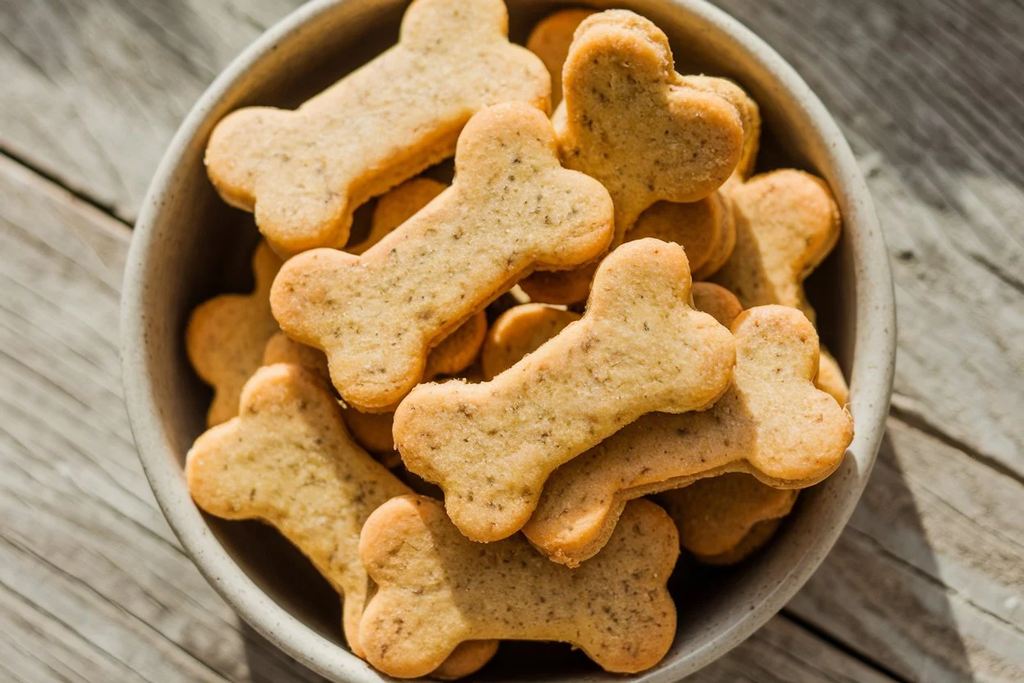
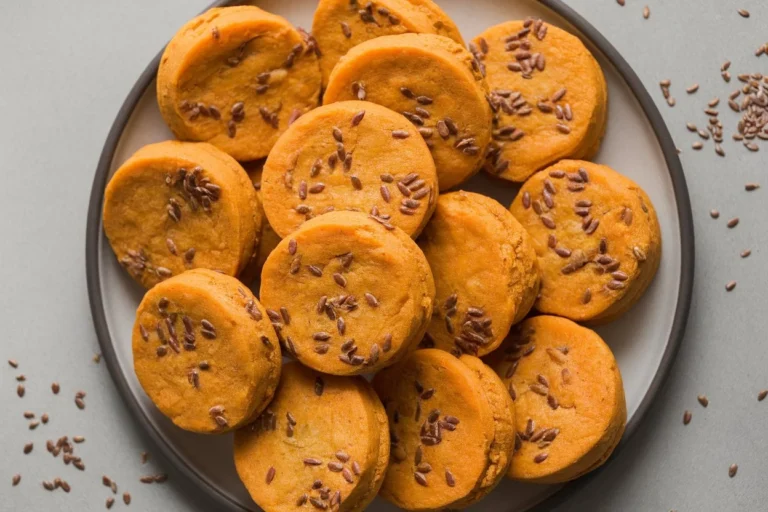
Pumpkin makes a useful base for homemade dog treats because it mixes easily with other ingredients and adds moisture to the dough. Ground flaxseed gives these biscuits a slightly nutty flavor and helps create a firmer texture when baked.
These are especially handy when you want a homemade biscuit without using conventional wheat flour.
Ingredients
- 1 cup plain canned pumpkin
- 1/4 cup ground flaxseed
- 1/2 cup coconut flour
- 1/2 teaspoon cinnamon, optional
Important: Use plain pumpkin rather than pumpkin pie filling, which may contain added sugar and spices.
Instructions
- Preheat the oven to 325°F (165°C).
- Line a baking tray with parchment paper.
- Combine the pumpkin and ground flaxseed in a bowl.
- Add the coconut flour and mix until a dough begins to form.
- If the dough is difficult to work with, adjust the consistency gradually rather than adding a large amount of flour at once.
- Place the dough on a suitable work surface and gently roll it to roughly 1/4-inch thickness.
- Cut the dough into small shapes using a cookie cutter, or simply cut it into bite-sized pieces.
- Transfer the pieces to the baking sheet.
- Bake for approximately 25–30 minutes, until the biscuits are firm.
- Cool thoroughly before serving.
Storage Tip: Store cooled biscuits in an airtight container for short-term use. Freeze extras if you have made a larger batch.
3. Banana & Oat Bites
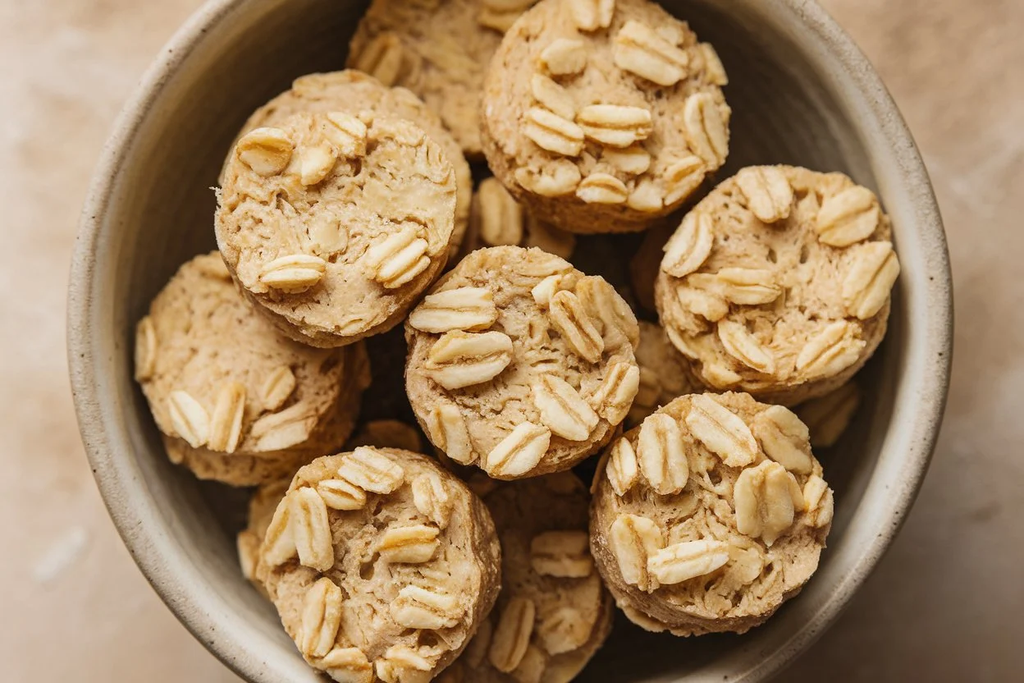
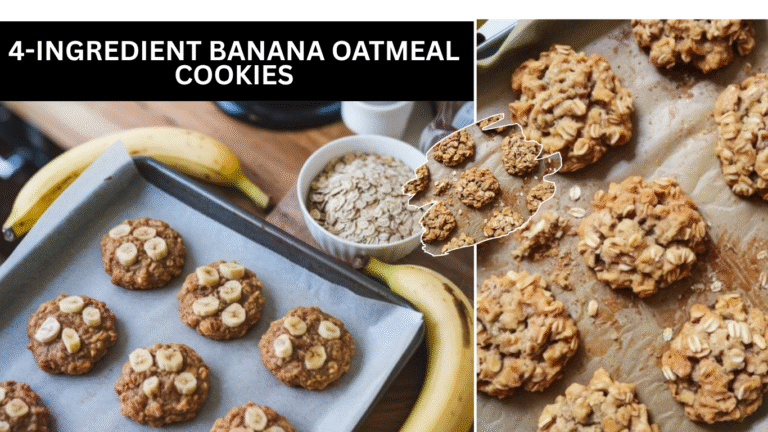
When you want something quick, these banana and oat bites keep things simple. Ripe banana provides moisture and natural sweetness, while oats help create a soft, chewy texture.
If your dog needs to avoid gluten because of a specific dietary recommendation, use oats that are appropriately labeled for your needs. Also remember that an ingredient that works for one sensitive dog may not be appropriate for another.
Ingredients
- 1 ripe banana, mashed
- 1 cup oats
- 1 tablespoon coconut oil, optional
Instructions
- Preheat your oven to 350°F (175°C) and prepare a baking sheet with parchment paper.
- Mash the banana in a bowl until there are no large pieces remaining.
- Add the oats and optional coconut oil.
- Stir until the ingredients form a thick mixture.
- Let the mixture sit briefly if it seems too loose so the oats can absorb some moisture.
- Scoop small portions onto the baking sheet.
- Flatten each portion slightly with the back of a spoon.
- Bake for approximately 15–20 minutes, or until the bites are set and lightly browned.
- Let them cool completely before giving one to your dog.
Storage Tip: Keep cooled bites in a sealed container and refrigerate or freeze them if you want to keep them longer.
4. Carrot & Chickpea Balls

For dogs that enjoy different flavors and textures, these carrot and chickpea bites offer another simple homemade option.
Cooked chickpeas form the base, while grated carrot adds moisture and a little natural sweetness. Coconut flour helps bind the mixture so you can shape it into small portions.
Ingredients
- 1/2 cup cooked plain chickpeas
- 1/2 cup finely grated carrot
- 1/4 cup coconut flour
- 1 tablespoon finely chopped parsley, optional
Instructions
- Preheat the oven to 350°F (175°C).
- Line a baking sheet with parchment paper.
- Mash the cooked chickpeas thoroughly in a mixing bowl.
- Add the grated carrot and coconut flour.
- If using parsley, stir it through the mixture.
- Mix everything until the ingredients hold together.
- Take small portions and gently roll them into balls.
- Place the balls on the prepared baking sheet.
- Bake for approximately 20–25 minutes, until firm.
- Cool completely before serving.
Storage Tip: Place fully cooled treats in an airtight container. Freeze any extras you won’t use within a few days.
5. Apple & Buckwheat Cookies
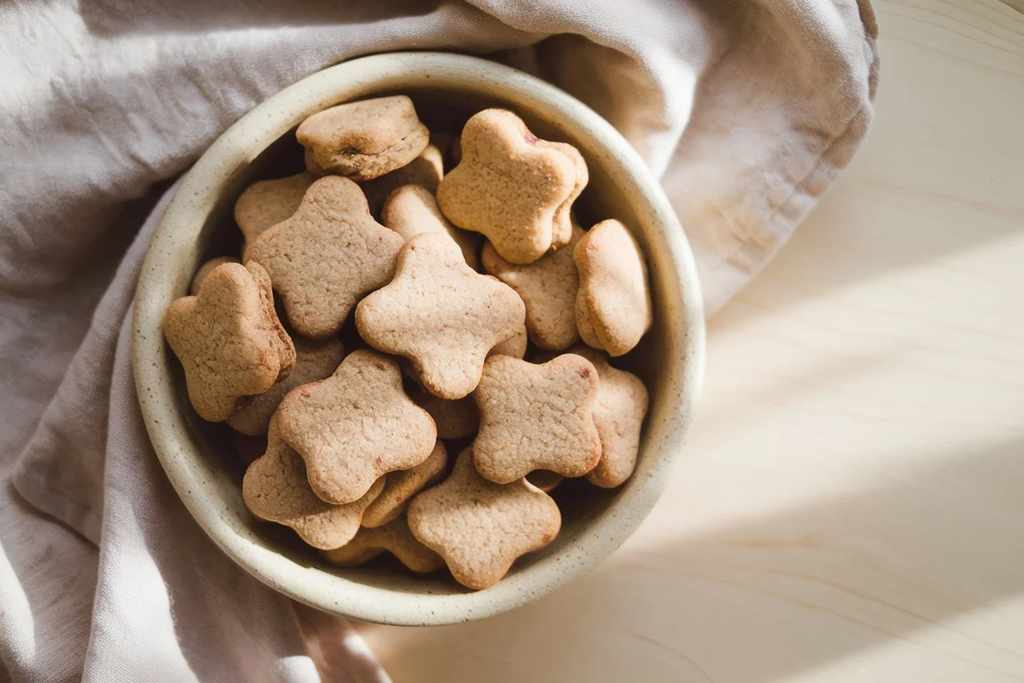
Buckwheat is a seed rather than a wheat grain, despite its name, and buckwheat flour is naturally gluten-free. Combined with unsweetened applesauce, it makes a simple dough for homemade dog cookies.
These treats can also be baked longer if your dog prefers a firmer, crunchier texture.
Ingredients
- 1/2 cup unsweetened applesauce
- 1 cup buckwheat flour
- 1 tablespoon coconut oil
Instructions
- Preheat your oven to 350°F (175°C).
- Line a baking tray with parchment paper.
- Mix the applesauce and coconut oil together in a bowl.
- Gradually add the buckwheat flour.
- Stir until the mixture forms a workable dough.
- Roll the dough to approximately 1/4-inch thickness.
- Cut small cookies using a cookie cutter, or slice the dough into simple squares.
- Arrange the cookies on the prepared baking sheet.
- Bake for approximately 20–25 minutes, checking toward the end of baking.
- Allow the cookies to cool completely before serving.
For a harder texture, you can bake them slightly longer, but watch them carefully so they don’t burn.
Storage Tip: Once cooled, store the cookies in an airtight container. Freeze part of the batch if you won’t use them within several days.
Why These Treats Can Be Useful for Dogs With Food Sensitivities
One advantage of homemade treats is that you can see exactly which ingredients you’re using.
Sweet potato, pumpkin, banana, carrot, and applesauce can provide different flavors and textures, while ingredients such as coconut flour, oats, and buckwheat flour can be used in place of traditional wheat flour depending on your dog’s individual dietary needs.
However, it’s important not to assume that a particular ingredient is suitable for every dog with allergies or digestive sensitivities.
If your dog has a diagnosed food allergy, the safest approach is to follow the elimination or restricted diet recommended by your veterinarian. A homemade recipe should only be considered appropriate when all of its ingredients fit your dog’s individual diet.
A Few Ingredient Notes
Sweet Potato: Adds moisture, fiber, and natural sweetness to baked treats.
Pumpkin: Plain pumpkin is commonly used in dog food and treats and contributes moisture and fiber.
Banana: A naturally sweet fruit that works well as a binder in simple homemade recipes.
Carrots: Add texture and natural sweetness while keeping the recipe relatively simple.
Applesauce: Choose plain, unsweetened applesauce without added ingredients that aren’t appropriate for dogs.
Chickpeas: Plain, cooked chickpeas can be used in some homemade dog recipes, but they should be prepared without seasonings or sauces.
Coconut Flour: A flour made from coconut that can be useful in recipes where you’re avoiding traditional wheat flour.
Buckwheat Flour: Despite the word “wheat” in its name, buckwheat is not wheat and is naturally gluten-free.
Oats: A common ingredient in homemade dog treats, although individual dogs can have their own dietary restrictions.
Important Safety Notes Before Making Homemade Dog Treats
Homemade does not automatically mean healthier or safer for every dog.
Before introducing a new treat, consider your dog’s existing diet, allergies, medical conditions, and any ingredients your veterinarian has advised you to avoid.
Also remember:
- Introduce new treats gradually.
- Start with a small portion.
- Avoid ingredients known to be unsafe for dogs.
- Don’t add sugar, chocolate, xylitol, or heavily seasoned ingredients.
- Treats should remain a small part of your dog’s overall diet.
- For diagnosed food allergies, check the complete ingredient list carefully.
- Ask your veterinarian for guidance if your dog has recurring reactions to food.
If your dog develops signs such as vomiting, diarrhea, facial swelling, hives, breathing difficulty, or another concerning reaction after eating something new, contact a veterinarian promptly.
FAQs About Homemade Allergy-Friendly Dog Treats
Can I change an ingredient in one of these recipes?
You may be able to make substitutions, but don’t assume that one flour or ingredient is interchangeable with another.
If you’re making treats for a dog with a diagnosed food allergy, any substitution should fit the diet recommended for that dog. Changing an ingredient can also affect the moisture and texture of the finished treat.
How many homemade treats can I give my dog?
Treats should complement your dog’s regular diet rather than replace a balanced meal.
The appropriate amount depends on your dog’s size, age, activity level, health, and overall diet. Keep portions small and account for treats when considering their daily food intake.
Can puppies eat homemade dog treats?
Some simple homemade treats may be suitable for puppies, but puppies have different nutritional requirements from adult dogs.
If you’re making treats for a young puppy, use age-appropriate portions and check with your veterinarian if you’re unsure whether a particular ingredient or recipe is suitable.
Should I refrigerate homemade dog treats?
Storage depends on the ingredients and moisture level of the recipe.
Treats containing moist ingredients may benefit from refrigeration, while thoroughly baked, dry treats can have different storage requirements. When in doubt, refrigerate or freeze homemade treats rather than leaving them at room temperature for extended periods.
Can homemade treats cure my dog’s food allergy?
No. Homemade treats are not a treatment for a food allergy.
If your dog has a suspected or diagnosed allergy, work with your veterinarian to identify the trigger and choose an appropriate diet. The benefit of homemade treats is that they can give you greater control over the ingredients you offer.
Final Thoughts: Simple Treats, Thoughtful Ingredients
Making your dog’s treats at home can be a fun way to add variety while giving you more control over the ingredients.
These five recipes offer several different combinations, from soft sweet potato chews to crunchy apple and buckwheat cookies. But the best recipe for your dog is always the one that fits their individual dietary needs.
If your pup has food sensitivities, read every ingredient carefully rather than relying only on labels such as “allergy-friendly.”
And when you find a recipe your dog loves, make a small batch, store it properly, and enjoy those very enthusiastic tail wags that usually follow homemade treats.