Beef, Brown Rice & Green Beans – Balanced Dog Recipe – Simple, Nutritious, and Homemade
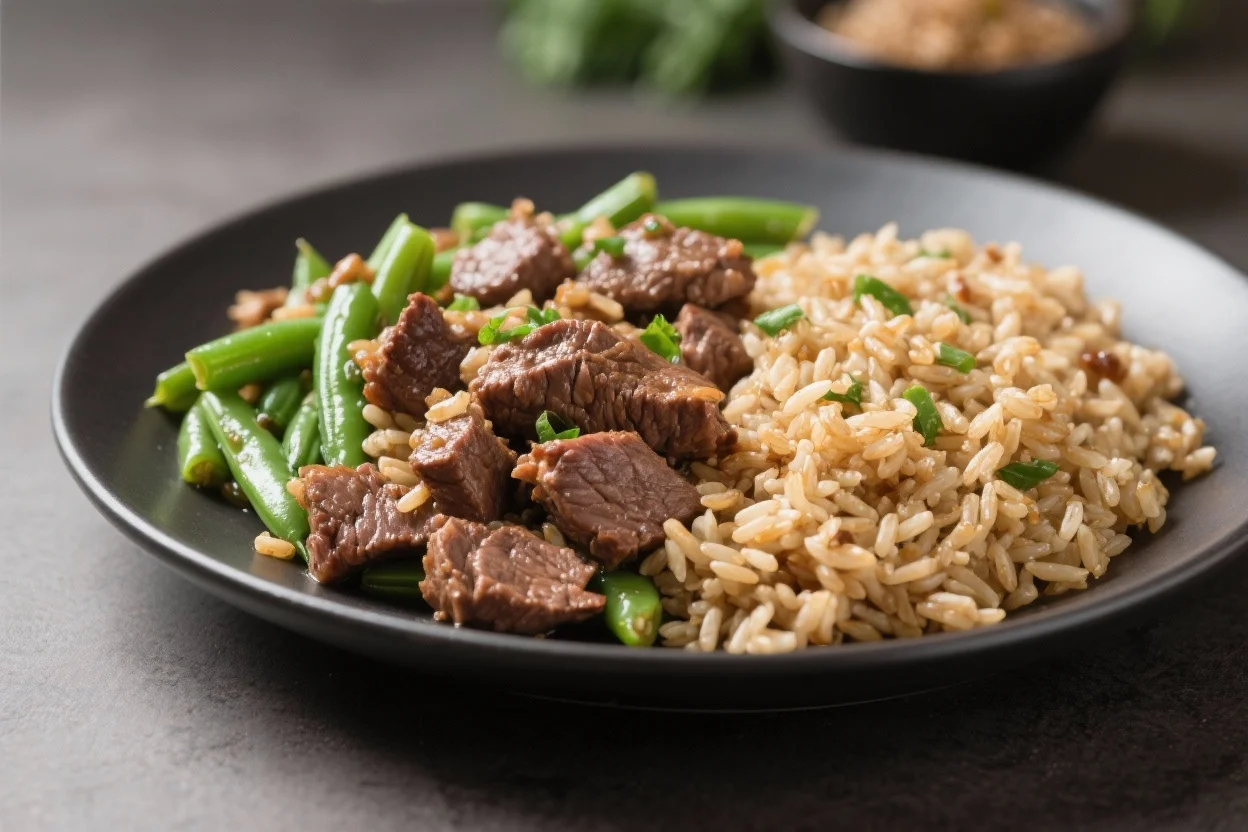
If you want to prepare your dog’s food at home, this beef, brown rice, and green bean recipe keeps things simple. It combines lean ground beef with rice and vegetables for a filling homemade meal.
The recipe can also be prepared in batches, making it easier to portion and store meals for later.
Why This Recipe Works
This recipe brings together protein, carbohydrates, vegetables, and optional nutritional additions in one bowl.
Lean beef provides protein, while brown rice adds carbohydrates. Green beans and carrots bring extra fiber and nutrients.
For regular homemade feeding, the calcium source and dog-specific vitamin and mineral supplement are important parts of the recipe.
Shopping List
- Lean ground beef (90–93% lean), about 2 lbs (900 g)
- Brown rice, 2 cups uncooked
- Green beans (fresh or frozen), 3 cups chopped
- Carrots, 1 cup finely diced (optional)
- Beef or low-sodium chicken broth, 2–3 cups (optional)
- Salmon oil or fish oil (follow the product label for dogs)
- Calcium source (ground eggshell powder or calcium carbonate)
- Dog-specific multivitamin/mineral (veterinary-formulated)
- Olive oil or coconut oil, 1–2 tablespoons (optional)
- Water for cooking
How to Make It
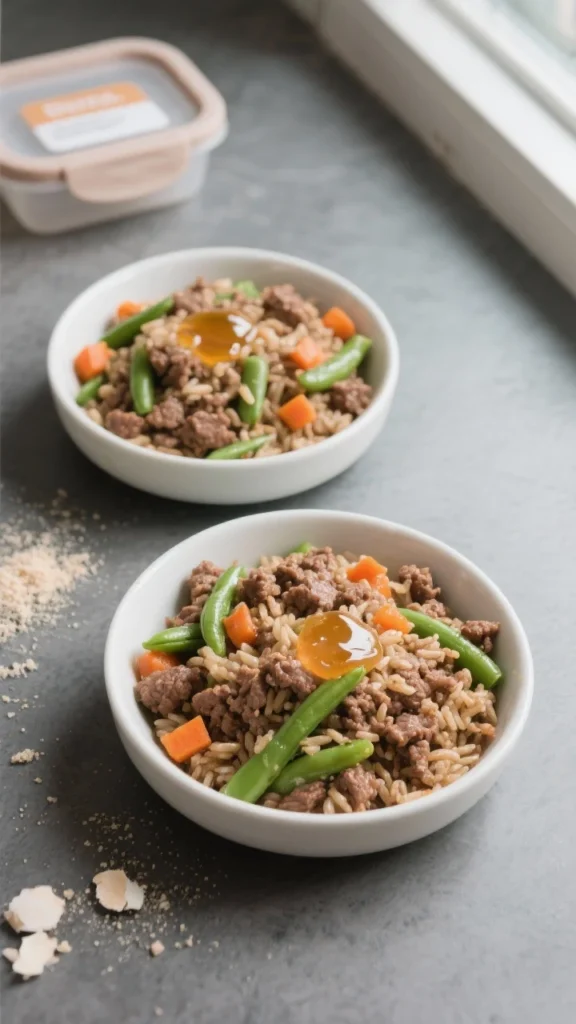
- Cook the brown rice. Rinse 2 cups of brown rice and add it to a pot with 4 cups of water.Bring it to a boil, then cover and simmer until the rice is tender, usually around 35–40 minutes. Fluff with a fork and set aside.
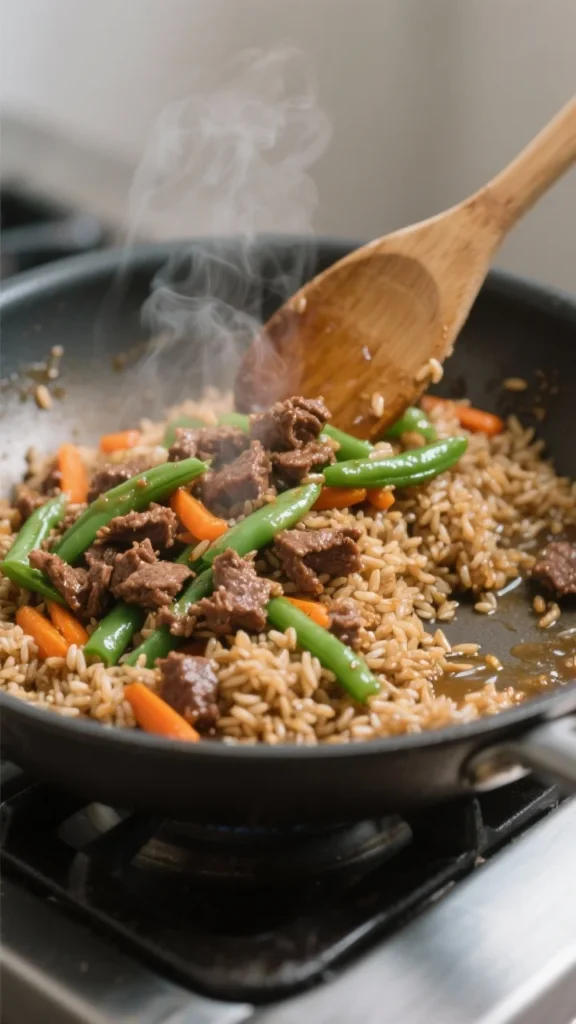
- Cook the beef. Add the ground beef to a large skillet or pot over medium heat. Break it apart as it cooks until no pink remains.If there is a large amount of grease, drain the excess.
- Prepare the vegetables. Steam or lightly boil the green beans and carrots until they are tender but still have some texture. This usually takes around 6–8 minutes.
- Combine everything. Place the cooked beef, rice, green beans, and carrots into a large pot.Stir thoroughly. Add a little water or broth if the mixture needs more moisture.
- Add the supplements. Allow the food to cool until it is just warm. Stir in the salmon or fish oil, calcium source, and dog-specific multivitamin according to their directions.Add these ingredients after cooking rather than heating them directly.
- Portion the food. Divide the finished recipe into appropriate daily portions.A general starting point is around 2–3% of your dog’s ideal body weight per day, divided between two meals. Adjust according to your dog’s individual needs.
- Serve and store. Serve the food slightly warm or at room temperature.Store any remaining portions safely for later meals.
How to Store
- Refrigerator: Keep the food in airtight containers for up to 3–4 days.
- Freezer: Divide into individual portions and freeze for up to 2 months.
- Thawing: Move frozen portions to the refrigerator overnight before serving.
- Reheating: Warm gently and allow the food to reach a comfortable temperature before serving.
- Food safety: Use clean containers and utensils. Discard food that has been sitting in your dog’s bowl at room temperature for too long.
Benefits of This Recipe
- Protein: Lean beef provides protein that helps support normal muscle maintenance.
- Carbohydrates: Brown rice provides energy and adds substance to the meal.
- Vegetables: Green beans and carrots contribute fiber and various nutrients.
- Healthy fats: Fish oil provides omega-3 fatty acids, while optional oils add additional calories.
- Customizable: Ingredients can be adjusted based on your dog’s individual tolerance and dietary needs.
- Simple ingredients: You can see exactly what goes into each portion.
Common Mistakes to Avoid
- Skipping calcium: Boneless cooked meat does not provide enough calcium by itself for a complete homemade diet. Use the appropriate calcium source according to your feeding plan.
- Overcooking vegetables: Cook vegetables until tender rather than leaving them mushy.
- Adding garlic or onions: Avoid both, including in broth and seasoning mixes.
- Guessing supplement amounts: Follow the product directions or your veterinarian’s instructions.
- Ignoring portion size: Adjust the amount based on your dog’s body condition, activity, and individual calorie needs.
Variations You Can Try
- Swap the grain: Quinoa or barley can replace brown rice if your dog tolerates them.
- Change the protein: Lean ground turkey or pork can be used instead of beef.
- Add leafy greens: Small amounts of finely chopped spinach or kale can be mixed with the vegetables.
- Pumpkin for sensitive stomachs: Add a few tablespoons of plain pumpkin puree for extra fiber.
- Bone broth boost: Use a dog-safe, low-sodium broth for additional moisture and flavor.
- Egg topper: A plain scrambled or poached egg can be added occasionally. Adjust the total amount of food if needed.
FAQ
How much should I feed my dog per day?
A general starting point is around 2–3% of your dog’s ideal body weight per day, split between two meals.
The exact amount varies from dog to dog, so adjust based on activity level and body condition.
Do I really need to add calcium?
Yes, if this recipe is being used as a regular homemade diet.
Boneless meat is relatively high in phosphorus, so an appropriate calcium source helps balance the overall mineral content. Follow your veterinarian’s guidance or the directions for your chosen calcium supplement.
Can I use white rice instead of brown rice?
Yes.
White rice generally cooks faster and can be easier for some dogs to digest. If you make the switch, make sure the overall recipe still provides the nutrients your dog needs.
Is this safe for puppies?
Puppies have different nutritional requirements while they grow.
Before using a homemade recipe as a puppy’s main diet, have the recipe reviewed by your veterinarian or a veterinary nutrition professional.
Can I cook the beef with seasonings?
It is best to keep the beef plain.
Do not add salt, garlic, onions, or seasoning blends that may contain ingredients unsuitable for dogs.
What if my dog has a fish allergy?
Talk with your veterinarian about another appropriate source of omega-3 fatty acids.
An alternative such as algae-derived DHA may be suitable for some dogs.
How long can I store this in the fridge?
Keep it refrigerated in sealed containers for about 3–4 days.
For longer storage, freeze individual portions and thaw them as needed.
My dog is gaining weight on this recipe. What should I change?
Start by reviewing the portion size and any added oils.
Reducing the serving size slightly may help, but changes should be based on your dog’s body condition and activity level.
Can I batch-cook this for multiple dogs?
Yes.
Make a larger batch and divide it into individual portions based on each dog’s needs. Label the containers clearly so each dog receives the appropriate amount.
Do I need a multivitamin?
If you’re feeding homemade food as a regular primary diet, a dog-specific vitamin and mineral supplement may be needed to help meet nutritional requirements.
Choose one formulated for dogs and follow the product directions or your veterinarian’s advice.
Final Thoughts
This Beef, Brown Rice & Green Beans recipe gives you a straightforward homemade meal built around familiar ingredients.
The beef, rice, and vegetables are easy to prepare in a large batch, while the appropriate calcium and nutritional supplements can help support a more complete feeding plan.
Prepare the food, divide it into portions, and store the extras so homemade meals are easier to manage throughout the week.