Ground Beef Dog Food That Makes Tails Spin: A Simple, Vet-Friendly Recipe Your Pup Will Devour
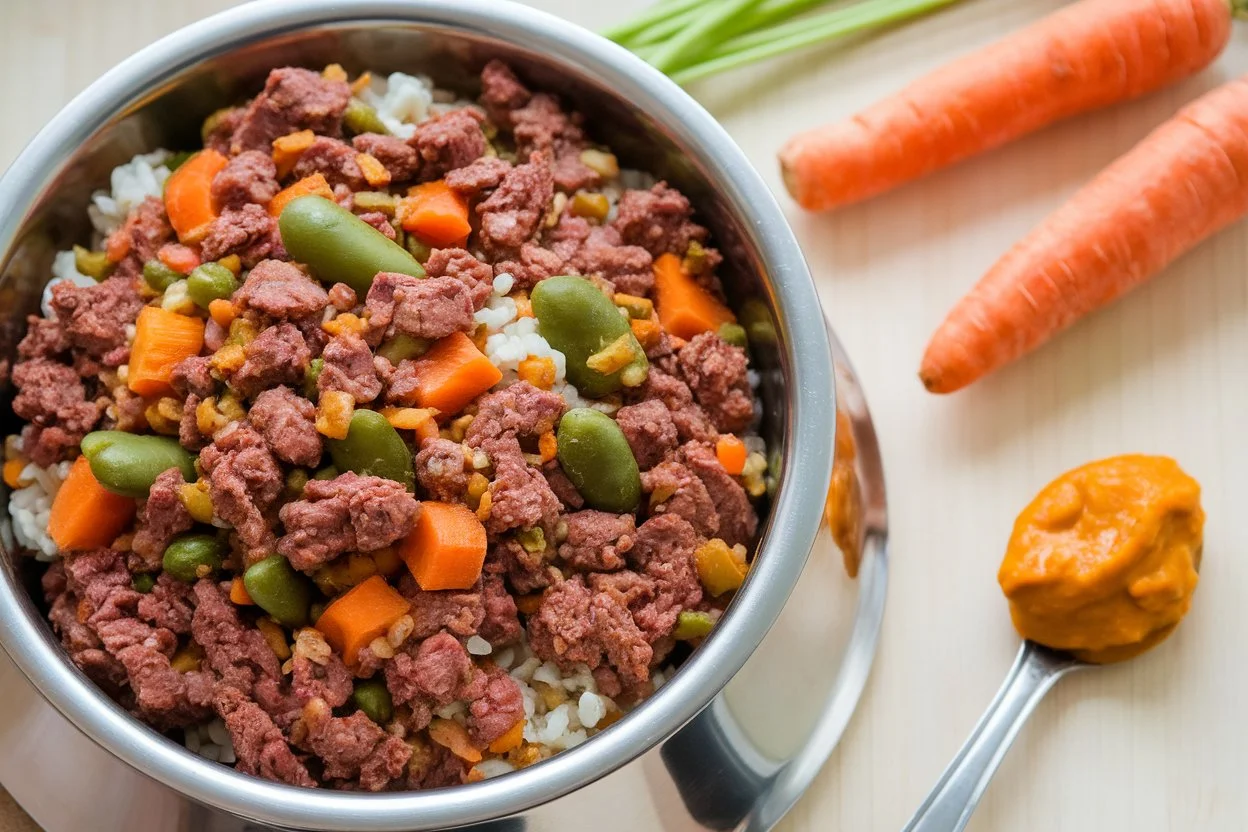
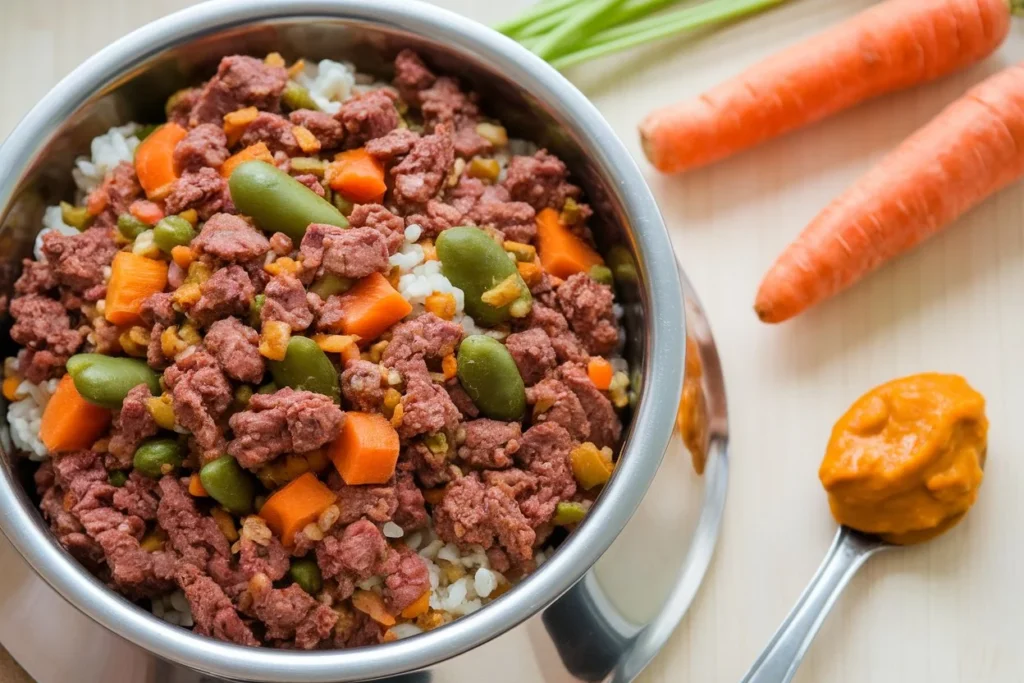
Making your dog’s meals at home can be surprisingly straightforward when you stick with familiar ingredients and prepare everything in one batch. Ground beef gives the recipe a hearty protein base, while rice, vegetables, and pumpkin add variety and texture.
This is also the kind of recipe that works well for meal prepping. Cook everything together, let it cool, divide it into portions, and you have several meals ready to go without starting from scratch every day.
For dogs eating homemade food regularly, the supplement step matters. Meat, rice, and vegetables alone do not automatically provide every vitamin and mineral a dog needs, so follow the recipe’s supplementation instructions rather than treating the add-in as optional.
Disclosure: As an Amazon Associate, we earn from qualifying purchases at no additional cost to you.
Why You’ll Love This Recipe
There are plenty of reasons this homemade beef recipe can become a convenient option in your meal-prep routine:
- Simple whole-food ingredients: Ground beef, rice, carrots, green beans, and pumpkin are easy to find and simple to prepare.
- A satisfying combination: The recipe brings together protein, carbohydrates, vegetables, and added fats in one bowl.
- Easy batch cooking: Make a larger batch at once and divide it into individual portions.
- Freezer friendly: Portioning before freezing makes future meals much easier to serve.
- Easy to customize: You can adjust the protein, carbohydrate, and vegetable choices to suit your dog’s preferences.
- A familiar texture: Soft rice, cooked vegetables, pumpkin, and crumbled beef create a meal that many dogs find appealing.
If this recipe is being used as a long-term homemade diet rather than an occasional addition to your dog’s regular food, the nutritional supplement should be treated as part of the recipe itself. Homemade diets can become deficient when ingredients or supplements are changed without recalculating the overall nutrition.
What Goes Into This Recipe – Ingredients
Here’s everything you’ll need for the batch:
- 2 lb (900g) 90–93% lean ground beef
- 1 cup uncooked white or brown rice
- 2 cups water or low-sodium beef or chicken broth
- 1 cup diced carrots
- 1 cup chopped green beans
- 1/2 cup plain pumpkin puree
- 2 tablespoons olive oil or salmon oil
- 1/2 teaspoon turmeric, optional
- 1/4 teaspoon finely ground eggshell powder per cup of finished food, or a veterinarian-approved canine multivitamin/mineral supplement
- Water as needed
For regular feeding, the vitamin-and-mineral component is important because a mixture of meat, rice, and vegetables by itself isn’t nutritionally complete. Calcium, phosphorus, zinc, magnesium, iron, and other nutrients all need to be considered when building a homemade diet.
If you use broth, check the ingredient list carefully and choose one without onion or garlic and without heavy seasoning.
How to Make It – Instructions
1. Cook the rice
Start with the rice because it needs time to cook and cool. Rinse it if desired, then prepare it with the water according to the package directions.
Once cooked, set it aside while you prepare the rest of the ingredients.
2. Brown the beef
Place the ground beef in a large skillet over medium heat. Break it apart as it cooks so you end up with small, evenly sized pieces.
Cook thoroughly, then drain excess grease if necessary.
3. Add the vegetables
Add the diced carrots and chopped green beans to the cooked beef.
Cook until the vegetables soften but still retain some texture. If the mixture becomes dry, add a small amount of water.
4. Combine everything
Transfer the cooked beef and vegetables into a large mixing bowl.
Add the prepared rice, pumpkin puree, optional turmeric, and oil. Stir everything together until the ingredients are evenly distributed.
5. Cool the food
Let the mixture cool completely before portioning it.
Avoid serving the food while it is still hot. A completely cooled batch is also easier to weigh, divide, and store.
6. Supplement smart
Once the food has cooled, add the canine vitamin-and-mineral supplement according to its label or use the eggshell powder amount specified in the recipe.
Don’t add supplements to food while it is piping hot.
For a homemade diet intended to replace commercial food over the long term, consistency matters. Veterinary nutrition guidance emphasizes following the complete recipe and supplement instructions because changing or leaving out ingredients can alter the nutritional balance.
7. Portion by weight and activity
Divide the finished food into individual servings based on your dog’s size, activity level, body condition, and feeding schedule.
Using a kitchen scale can make batch portioning much easier and keeps each serving consistent.
Keeping It Fresh
Once the food has cooled, move it into clean, airtight containers.
- Refrigerator: Keep portions refrigerated for up to 4 days.
- Freezer: Freeze portions for up to 3 months.
- Thawing: Move frozen portions into the refrigerator overnight.
- Serving: Let the thawed food come closer to room temperature or gently warm it before serving.
- Labeling: Write the preparation date on each container so older portions are used first.
Freezing individual servings is especially useful if you’re preparing several days of meals at once. You can simply move the next portion into the refrigerator the night before.
Why This is Good for You
One of the biggest advantages of making a batch like this is control. You know exactly what went into the pot, how the ingredients were cooked, and how the finished food was portioned.
The recipe also brings several different food groups together:
- Ground beef supplies the primary protein.
- Rice provides carbohydrates and an easy-to-portion energy source.
- Carrots and green beans add fiber and a range of nutrients.
- Pumpkin contributes fiber and gives the mixture a soft, moist texture.
- Olive or salmon oil adds dietary fat.
- The vitamin/mineral component helps address nutrients that aren’t adequately supplied by the basic meat, rice, and vegetable mixture.
The important distinction is that nutritious individual ingredients don’t automatically make a homemade diet complete and balanced. A dog’s nutritional requirements depend on factors such as age, activity, health, and life stage, which is why supplementation and accurate formulation matter for long-term feeding.
What Not to Do
A few shortcuts can turn an otherwise simple recipe into a less suitable meal.
- Don’t leave out the calcium or vitamin/mineral component if you’re using the recipe regularly as your dog’s main food.
- Don’t use seasoned broth containing ingredients such as onion or garlic.
- Don’t rely on the same portion forever without paying attention to your dog’s body condition and activity.
- Don’t serve the food while it’s hot.
- Don’t make major ingredient changes to a homemade diet without considering how those changes affect the nutritional balance.
- Don’t assume one recipe works equally well for every medical condition. Dogs with kidney disease, liver disease, allergies, or other health concerns may require a specially formulated diet.
Homemade recipes can be particularly challenging for puppies and dogs with medical conditions because their nutrient requirements can differ substantially from those of a healthy adult dog.
Mix It Up
Once you’ve made the basic recipe, there are several ways to give it a little variety.
Change the carbohydrate
You can experiment with options such as:
- Quinoa
- Barley
- Sweet potato
Rotate the vegetables
Depending on your dog’s preferences, you can try:
- Peas
- Zucchini
- Spinach
If your dog has a known food sensitivity, keep the ingredient list appropriate for that individual dog.
Change the protein
Ground turkey or chicken can replace the beef when you want to use a different protein source.
Adjust the added fat
Flax or salmon oil can be used when you want to include another source of dietary fat. Measure added oils rather than pouring them freely, since oils are calorie-dense.
Make it more appealing for picky eaters
Serving the meal slightly warm can make the aroma more noticeable. A small amount of suitable, low-sodium broth can also add moisture and flavor, provided the broth contains no unsafe ingredients.
When making substitutions in a homemade diet that will be fed regularly, remember that changing ingredients can change the nutritional profile. For a long-term diet, substitutions are best made as part of a properly formulated recipe.
FAQ
How much should I feed my dog?
A commonly suggested starting point for homemade food is around 2–3% of a dog’s body weight per day, but that number is only a starting estimate.
For example, a 50-pound dog could fall around 1–1.5 pounds of food per day, divided between meals.
Watch your dog’s body condition, energy level, stool quality, and weight and adjust the amount by roughly 10–15% when needed.
The exact amount can vary considerably because calorie requirements depend on the individual dog, the recipe’s calorie density, activity, age, and other factors.
Is this safe for puppies?
It can be used for puppies when the diet is properly balanced for growth, but puppies have different nutritional requirements from adult dogs.
If you’re feeding this as a puppy’s primary diet, the calcium, phosphorus, vitamins, minerals, calories, and other nutrients need to be appropriate for growth. A puppy-specific supplement and feeding amount should be selected with veterinary guidance rather than simply using an adult-dog portion.
Puppies are one of the situations where nutritional imbalances in homemade diets can be particularly concerning.
Can I use fattier ground beef?
Yes. You can use a higher-fat ground beef if that’s what you have available.
The 90–93% lean range works well for this recipe because it provides plenty of beef without making the finished mixture excessively greasy.
If you use something closer to 85% lean, drain the excess fat after cooking and consider reducing or skipping the additional oil so the finished meal isn’t unnecessarily heavy.
Do I really need a supplement?
If this is an occasional homemade meal or topper, you don’t necessarily need to turn it into a fully formulated diet.
For a homemade recipe being used as your dog’s main food over the long term, however, a properly selected vitamin-and-mineral supplement is important. Meat, rice, and vegetables don’t automatically supply every nutrient a dog requires.
Ideally, a long-term homemade diet should be formulated for the individual dog with veterinary nutrition guidance rather than relying on a generic recipe alone.
What if my dog has a sensitive stomach?
Keep the meal simple and start with smaller portions.
White rice, lean ground beef, and pumpkin are the basic combination suggested here when you want a gentler version of the recipe. Avoid introducing several new ingredients at once because it becomes harder to determine what your dog is reacting to.
If digestive problems continue, become severe, or are accompanied by other concerning symptoms, contact your veterinarian rather than continuing to experiment with homemade recipes.
Can I cook this in an Instant Pot?
Yes, you can adapt the preparation for an Instant Pot.
Brown the beef using the sauté function, then add the rice, vegetables, and water. For the rice, follow the cooking time recommended for your particular appliance and the type of rice you’re using rather than relying on one universal pressure-cooking time.
After cooking, stir in the pumpkin and oil once the mixture has cooled enough, then add the appropriate supplement.
How do I know if the portions are right?
Your dog’s body condition is one of the most useful things to monitor.
You should be able to feel your dog’s ribs without them being heavily covered by fat, while the dog should still have an appropriate amount of body covering.
If your dog is gaining excess weight, reduce the daily amount gradually. If your dog is becoming too lean or losing weight unexpectedly, increase food appropriately and consider speaking with your veterinarian.
Activity levels can change over time, so portions may need to change too.
Can I add eggs?
Yes, eggs can be included as an additional food in moderation.
A useful guideline from the original recipe is approximately one scrambled or hard-boiled egg per 20–30 pounds of body weight a few times per week.
If you’re incorporating eggs regularly into a homemade diet, remember that the entire recipe still needs to provide the correct nutrient balance. Don’t simply add eggshell powder on top of an already supplemented recipe; calcium supplementation should be based on the formulation being used.
My Take
This ground beef recipe is built around ingredients that are easy to find, simple to cook, and practical to prepare in batches.
The real convenience comes from doing the work once: cook the beef and rice, soften the vegetables, mix everything together, cool the batch, and portion it for the coming days.
If you’re preparing homemade food regularly, the most important part isn’t making the recipe complicated. It’s being consistent with the ingredients, portions, storage, and required supplementation. That turns a one-off homemade meal into a much more organized feeding routine.
And yes, having a container of homemade beef-and-rice food ready in the refrigerator can make dinner time considerably easier—especially when your dog is already waiting beside the bowl.