
10 Ways to Declutter Dog Supplies Fast
Dog supplies have a way of multiplying when you’re not looking. One minute you have a leash and a bag of food, and the next there’s a mountain of toys, half-empty treat bags, and grooming tools in every room of the house. If your home feels overrun, you don’t need a full weekend to fix it. You just need a focused afternoon and a simple plan. These 10 ways to declutter dog supplies fast will help you sort, purge, and organize everything quickly — so your home feels calm again by dinner.
This post contains affiliate links. As an Amazon Associate, I earn from qualifying purchases at no extra cost to you.
1. Pull Everything Out and Take Inventory

Want a Better-Trained, Happier Dog?
Get practical guidance for obedience, behavior, and everyday dog training with a collection of helpful training guides designed for dog owners.
This post may contain affiliate links. If you purchase through our link, we may earn a commission at no additional cost to you.
You can’t organize what you can’t see — lay it all out first.
Grab a laundry basket and walk through your home collecting every dog item you can find. Leashes, toys, treats, grooming tools, poop bags, medications, the works. Lay it all out on a table or the floor. This step takes about fifteen minutes, and it’s eye-opening. Most people find duplicates they forgot they owned and items they haven’t touched in months. Once everything is visible, decluttering gets easy because the decisions practically make themselves. You will also spot things to relocate, like the brush that somehow ended up in the bathroom drawer.
Pro Tip: Take a quick photo of the full pile before you start sorting — it’s satisfying to compare with your tidy “after” setup.
2. Sort Everything Into Four Piles

Four piles keep decisions fast and final.
With everything laid out, sort each item into one of four piles: keep, donate, toss, or relocate. Keep means your dog uses it regularly. Donate covers gently used toys, outgrown coats, and unopened treats. Toss is for chewed-up toys, expired treats, and dried-out grooming products. Relocate is for things that belong somewhere else, like the leash that migrated to the kitchen. Don’t overthink it — if you hesitate for more than ten seconds, it probably belongs in donate or toss. Set a timer for thirty minutes to keep momentum up and stop second-guessing every little item.
Pro Tip: Keep a trash bag and a donation bag right next to you while sorting so finished piles leave the room immediately.
3. Audit the Toy Collection

Your dog has favorites — the rest is just clutter.
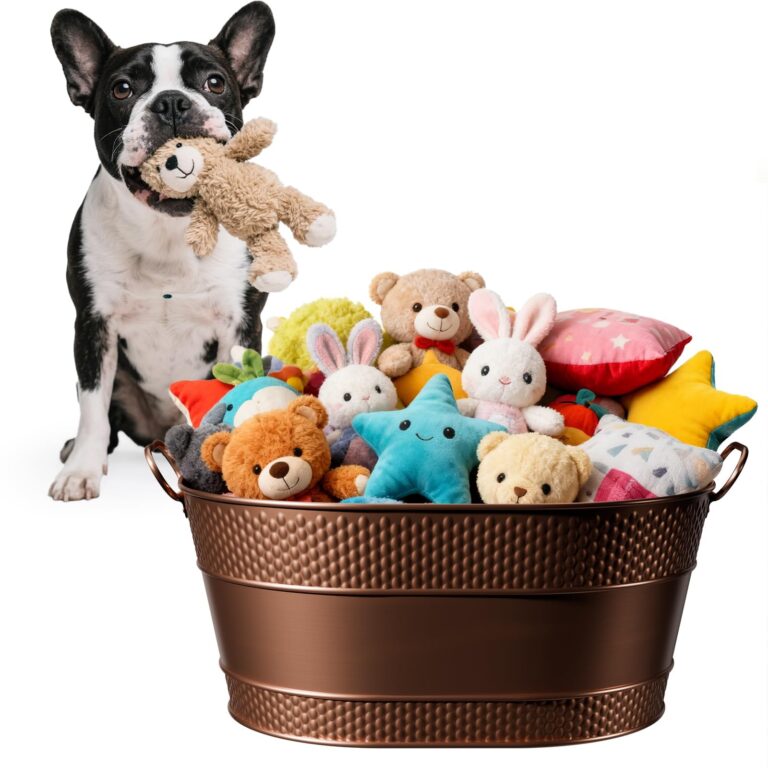
Toys are usually the biggest source of dog clutter. Gather every toy and watch which ones your dog actually reaches for over a day or two. Keep the clear favorites plus a few backups. Toss anything with stuffing hanging out, squeakers that no longer squeak, or rope toys that are frayed down to threads. A smaller toy collection is actually better for your dog — fewer choices mean they play harder with what they have, and cleanup takes seconds instead of minutes. Inspect toys for loose parts or torn seams; damaged toys should never stay in the keep pile.
Pro Tip: Aim to keep about eight to ten toys total. If the number creeps up again, it’s time for another quick audit.
4. Fill One Donation Bag Today

One full bag out the door beats a perfect system on paper.
Shelters and rescues always need supplies, and your extras could make a real difference. Fill one bag with the gently used items from your donate pile: toys your dog ignored, the coat that never quite fit, unopened treats, spare bowls, and blankets in good shape. Call your local shelter first to check what they accept. Dropping the bag off the same day is the secret — it stops the donate pile from slowly migrating back into your closets. Many shelters also accept opened bags of treats and food, so ask before you toss anything edible.
Pro Tip: Keep a permanent “donate” bag in your laundry room so future cast-offs have somewhere to go immediately.
5. Claim One Zone for All Dog Stuff
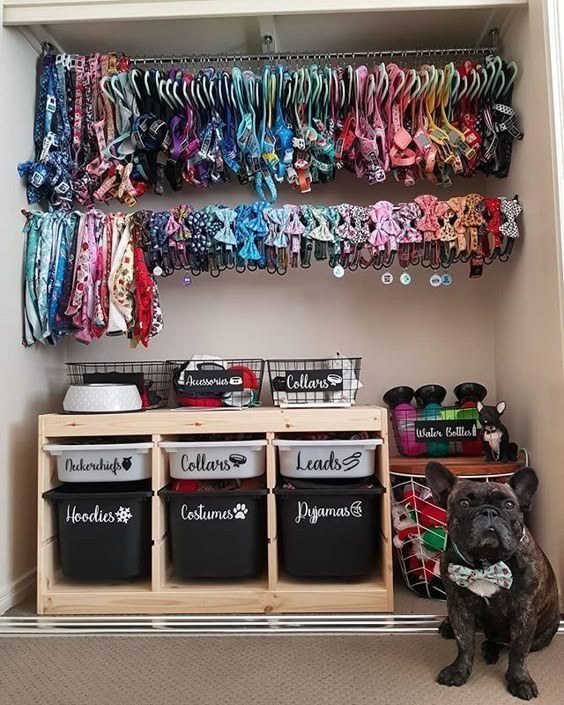
One home base stops supplies from spreading everywhere.
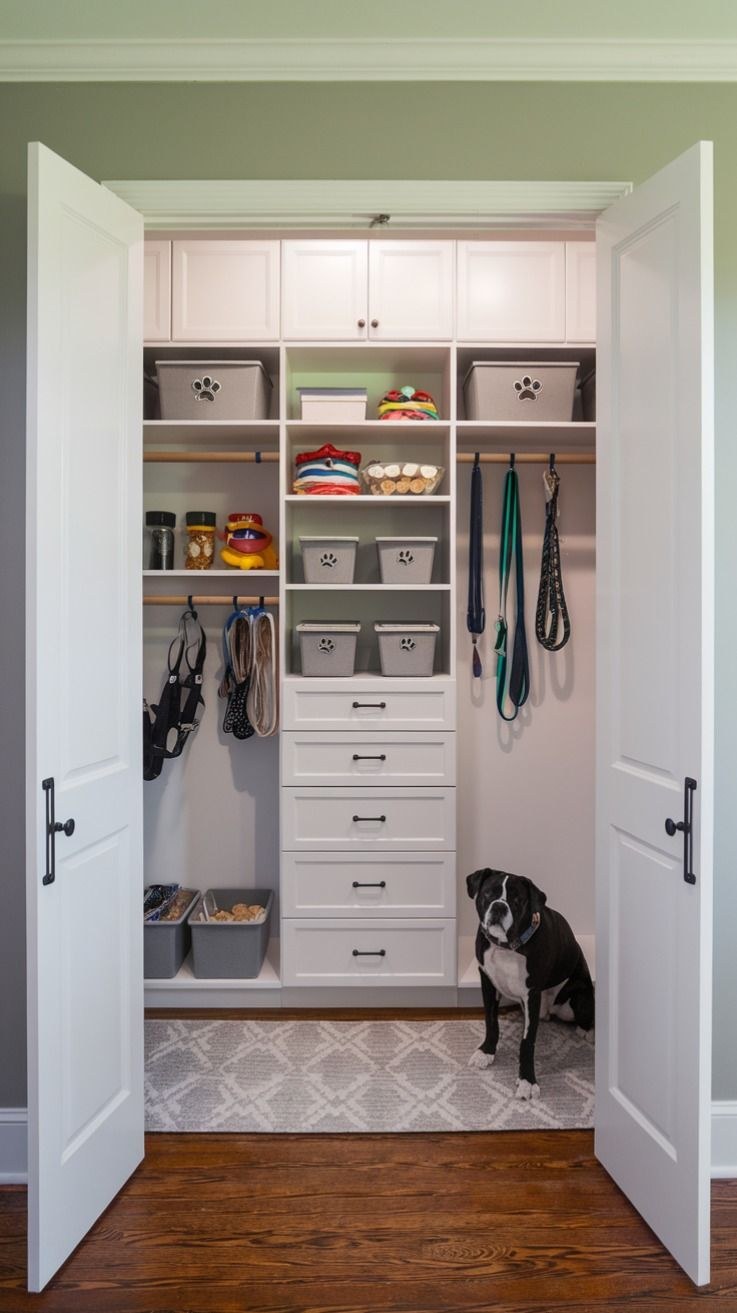
Dog clutter happens when supplies live in five different places. Pick one zone — a closet, a pantry shelf, or a corner of the laundry room — and move every keep item there. This becomes your dog’s home base. When everything lives in one spot, you always know what you have, and buying duplicates stops. If you’re tight on space, these small-home dog supply organization ideas show how to fit a full setup into even the tiniest corner. A single zone also makes it obvious when you are running low on essentials like poop bags or treats.
Pro Tip: Choose a zone near the door you use for walks so daily gear is always within arm’s reach.
6. Contain It in Clear Lidded Bins

Clear bins turn chaos into a system you can actually maintain.
Now that you’ve purged, give every category its own clear bin with a lid. One for treats, one for grooming, one for toys, one for walking gear. Clear bins work best because you can see what’s inside without opening them, which means you’ll actually put things back. Lids keep dust out and stop curious dogs from “reorganizing” for you. Stackable bins are ideal since they use vertical space and keep your zone compact. If you have deep shelves, add small bins inside the big ones so little items like nail clippers don’t get lost.
Pro Tip: Leave one bin empty on purpose — it gives the system room to grow without overflowing.
7. Label Every Bin With a Label Maker
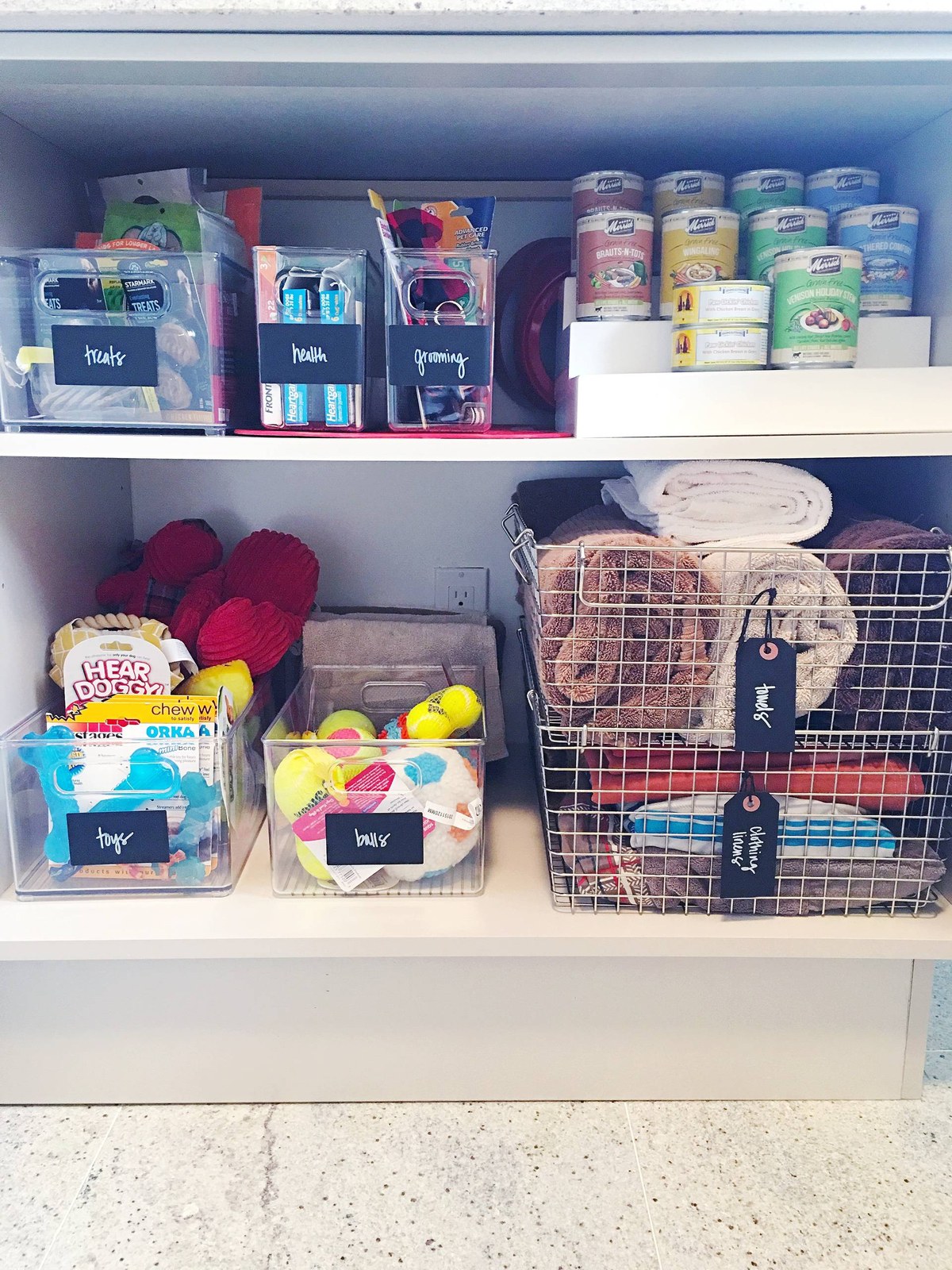
Labels make the system stick for the whole household.
A label maker is the fastest way to make your new system permanent. Label each bin with its category in big, clear words: TREATS, GROOMING, TOYS, WALKING GEAR. Labels do two things — they remind you where things belong, and they let everyone else in the house put things back correctly too. It takes about ten minutes to label a full set of bins, and it instantly makes the whole setup look intentional instead of thrown together. Labels also help pet sitters and dog walkers find things without texting you for directions.
Pro Tip: Use a label maker with waterproof labels for bins that live near doors or in the garage.
8. Start a Toy Rotation Box

Fewer toys out means less mess and a more excited dog.
Here’s the trick that keeps toy clutter from coming back: only keep four or five toys out at a time. Store the rest in a rotation box in your dog zone. Every week or two, swap a few toys. Your dog gets the excitement of “new” toys without you buying anything, and your floors stay clear. This works especially well with puppies and young dogs, who get bored fast but don’t need twenty toys scattered around to stay happy. Dogs often get more excited about a rediscovered toy than a brand-new one, so rotation really works.
Pro Tip: Wash plush toys before they go into the rotation box so every swap feels fresh.
9. Toss Expired and Duplicate Grooming Products

Half-empty bottles multiply faster than anything else.
Grooming supplies are decluttering gold because so much of it is expired or duplicated. Check every bottle: shampoos older than a year, ear cleaners you’ve never opened twice, three half-used bottles of the same detangling spray. Keep one of each type you actually use and toss the rest. Consolidate the keepers into one bin or caddy. You’ll be amazed how much shelf space appears when the duplicates are gone. While you are at it, toss any brush with bent bristles or clippers that have gone dull.
Pro Tip: Write the date you open a new bottle on the cap with a marker so you know when it’s past its prime.
10. Keep Only Daily Items by the Door
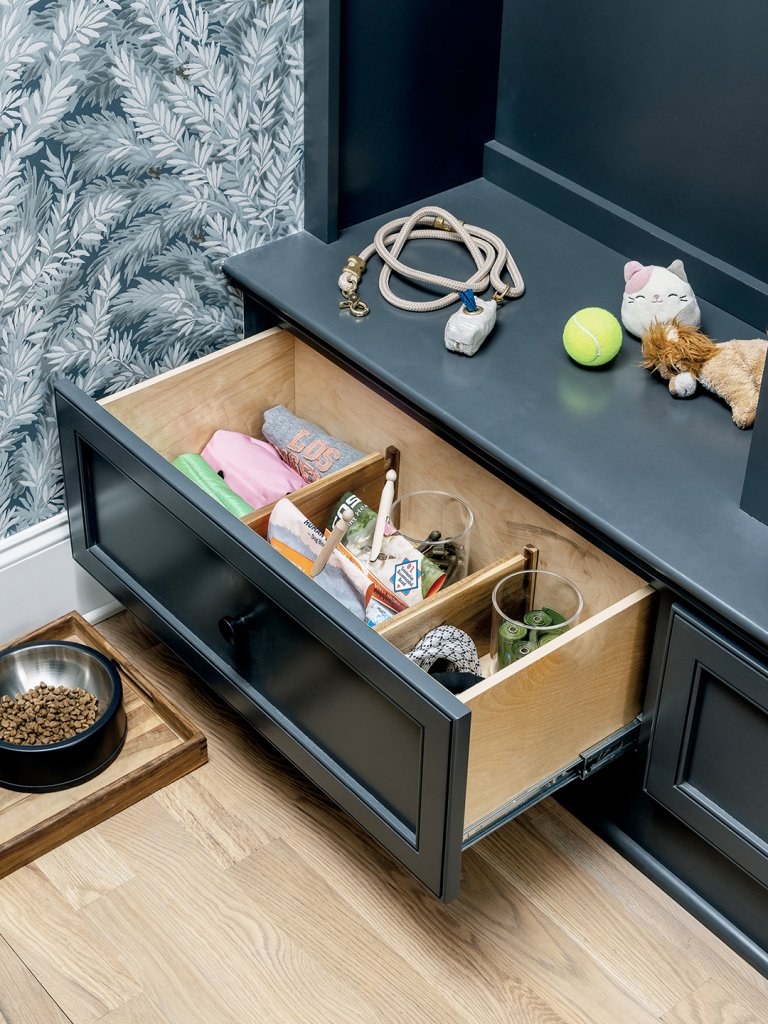
The entryway should hold today’s gear, not the whole collection.
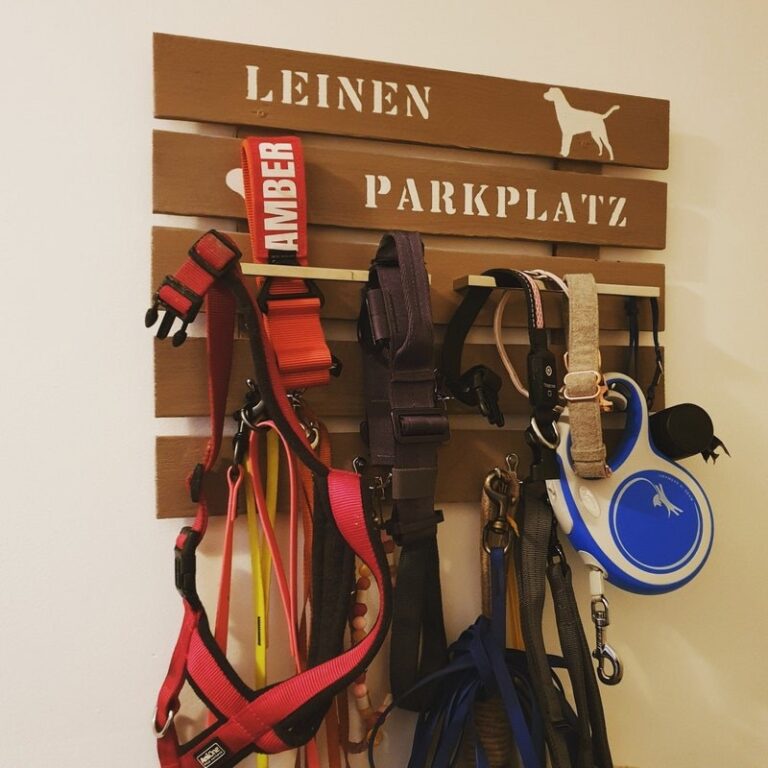
Your entryway is the last place clutter should live, but it’s usually the worst. Strip it down to true daily items: one leash, poop bags, treats for walks, and maybe a towel for muddy paws. Everything else — spare leashes, extra collars, seasonal gear — goes back to your main dog zone. Use a small drawer, tray, or wall hooks so the daily kit has a defined home. When the entryway only holds what you use today, it stays tidy on its own. Add a wall hook for the daily leash.
Pro Tip: Do a 30-second entryway reset every time you come home from a walk — leash hung, treats sealed, done.
Quick Tips to Stay Organized
- Declutter in one focused afternoon — momentum beats perfection.
- Keep the donation bag by the door until you drop it off.
- Photograph your organized setup so you remember the system.
- Do a five-minute toy pickup every evening before bed.
- Revisit your bins every season and purge what your dog ignores.
- When you buy something new, something old has to go.
Frequently Asked Questions
How long does it take to declutter dog supplies?
Most people finish in two to three hours, including sorting, purging, and setting up bins. The sorting step is the longest part — once decisions are made, organizing is quick.
What should I do with dog toys my dog doesn’t play with?
Donate gently used toys to a local shelter or rescue. Toss anything damaged or unsafe. Keeping only favorites actually makes playtime more engaging for your dog.
How do I keep dog supplies from getting messy again?
Give everything a labeled home and do a quick nightly reset. The one-in-one-out rule — something leaves when something new arrives — prevents slow buildup.
Where can I donate used dog supplies?
Animal shelters, rescues, and pet food banks usually accept gently used toys, coats, bowls, and unopened food. Call ahead to confirm what they need most.
Conclusion
Decluttering dog supplies doesn’t have to be a big project. Pull everything out, sort it fast, donate the extras, and contain what’s left in labeled bins. In one afternoon, you’ll go from chaos to a system that practically maintains itself. For the next step, check out these ways to organize dog supplies in a small home and keep the momentum going.