DIY Jewelry Cleaner Recipe For Restoring Shine At Home
Jewelry can lose its sparkle surprisingly quickly. Everyday contact with lotion, perfume, sunscreen, sweat, and dust can leave rings, necklaces, and other favorite pieces looking cloudy or dull.
The good news is that many pieces can be refreshed at home with a very simple cleaning routine. You don’t need an expensive jewelry-cleaning kit to deal with ordinary buildup—what matters most is using a gentle method that’s appropriate for the metal and stones you’re cleaning.
Before reaching for any homemade solution, identify what you’re working with. A cleaning method that’s perfectly fine for one piece can be too aggressive for another.
Want a Better-Trained, Happier Dog?
Get practical guidance for obedience, behavior, and everyday dog training with a collection of helpful training guides designed for dog owners.
This post may contain affiliate links. If you purchase through our link, we may earn a commission at no additional cost to you.
The No-Nonsense Basics: What Actually Works
Most everyday jewelry grime is a combination of oils, lotions, dust, and residue. A mild cleaning solution can loosen that buildup without requiring harsh scrubbing.
The important part is keeping the process gentle and choosing your method based on the material.
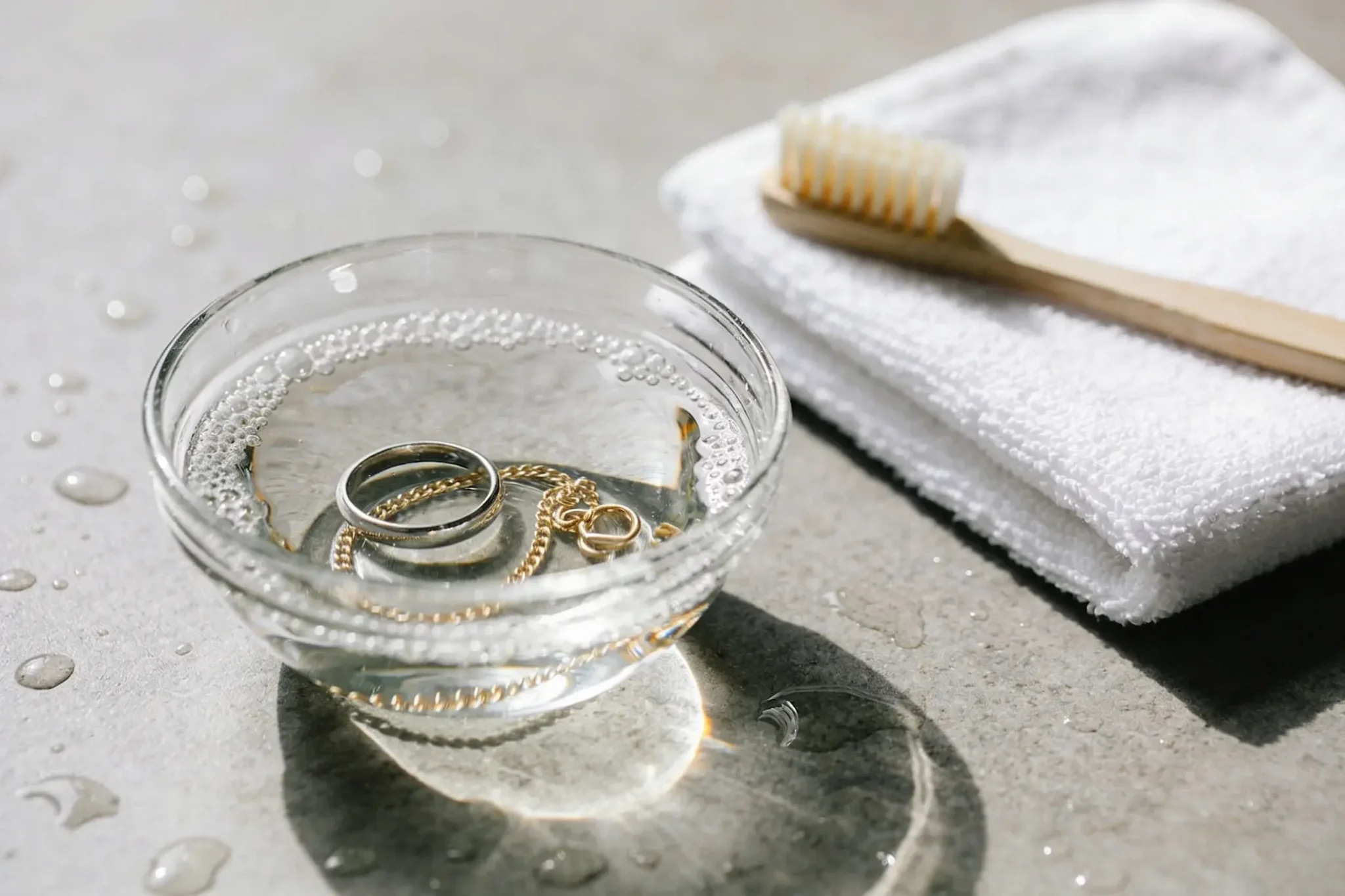
The basic supplies are simple:
- Gentle surfactant: Mild dish soap helps loosen oils, lotion, and everyday residue.
- Warm (not hot) water: Warm water helps with cleaning while avoiding unnecessary heat exposure.
- Soft brush: A soft-bristled toothbrush can reach around prongs, settings, and other small spaces.
- Lint-free cloth: Microfiber or a soft cotton cloth can dry and buff jewelry without aggressive abrasion.
Disclosure: As Amazon Associates, we earn from qualifying purchases at no extra cost to you.
The MVP Recipe: Everyday Sparkle Soak
For many common jewelry pieces, a basic soap-and-water soak is a convenient starting point. The source recommends this method for most metals and durable stones such as diamonds, sapphires, rubies, and moissanite.
Ingredients
- 1 cup warm water
- 1 teaspoon mild dish soap
- Optional: 1 teaspoon household ammonia (for diamonds only; skip for everything else)
Steps
- Combine the warm water and mild dish soap in a small bowl. If you’re cleaning a diamond-only piece and choose to use the optional ammonia, add it carefully. Do not use ammonia with the other stones listed here.
- Place the jewelry into the solution and let it soak for 10–15 minutes. This gives the mixture time to loosen the accumulated grime.
- Use a soft brush to gently clean around the stones, underneath settings, and around the prongs.
- Rinse the piece with lukewarm water over a strainer so it doesn’t accidentally disappear down the drain.
- Pat the jewelry dry using a lint-free cloth and allow it to completely air-dry before wearing it.
The Baking Soda Paste: For Tarnished Sterling Silver
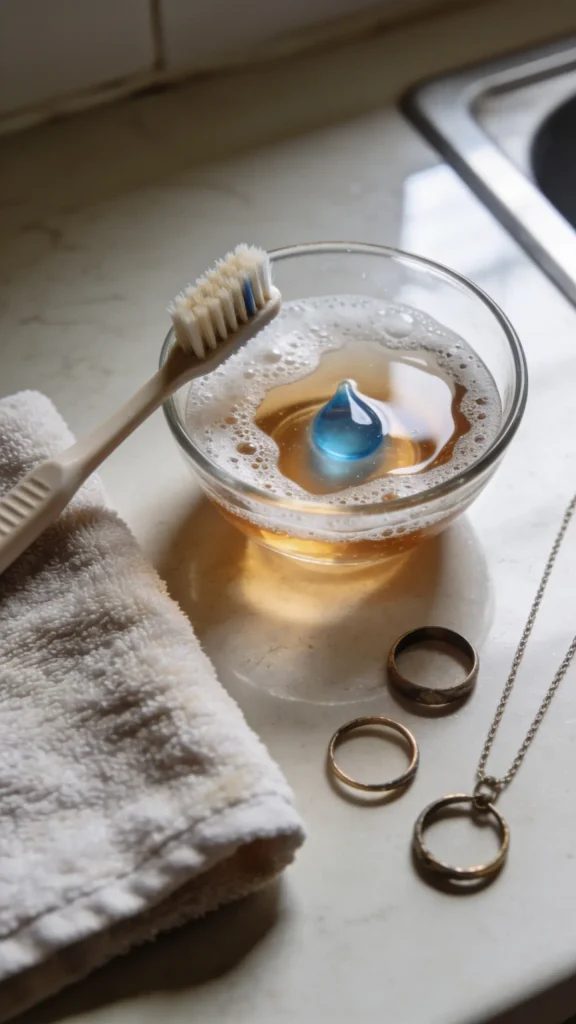
When plain sterling silver has developed a dull or tarnished appearance, a simple baking soda paste can be used on the metal itself.
Ingredients
- 2 tablespoons baking soda
- 1 tablespoon water (add drops until it’s a spreadable paste)
Steps
- Combine the baking soda and water until you have a soft paste.
- Apply it using a soft cloth. Keep the paste away from gemstones, as this method is intended for the metal.
- Work gently in small circular motions instead of applying heavy pressure.
- Rinse the piece thoroughly and dry it completely.
- Finish by buffing with a clean cloth to bring back additional shine.
Quick Silver De-Tarnish (Foil Method)
This method is intended for plain silver pieces such as simple chains. The source recommends skipping it when the jewelry contains gemstones, intentional oxidation, or delicate finishes.
- Place aluminum foil inside a bowl with the shiny side facing upward.
- Add 1 cup hot water, 1 tablespoon baking soda, and 1 tablespoon salt.
- Put the silver into the solution so that it makes contact with the foil.
- Allow it to sit for 2–5 minutes.
- Remove the jewelry, rinse thoroughly, and dry it.
Gold, Gold-Filled, And Gold-Plated: Handle With Care
Different gold finishes don’t all respond to cleaning in exactly the same way.
- Solid gold and gold-filled: The basic soap soak can be used, followed by gentle brushing.
- Gold-plated: Be much more careful. Avoid abrasive products and stick with the soap solution. Dab and wipe rather than aggressively scrubbing, since excessive friction can wear away the plating.
Pro Tip: Bring Back Luster
Once the jewelry has been cleaned and dried, use a clean microfiber cloth to gently buff the surface.
This small finishing step can restore some of the shine without adding another cleaning product.
Tricky Stones Cheat Sheet (So You Don’t Cry Later)
Some gemstones require significantly more care than durable stones. The safest approach is to avoid automatically treating every piece of jewelry the same way.
- Emerald, opal, pearl, coral, turquoise, lapis, malachite: Avoid ammonia, vinegar, ultrasonic cleaners, and hot water.
- Emeralds: Since they may be oil-filled, use lukewarm water with a small amount of dish soap. Give the piece a quick dip and gently wipe it rather than leaving it submerged.
- Pearls: Use a barely damp cloth with a mild soap solution. Lay the pearls flat while they dry, and never soak pearl strings.
- Soft/porous stones: Keep cleaning extremely gentle. Use only a mild soap-and-water wipe and avoid abrasives, foil methods, and prolonged contact with liquids.
What To Never Use (Seriously, Don’t)
Certain popular household cleaning tricks can cause more harm than good when used on jewelry.
- Toothpaste: Its abrasive particles can scratch metals and some stones.
- Vinegar or lemon juice: These acidic ingredients can be unsuitable for softer stones and certain jewelry finishes.
- Bleach or chlorine: These can affect gold alloys and damage settings. Wearing jewelry in pools is also a poor combination.
- Baking soda on plated pieces or soft stones: Abrasive rubbing can leave microscopic scratches or affect delicate surfaces.
- Boiling water “shock” baths: Sudden temperature changes can potentially damage stones or affect glued settings.
Deep Clean Routine: Quick, Safe, Sparkly
You don’t need an elaborate schedule to keep frequently worn jewelry looking clean. A simple routine is enough.
- Weekly: Give everyday rings a gentle soap soak. Keep the cleaning period around 5–10 minutes, brush lightly, rinse, and dry.
- Monthly: Examine prongs and clasps under a bright light. Check whether anything feels loose or whether you can see unusual gaps. Clicking or visible movement is a reason to have the piece inspected by a jeweler.
- Seasonal: Give your jewelry collection a more complete cleaning and refresh the way you store it. Silver pieces can be stored with anti-tarnish strips, while pearls should receive a gentle wipe and be laid flat to dry.
Storage Hacks
- Store individual pieces in separate soft pouches or compartments to prevent them from rubbing against or tangling with one another.
- Add silica gel packs to help reduce moisture in your storage area.
- For silver jewelry, use anti-tarnish cloths or tabs inside the jewelry box.
Shine Boosters You’ll Actually Use
A few small habits can prevent jewelry from becoming heavily coated with residue in the first place.
- Put jewelry on last: Apply lotion, sunscreen, perfume, and hairspray before putting your jewelry on.
- Take it off first: Remove jewelry before exercising, showering, swimming, or cleaning.
- Hand cream hack: If you’ve already applied hand cream while wearing rings, give the rings a quick wipe afterward.
- Travel tip: A pill organizer can provide separate compartments for small pieces. For necklaces, threading chains through a straw can help reduce tangling.
FAQs
Can I use ultrasonic cleaners at home?
Ultrasonic cleaners can work well for certain jewelry, including some diamonds and plain metals, but they aren’t appropriate for every stone or setting.
They can be unsuitable for softer stones, fracture-filled gemstones, micro-included stones, or pieces where the setting may be vulnerable. If you aren’t certain what your stone or treatment is, the source recommends skipping the ultrasonic cleaner or checking with a jeweler first.
How do I clean antique or heirloom pieces safely?
Start with the gentlest approach: mild soap, water, and a soft brush.
Avoid soaking delicate pieces that contain glued settings or foils behind the stones. For valuable or particularly delicate heirloom jewelry, having a professional jeweler inspect it periodically can help identify loose settings or other problems before cleaning causes damage.
What if my jewelry still looks cloudy after cleaning?
Residue can remain in areas that are difficult to reach, particularly underneath stones and around prongs.
Try repeating the gentle soak and pay closer attention to those hidden areas when brushing. Rinse thoroughly afterward.
If the cloudy appearance remains, the issue may be surface scratches or buildup in the underside of the setting. At that point, professional polishing and inspection may be more appropriate.
Is ammonia safe for all gold and diamonds?
The source recommends ammonia in small amounts for diamonds and solid gold, but not as a universal jewelry cleaner.
Avoid ammonia on plated pieces and colored gemstones. It should also be avoided when dealing with fracture-filled or coated diamonds.
Can I clean pearls with soap?
Yes, but use an extremely gentle approach.
Dampen a soft cloth and use a tiny amount of mild soap, then wipe the pearls with clean water and lay them flat to dry. Do not soak, scrub, or expose them to hot water.
The source also recommends restringing pearls every 1–2 years when they’re worn frequently.
How do I know if a stone is too delicate for these methods?
Treat a stone as delicate when it’s opaque, porous, treated, or otherwise known to require special handling.
Stones such as turquoise, opal, lapis, malachite, coral, and pearl should receive particularly gentle treatment.
If you’re uncertain about a gemstone, avoid experimenting with aggressive methods. Keep contact brief and test only a very small area when appropriate.
Conclusion: Your Sparkle, Your Rules
You can refresh many everyday jewelry pieces without buying an expensive specialty cleaner.
For suitable metals and durable stones, warm water, mild dish soap, a soft brush, and a lint-free cloth can handle ordinary buildup. More delicate gemstones need a different approach, so identifying the material before cleaning is just as important as the cleaning method itself.
Keep the routine gentle, avoid abrasive shortcuts, and store your pieces properly between wears. A little regular care can go a long way toward keeping your favorite jewelry looking bright and polished.