Dog Nook Ideas: 10 Cozy Indoor Corners I Made for My Dog
I started looking for dog nook ideas when my dog kept dragging a blanket to the same quiet corner of the living room. That corner told me what my dog wanted: a defined spot that felt safe, warm, and part of the home, not a bed pushed against a wall as an afterthought. A good nook needs no spare room or big budget, just a clear boundary, a comfortable bed, good airflow, and room for the few things my dog uses each day.
I keep a nook simple: a bed, a washable blanket, one chew toy, and a water bowl nearby but outside the sleeping area. A calm corner helps my dog settle faster when guests arrive. Here are ten indoor corners I have tried, with the sizes, materials, and placement details that made each one work.

Want a Better-Trained, Happier Dog?
Get practical guidance for obedience, behavior, and everyday dog training with a collection of helpful training guides designed for dog owners.
This post may contain affiliate links. If you purchase through our link, we may earn a commission at no additional cost to you.
1. The Under-Stair Nook
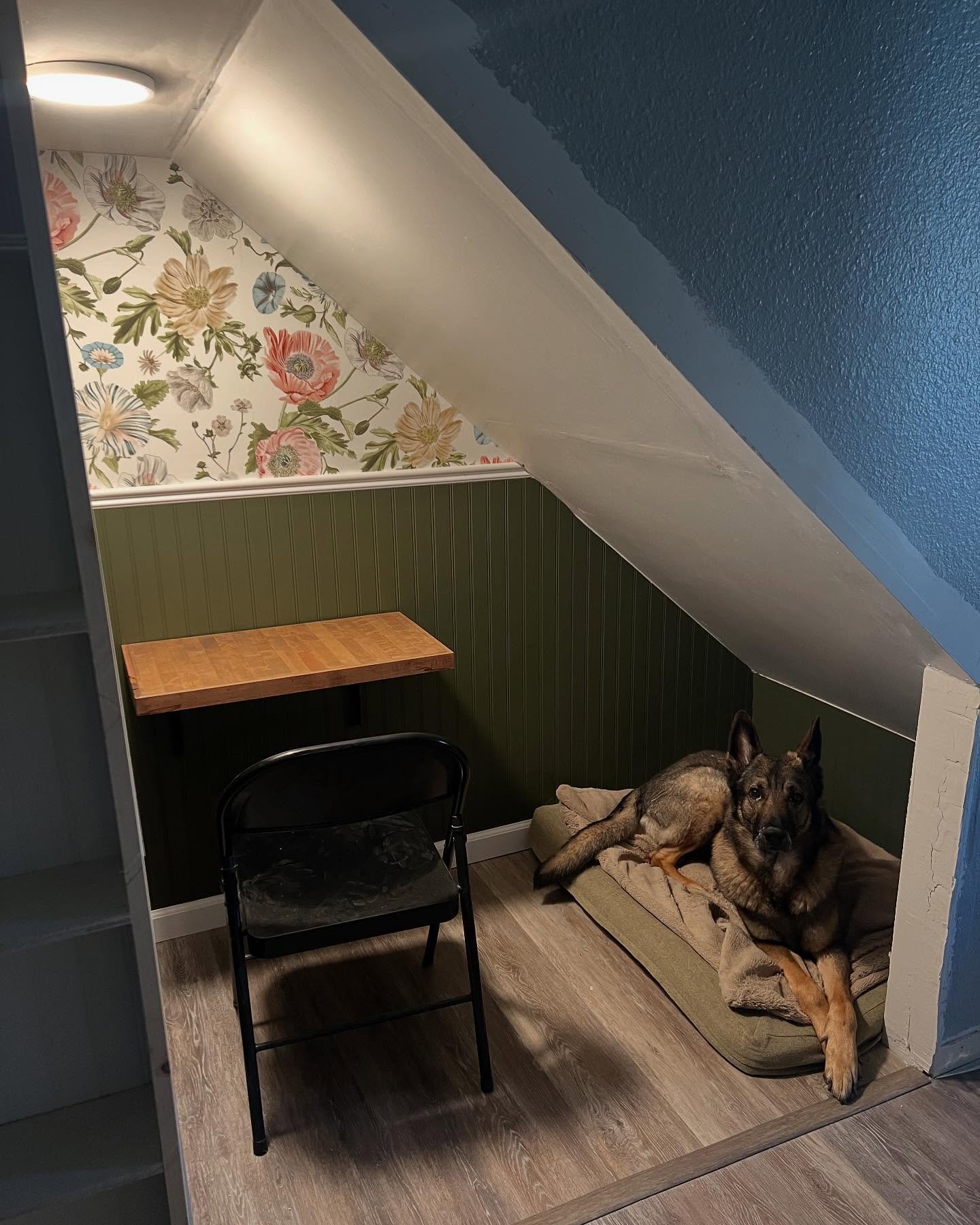
I love an under-stair nook because the shape already feels like a den. I measure height and depth first, so my dog can stand, turn around, and stretch out fully, with a few inches of clear space above the bed. I keep the front open for airflow and never use a locking door. I add a low, washable mat, a bed that fits without bunching, light paint, and a small wall light with the cord hidden behind trim and out of reach. These under-stair dog room ideas helped me plan this tight triangle, and I keep a toy basket just outside, so the sleeping space stays clear.
2. The Laundry and Mudroom Feeding Nook
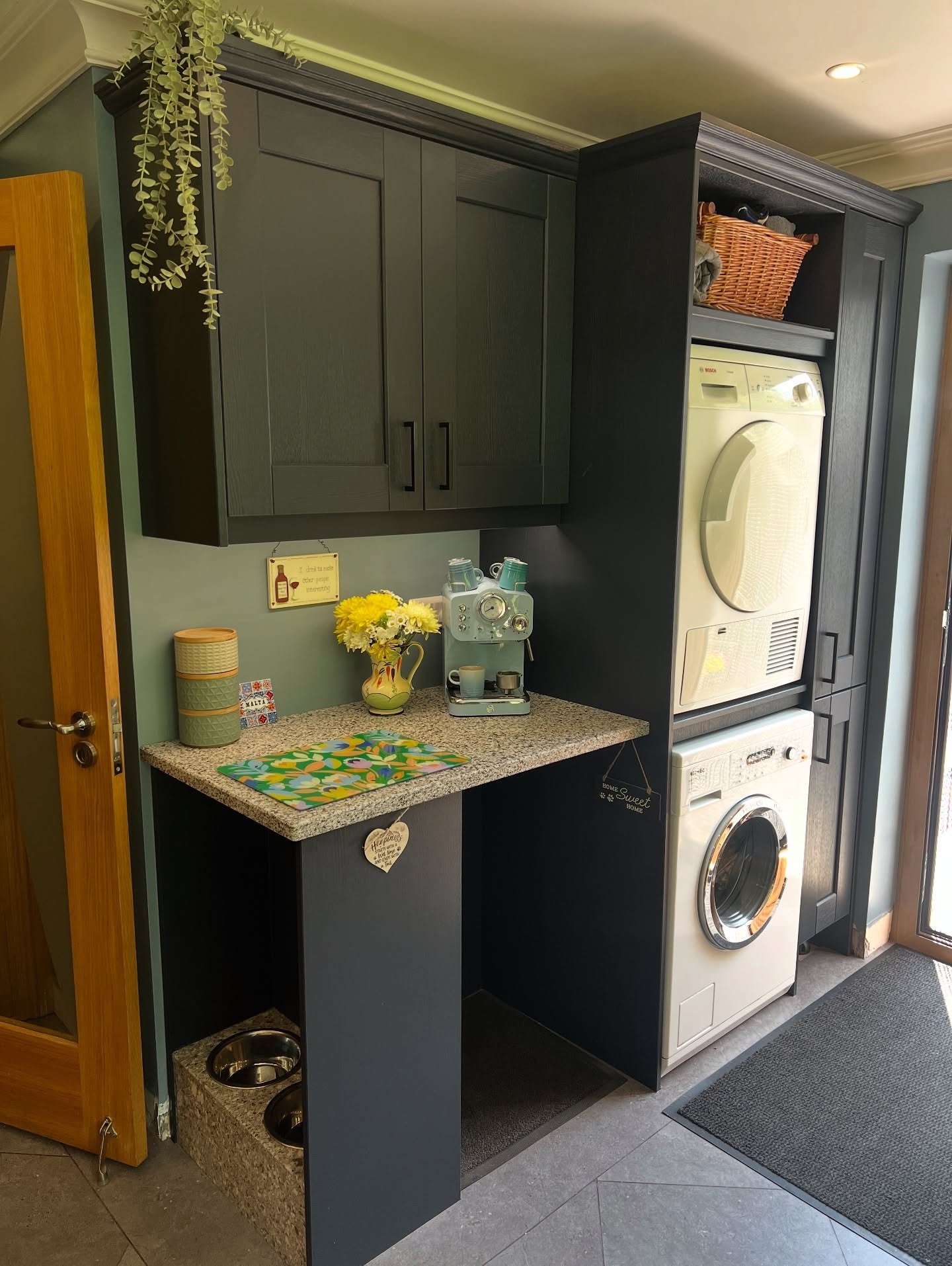
I use the laundry room for a feeding nook when the kitchen feels too busy. I set raised bowls into a low platform of sealed wood or sturdy plastic, with rims near my dog’s chest height, so my dog does not hunch over a floor bowl. I wipe the platform after meals, keep food in a sealed bin on a shelf above, and store cleaning supplies in a closed cabinet. A washable rug catches spills. These dog laundry room organization ideas helped me plan hooks, bins, and a layout that keeps the floor clear.
📸 Photo credit: Instagram @just_shelby765
3. The Fireplace Corner Nook
I place a fireplace nook beside the hearth, never directly in front of it, with a clear gap between the bed and the fireplace opening. I use a thick mat under a low bolster bed with a washable cover, and I keep blankets and toys away from the hearth edge. I use a sturdy screen when the fire is lit, and I never leave an open flame or portable heater running unattended near the nook.
4. The Elevated Cot Nook
I reach for an elevated cot when the floor feels cold or drafty. A cot lifts my dog a few inches off the ground, lets air move underneath, and stays cleaner than a bed placed straight on carpet. I choose a strong metal or hardwood frame with a taut, washable fabric top, check the weight limit, and test that the frame stays steady when my dog steps on and off. I place it against a wall, away from walkways. A solid basic cot costs roughly $30 to $80, and I replace the fabric top when it sags.
📸 Photo credit: Instagram @enhanced.kitchens
5. The Sofa-Corner Nook With Washable Covers
I built a sofa-corner nook for a dog that always wants to stay close to me. I place a low bed where the sofa meets the wall, so two sides feel sheltered and one side stays open to the room. I use firm foam that holds its shape, sized so my dog can lie flat without hanging over the edge, with a removable, machine-washable cover plus a spare ready to swap in. I avoid loose buttons, ribbons, or stuffing a chewer could pull apart. For calm colors, I borrow ideas from these cozy dog room ideas and keep the palette simple.
6. The Teepee and Tent Nook
I use a teepee when I want a den I can move from room to room. I look for smooth wood poles with no sharp ends, covered in sturdy cotton canvas I can spot-clean, set in a corner with the opening facing the room so my dog can see me and still feel tucked away. I place a cushion inside that fills the floor without pushing against the fabric walls, and I measure the opening so my dog walks in without ducking. I keep the teepee away from cords, lamps, and houseplants, and I remove loose ties or tassels.

📸 Photo credit: pexels
7. The Wicker and Raised-Bed Nook by a Window
I place a wicker basket bed or raised wooden bed beside a window for a dog that loves to watch the street. I choose a deep cushion with a washable liner, set a short step back from the glass so my dog does not press against a cold or sun-heated pane, and lower a blind during strong afternoon sun so the bed does not overheat. I check wicker often for broken strands or sharp edges and switch to solid wood or metal if my dog chews it. I keep houseplants away unless I have confirmed each one is dog-safe.
8. The Window-Seat Nook With Hidden Dens Underneath
I love a window seat that does double duty: a reading cushion on top and a hidden den underneath for my dog. I measure the opening so my dog can walk in freely, leave ventilation gaps at the back or sides, and never add a locking door, so fresh air moves through and my dog can always walk out. I line the floor with a thin, washable pad and a fitted bed, run any light cord outside the den and high out of reach, and use closed bins for blankets and grooming tools. I planned the clearances with this guide on how to design built-in dog beds that save floor space.

📸 Photo credit: pexels
9. The Closet-Turned-Nook
I turn a spare closet into a nook only after I remove the door or replace it with a wide, open frame. I never keep my dog in a small, closed closet. I remove low shelves, paint the inside a light color, add a low bed and washable mat, and place a small wall light high up with cords hidden behind trim. I use the upper space for closed bins of blankets and towels, keep the floor clear except for the bed and one toy, and check airflow on warm days. For a polished finish matched to the room, I take cues from these stylish indoor dog house ideas and keep trim and colors consistent.
10. The Hallway and Entry Nook With Storage
I use a hallway nook for a dog that greets everyone at the door. I choose a shallow spot that does not block the walkway, with a low bed against one wall and a narrow bench or hooks on the other side, set back from the door swing so my dog is not startled each time it opens. I store the leash, harness, waste bags, and towels in a closed basket at my height, add a grippy, washable rug, and wipe paws before my dog settles on the bed. A slim bench with hidden storage costs roughly $40 to $120 for a basic bench and bed setup, depending on materials.

📸 Photo credit: pexels
How I Pick the Right Corner
I walk the house at different times of day before I choose a corner. I check traffic first: a nook beside a busy doorway stays empty, while a quiet corner near the room where I spend the most time gets used daily. I watch light next, aiming for soft morning light and afternoon shade, never a harsh sun patch with no way to move away from the heat. I kneel at floor level to feel for drafts, and I move the bed away from radiators, vents, and noisy appliances.
I also check safety in every candidate corner: good airflow, no exposed cords, no small chewable objects, no toxic plants within reach, and a clear path out. My rule for any enclosed nook is simple: it must stay open, aired, and easy to leave, with chew-safe materials, cords and lights out of reach, washable bedding, and no open flame or heater left unattended nearby.
Frequently Asked Questions
How big should a dog nook be?
I size a nook so my dog can stand up, turn around, and stretch out flat without touching the walls. I measure my dog lying down from nose to tail, then add several inches on each side. A snug feel can comfort some dogs, but a tight space that traps heat will stay unused.
Can I put a dog nook in a small apartment?
Yes. I use corners that already exist: the end of a sofa, under a window seat, or a short stretch of hallway wall. I choose a low bed and vertical storage, like wall hooks and a slim basket, so the nook adds comfort without taking over the floor.
What materials work best for a dog nook?
I use sealed wood, sturdy metal, washable cotton or canvas, and firm foam that holds its shape. I avoid loose stuffing, fragile wicker for heavy chewers, and fabrics that trap heat. I check for sharp edges and loose threads, and I wash covers often.
How do I keep a nook from smelling?
I wash the bed cover and blankets often, wipe the frame and floor under the bed, and keep food bowls out of the sleeping area. I air the nook daily by leaving the front open.
Should a dog nook have a door?
I leave the front open. A door can trap heat, block airflow, and make a dog feel stuck. If I need a short-term boundary, I use a wide, open gate, and I remove it as soon as I can.
Final Thoughts
I keep coming back to one simple test: does my dog choose the nook without being led there? When the corner has the right light, warmth, airflow, and a clean, soft bed, my dog settles in on its own. I start with one corner, keep it simple, and adjust the bed, light, and storage until the spot feels like a natural part of the home.