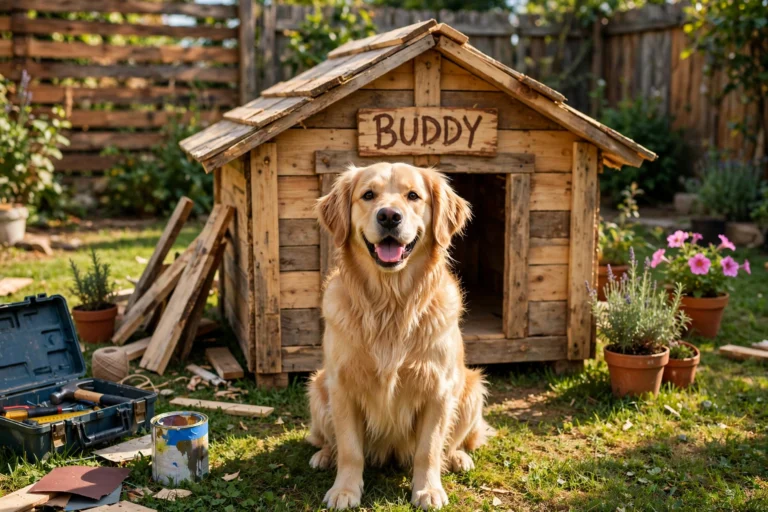
DIY Dog Playground: 8 Backyard Builds I Made for Play and Exercise
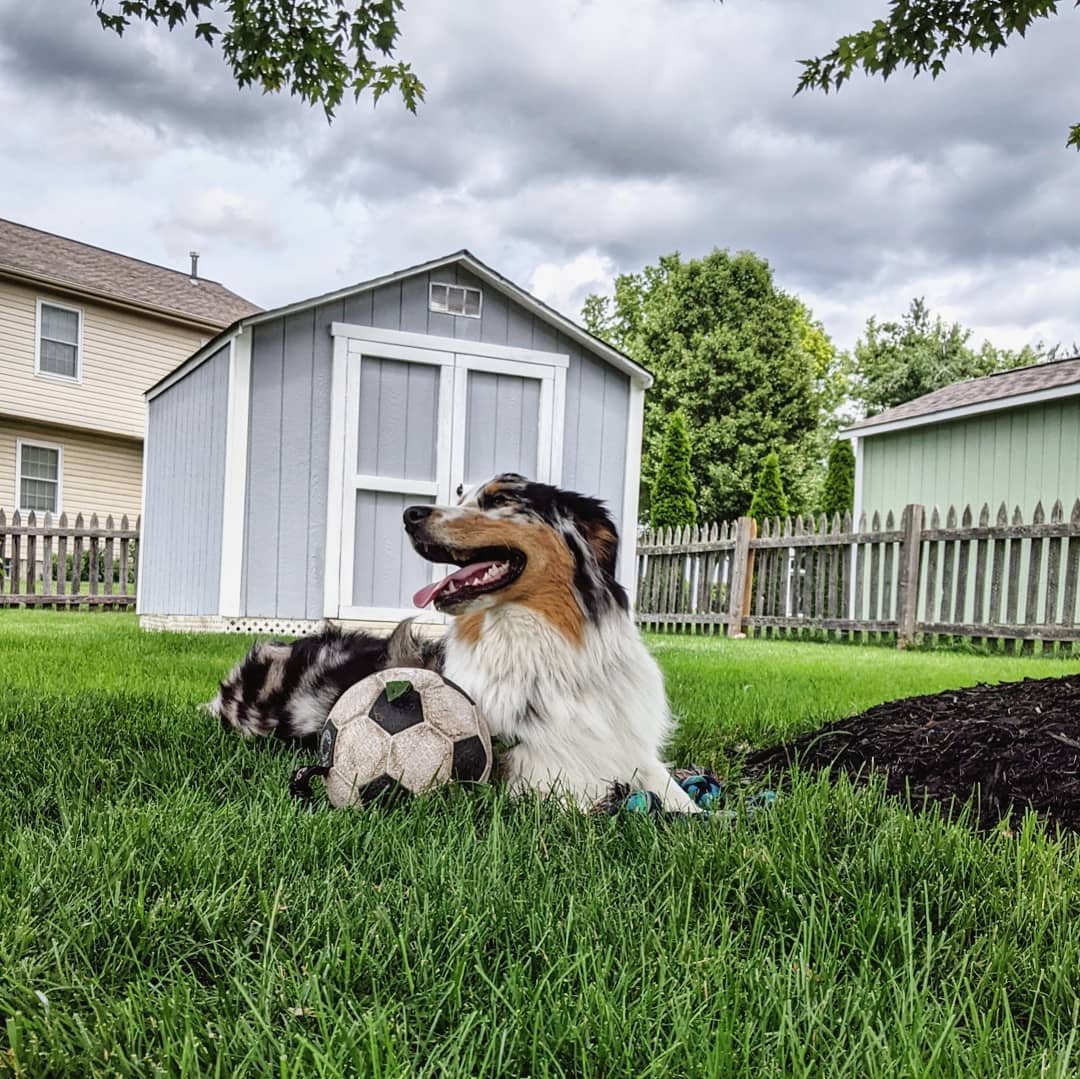
I wanted a backyard dog playground that gave my dog a real job outside, not just grass to pace around. I started with one corner, added one build at a time, and watched what my dog loved. If a build did not suit her, I moved it, lowered it, or removed it.
First, I sketched my yard, marking sun, shade, the gate, and my dog’s usual path. I put fast builds away from the fence and kept a rest spot near the house. That sketch helped when I planned my outdoor dog area. I kept water and shade close to every build.
Want a Better-Trained, Happier Dog?
Get practical guidance for obedience, behavior, and everyday dog training with a collection of helpful training guides designed for dog owners.
This post may contain affiliate links. If you purchase through our link, we may earn a commission at no additional cost to you.
1. Ball and Toy Station With a Defined Border
Without a border, balls rolled under the fence and toys spread all over my lawn. A border taught my dog where the game started.
Materials: landscape timbers or 2 x 4 boards, landscape stakes, a rubber mat or flat pavers, a low basket, balls, and rope toys.
- Pick a flat spot, at least 8 feet by 6 feet.
- Lay the timbers in a rectangle; stake each corner.
- Set the mat or pavers inside for steady footing.
- Put the basket at one end, toys facing out.
- Sand rough ends smooth; check for nails.
Difficulty: Easy, under an hour. I check the stakes weekly, since digging loosens them.
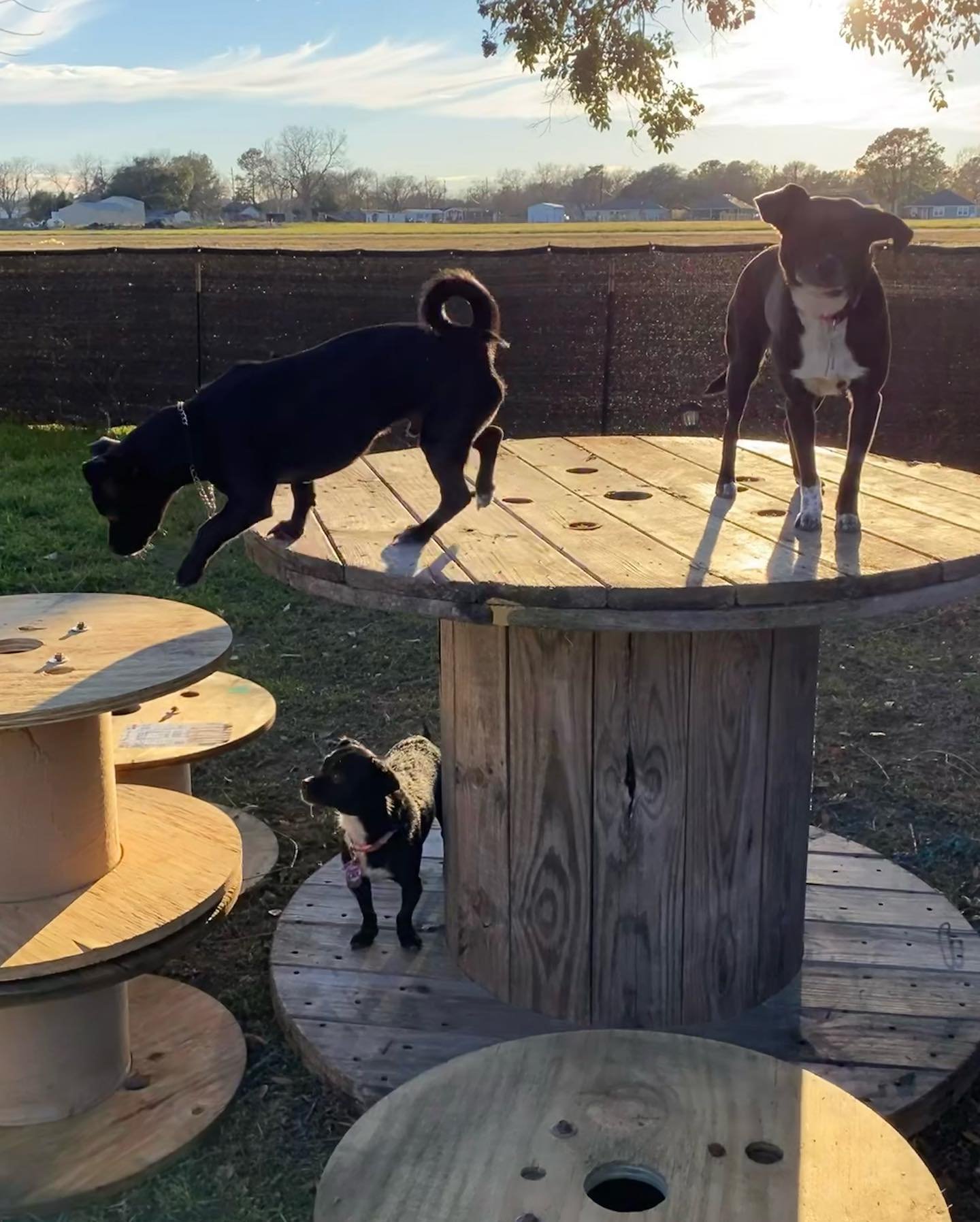
2. Cable-Spool Climbing Station, Sanded, Sealed, and Anchored
A wooden cable spool makes a fine low climbing platform. My dog steps up, pauses, and steps down. I never use a spool without work first, since splinters, nails, and wobble turn fun into risk.
Materials: one solid wooden cable spool, 24 to 30 inches across, sandpaper, pet-safe exterior sealer, a non-slip mat, ground anchors or L-brackets, and screws.
- Pull every nail and staple; sand the top, rim, and post smooth.
- Apply two thin coats of sealer; let it dry fully, away from my dog.
- Fix a non-slip mat to the top for grip.
- Anchor the spool on flat ground so it cannot rock or roll.
- Test it with my own weight first, rocking it from each side.
Difficulty: Medium. Sanding takes patience, and sealing needs dry weather. I keep the height low and never stack spools.
📸 Photo credit: Instagram @jasperandcerise
3. Toy Post With a Hanging Ring and Rope Ball
This build suits a dog that loves to tug and grab. A sturdy post holds a ring at nose height and a rope ball low enough to grab without a hard leap.
Materials: one 4 x 4 post, 5 feet long, quick-set concrete, a heavy-duty screw eye, strong rope, a rubber ring, a rope ball, and gravel.
- Dig an 18-inch hole; add 3 inches of gravel; set the post straight.
- Pour concrete around the base; brace it; let it set overnight.
- Sand the post smooth, top to bottom.
- Screw in the eye and test it with a firm pull.
- Hang the ring and ball so each swings free above the ground.
Difficulty: Medium. I check the rope each session for fraying and replace it at the first sign of wear. I supervise every tug game.
4. Sprint Lane and Running Corridor
Some dogs need a straight run to burn energy before they can focus. I made a lane along the longest straight edge of my yard, with a clear start, a wide turn, and nothing sharp between.
Materials: garden edging or stakes with rope, a flat surface at least 30 feet long and 4 feet wide, a flat paver, and a cone or sturdy bucket.
- Walk the lane; pick up stones, sticks, and broken edging.
- Mark each side with low edging or rope, clear but trip-free.
- Place the start paver and turn marker, with room to turn wide.
- Fill dips with topsoil so paws land flat at speed.
- Add a water bowl and rest mat past the start line.
Difficulty: Easy, mostly clearing and marking. I keep sessions short. I shaped the lane from dog run ideas for a backyard or side yard, matched to my space.
📸 Photo credit: Instagram @bodescaandmizzle
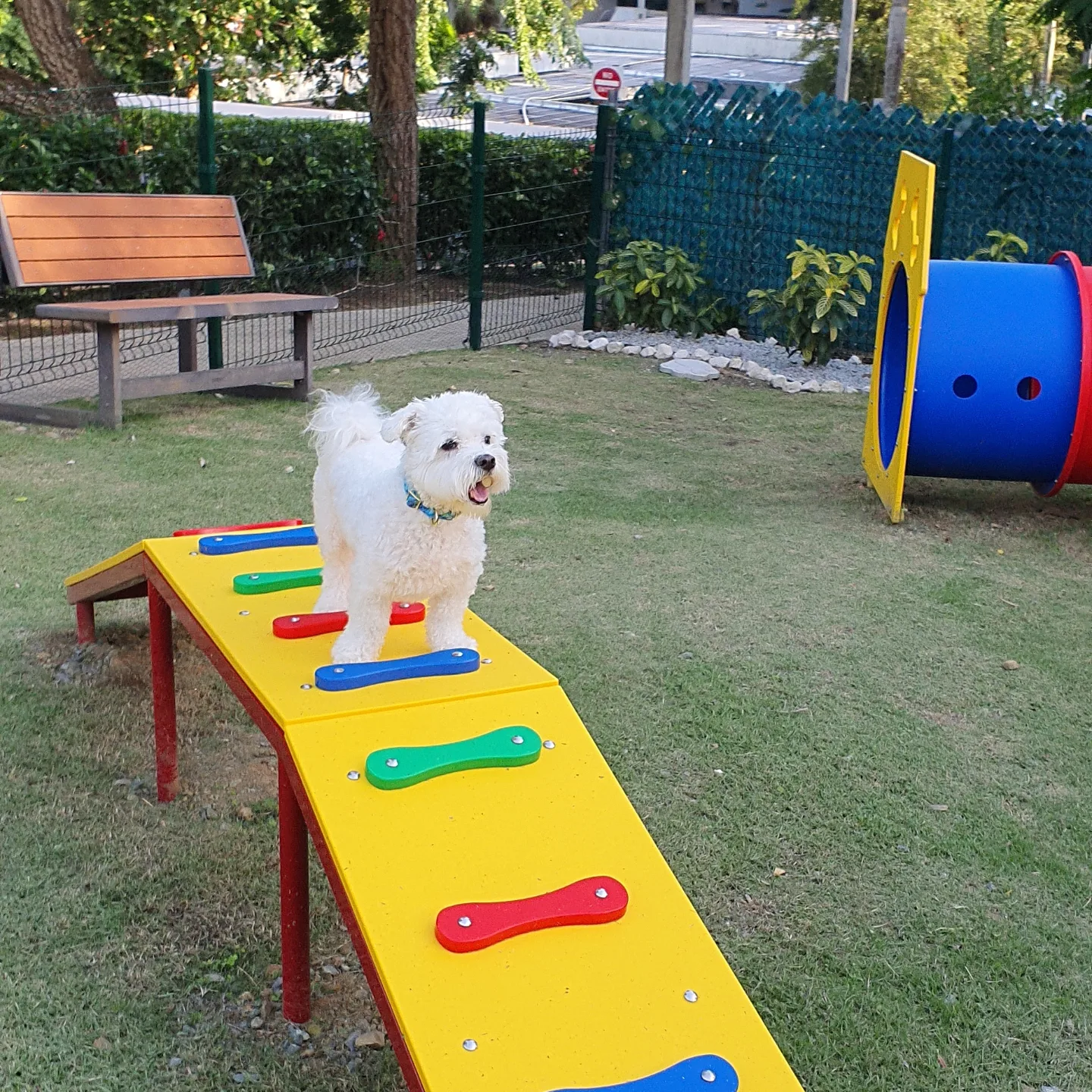
5. Tunnel Run, Pipe or Fabric Tunnel
A tunnel adds mystery to a run. My dog ducks in, disappears for a second, and pops out wagging hard. I started with fabric, then added a rigid pipe tunnel once she grew confident.
Materials: a pop-up fabric tunnel at least 18 inches wide, or smooth rigid pipe 18 to 24 inches across and 4 to 6 feet long, sandbags or stakes, and mats for each end.
- Set the tunnel straight on flat ground, with no bend or slope.
- Anchor each end so it cannot roll or slide.
- Check inside by hand for rough seams or sharp edges.
- Place a mat at each end for grip.
- Add a gentle curve only after straight runs feel easy.
Difficulty: Easy for fabric, medium for pipe. I sand pipe ends smooth. I never force my dog through; I lure her with treats and let her back out any time. Shade helps, since a tube warms fast in sun.
6. Weave Poles and a Low Jump From PVC
This pair makes a small agility course on a small budget. Poles teach focus and body control; a low jump teaches a tidy hop and soft landing. I keep both low, since fun matters more than speed.
Materials: six 1-inch PVC pipes, each 36 inches tall, six end caps, a PVC base frame with T-fittings, two jump uprights, one loose crossbar, and bright tape.
- Cut poles to equal height; cap each top.
- Space poles 20 to 24 inches apart in a straight line.
- Fix each pole to a wide base; firm, but able to tip if hit hard.
- Set jump uprights 24 inches apart; crossbar just 4 to 6 inches high.
- Wrap poles and crossbar in bright tape for visibility.
Difficulty: Medium. I teach one pole at a time, treat in hand, and raise the jump slowly. The crossbar rests loose, so it falls free if a paw catches it. I followed DIY dog obstacle course ideas for spacing and training order.
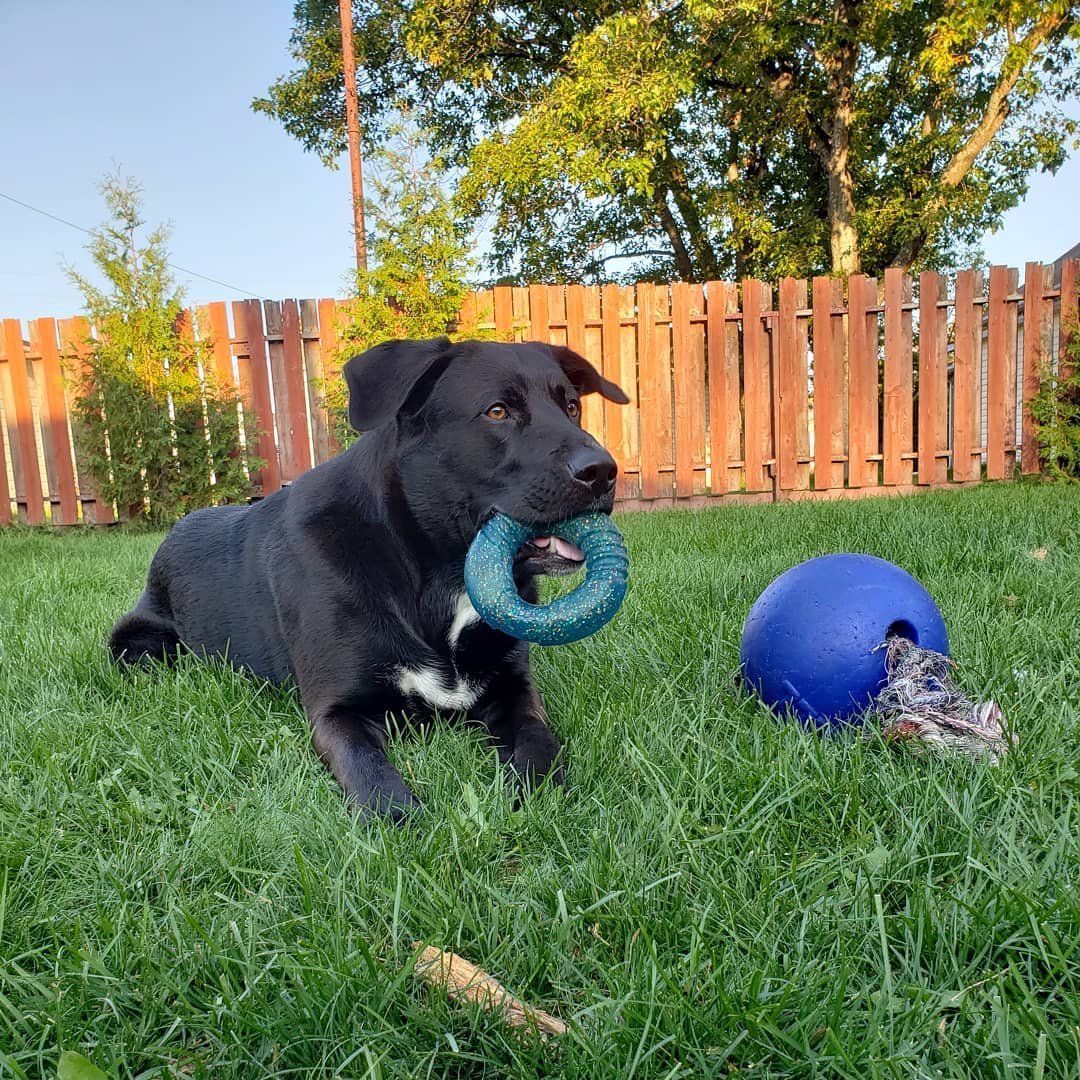
📸 Photo credit: Instagram @northern_furkids
7. Digging Pit for Dogs That Love to Dig
My dog dug at my lawn until I gave digging a legal home. A pit saved my flower beds and gave her a job she loved: dig, bury a toy, find it, settle happy.
Materials: four timbers or 2 x 6 boards for a 4-foot by 4-foot frame, stakes, landscape fabric, 8 to 10 cubic feet of clean play sand or loose topsoil, and sturdy toys.
- Pick a partly shaded spot with good drainage, away from the fence.
- Build the frame; stake each corner; sand top edges smooth.
- Lay fabric inside to slow weeds while water drains.
- Fill 10 to 12 inches deep; rake level.
- Bury one toy just under the surface for a first-visit win.
Difficulty: Easy, mainly hauling sand. I dampen the pit on dry days, rake it after play, and check weekly for glass or sharp stones. I keep toys in one basket, the habit I use to keep dog stuff tidy and organized after outdoor play.
8. Balance Beam and Pause Platform
A beam teaches slow, careful feet; a pause platform teaches a calm stop. I use them at the end of a run. The beam sits low, wide, and steady.
Materials: one 2 x 8 board, 8 feet long, two low supports from 2 x 4 offcuts or concrete blocks, non-slip tread tape, screws, sandpaper, and a 24-inch-square platform.
- Sand the beam all over; round the ends.
- Set supports 6 feet apart; screw the beam down firmly.
- Keep the beam 4 to 6 inches high; add tread tape on top.
- Place the platform at one end, level, firm, and non-slip.
- Walk the beam myself first, pressing hard in the middle.
Difficulty: Easy to medium. I start with my dog beside the beam, then one paw on, then a slow crossing with treats ahead. If she steps off, I praise the try and start again.
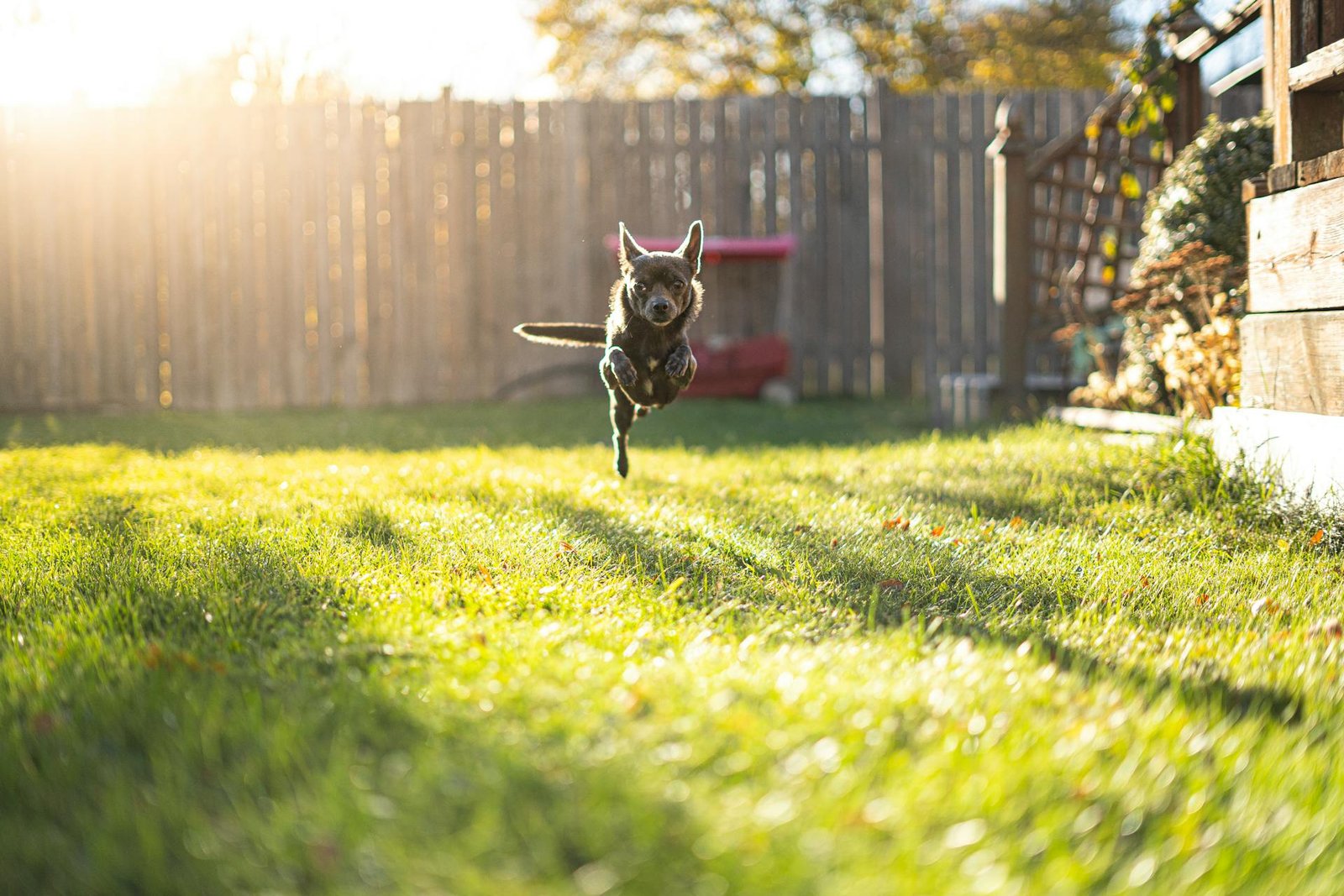
📸 Photo credit: pexels
Safety Checks I Run Before Playtime
I run the same short check before every session. Wood shifts, screws loosen, and rain changes the ground. Two minutes keeps a fun build safe.
I shake each build. Tall items must stay firm, with anchors holding. I sand rough spots at once, check for splinters, cracks, and loose screws, and check non-slip surfaces on the spool, beam, and platform. I tug each rope, ring, and toy, and remove anything frayed, cracked, or small enough to swallow.
I confirm shade over a rest spot and fresh water close by. On hot days I play morning or evening, in short sessions. I placed my rest mat where shade lasts longest, using dog house ideas with shade for placement. I supervise throughout and stop if my dog pants hard or lies down.
Frequently Asked Questions
How much space do I need for a backyard dog playground?
I started with a corner about 10 feet by 12 feet, then added builds as I learned what my dog used most. Small yards still work with a toy station, tunnel, and digging pit close together.
What is the safest height for a climbing platform or balance beam?
I keep first builds low: a spool under 30 inches, a beam just 4 to 6 inches high. I raise a build only after many confident sessions at the low height.
How do I keep wood safe for outdoor dog play?
I sand every surface smooth, seal it with pet-safe exterior sealer, and let it dry fully before play. I choose plain lumber with a pet-safe finish for surfaces my dog mouths, and I re-check the seal each season.
Can I build a dog playground on a budget?
Yes. My cheapest builds used rope, stakes, PVC, and sand, each costing roughly in the tens of dollars for new materials. I reused clean offcuts and a spool I already had. I spent most on concrete and non-slip mats.
How do I teach a nervous dog to use a tunnel or weave poles?
I go slow, with treats and praise at each small step. For a tunnel, I start short and straight, treat just inside. For poles, I guide one gap at a time. I let her walk away any time and end with a familiar win, like fetch.
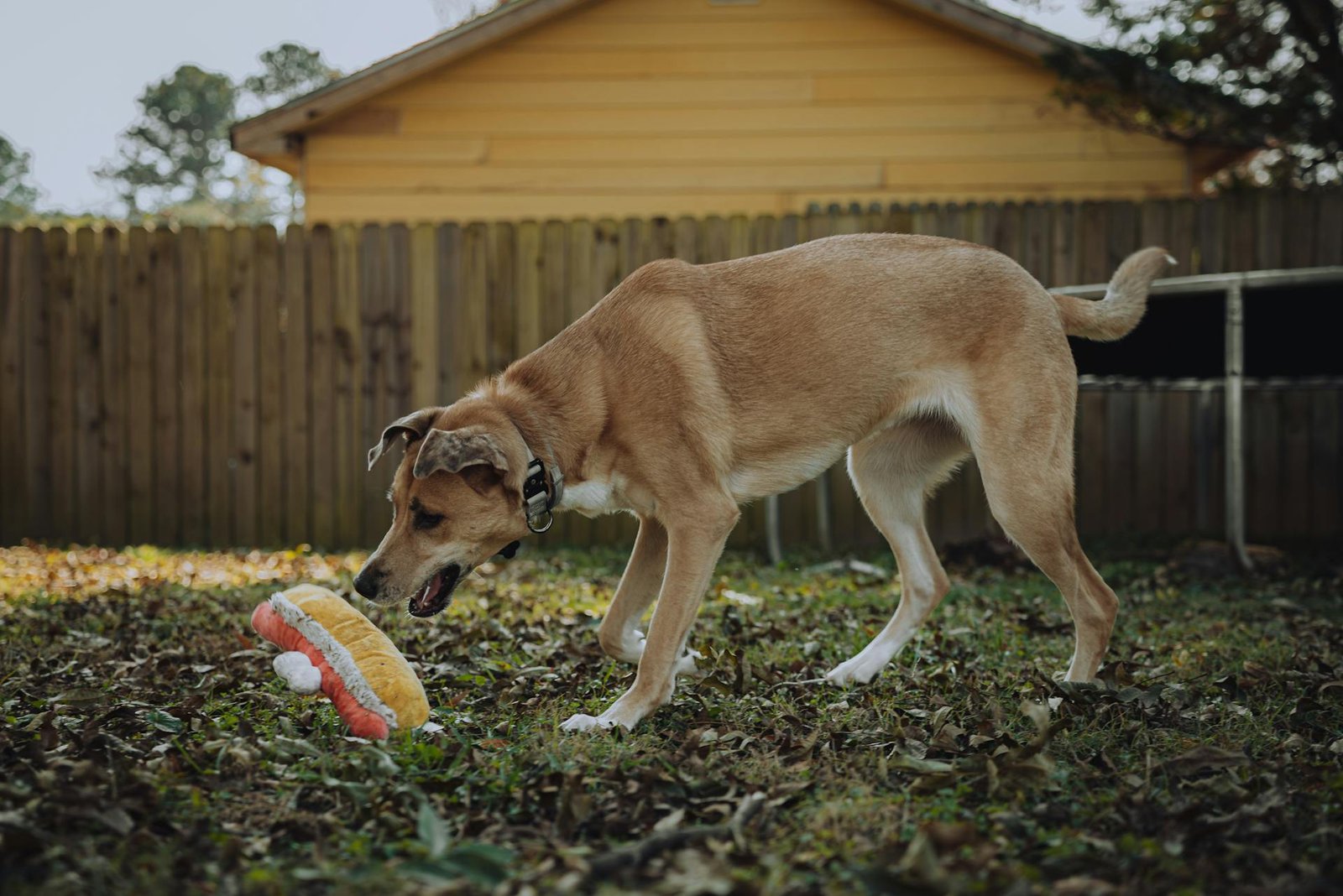
📸 Photo credit: pexels
Final Thoughts
My playground needed no big budget or perfect yard, just sturdy builds, low heights, smooth wood, and attention to what my dog liked. Start with the toy station or digging pit, add a tunnel or beam, and let your dog show you what to build next. Check each build, keep water and shade close, and stop while the fun still feels good.