Dog Pool Ideas: 10 Backyard Splash Setups I Trust for Hot Days
When summer heat settles in, I start thinking about dog pool ideas that keep my dog cool without turning my backyard into a muddy mess. I want a setup I can fill, watch, drain, and clean without a big project, and a safe way for my dog to step in and out every time.
Over time I have learned that a good pool setup is less about size and more about access, shade, footing, and clean water. A smaller pool with a steady entry, a shaded corner, and a place to dry off gets used again and again.

Want a Better-Trained, Happier Dog?
Get practical guidance for obedience, behavior, and everyday dog training with a collection of helpful training guides designed for dog owners.
This post may contain affiliate links. If you purchase through our link, we may earn a commission at no additional cost to you.
1. A Stock Tank Pool Setup That Stays Put
A round or oval stock tank gives me a sturdy pool with straight sides and a flat bottom, so my dog can stand with solid footing. I look for a tank about 4 to 6 feet across and about 2 feet deep, then I fill it only partway, often to chest height on my dog or lower.
I set the tank on flat, level ground and check that it does not rock. I put a rubber mat beside one edge as a step-in spot, and I keep a short hose nearby. I plan the spot as part of a wider outdoor dog area, so the tank, a water bowl, and a rest spot sit together without crowding a walkway.
2. A Foldable Splash Pad for Puppies and Small Dogs
A foldable splash pad suits a puppy, a small dog, or a dog still learning about water. The pad sits flat on the ground, so there is no high wall to climb, and the water stays shallow, often just an inch or two deep. I like that I can fold it up and store it when the yard needs the space back.
I place the pad on grass or a flat patio, away from sharp stones and sticks. I connect a garden hose, keep the spray gentle, and let my dog walk on at a free pace. I never force a nervous puppy onto the pad.
3. A Simple Kiddie Pool Setup
A hard plastic kiddie pool is the simplest setup I use. I choose one wide enough for my dog to turn around in, with low sides my dog can step over. I fill it to belly height or lower, so my dog can stand, sit, and splash without struggling.
I set the pool on level ground in a spot that gets some shade during the hottest part of the day. I rinse it before the first fill, and I check the rim for cracks or rough edges. A non-slip mat inside helps paws grip the smooth plastic. When I am done, I tip the pool, rinse it, and let it dry upside down.
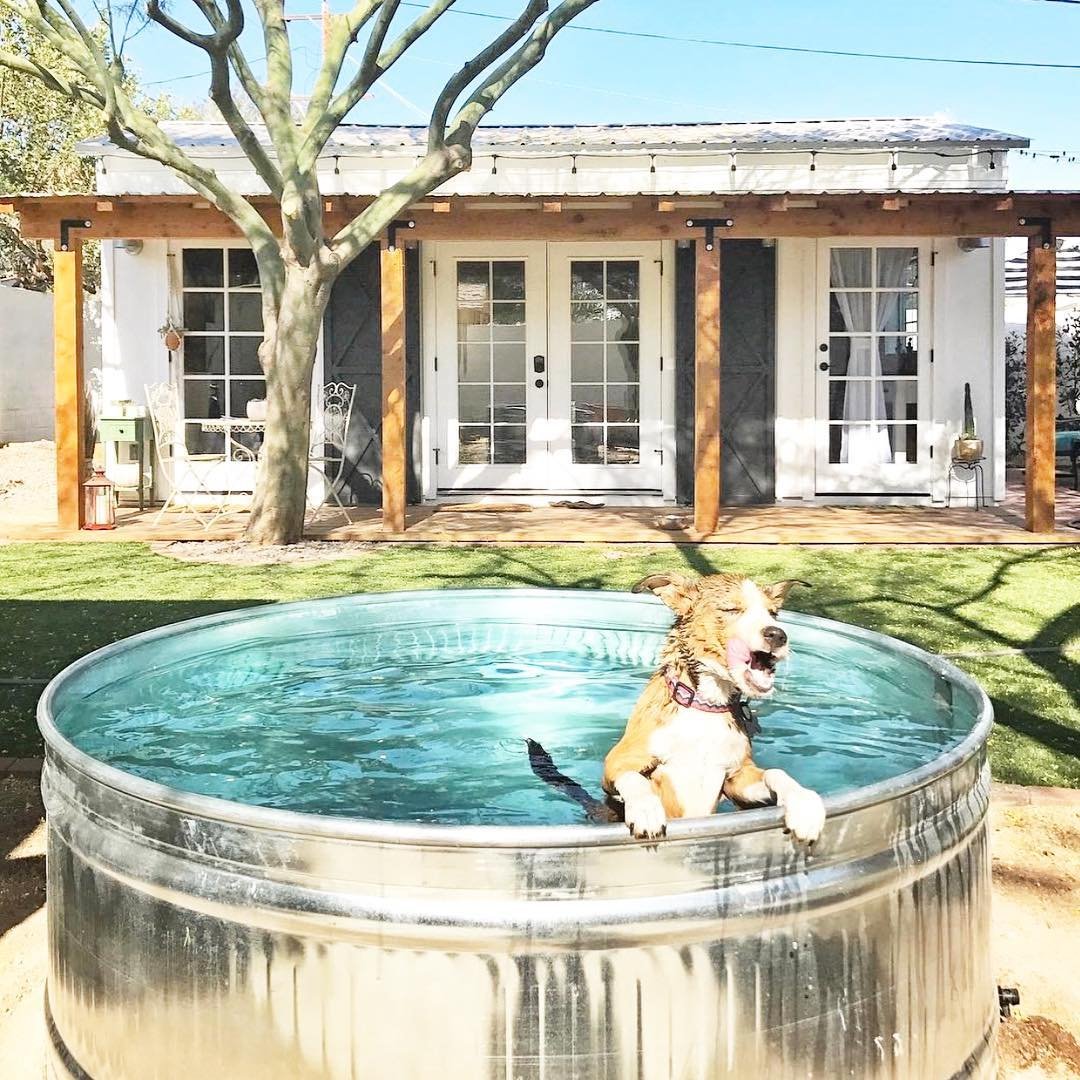
📸 Photo credit: Instagram @chiselbuilt
4. A Pool Ramp for Safe Entry and Exit
A ramp changes everything for a dog that cannot jump in and out with ease. I use a wide, low-slope ramp with a non-slip surface, anchored so it cannot slide or float away. The top should sit level with the pool edge, and the bottom should rest firmly on the pool floor.
I teach the ramp slowly, on dry ground first, then with very shallow water. I guide my dog up and down with a leash and treats until the path feels familiar. I plan the ramp path with the same care I give a backyard dog run layout, keeping the approach clear and flat.
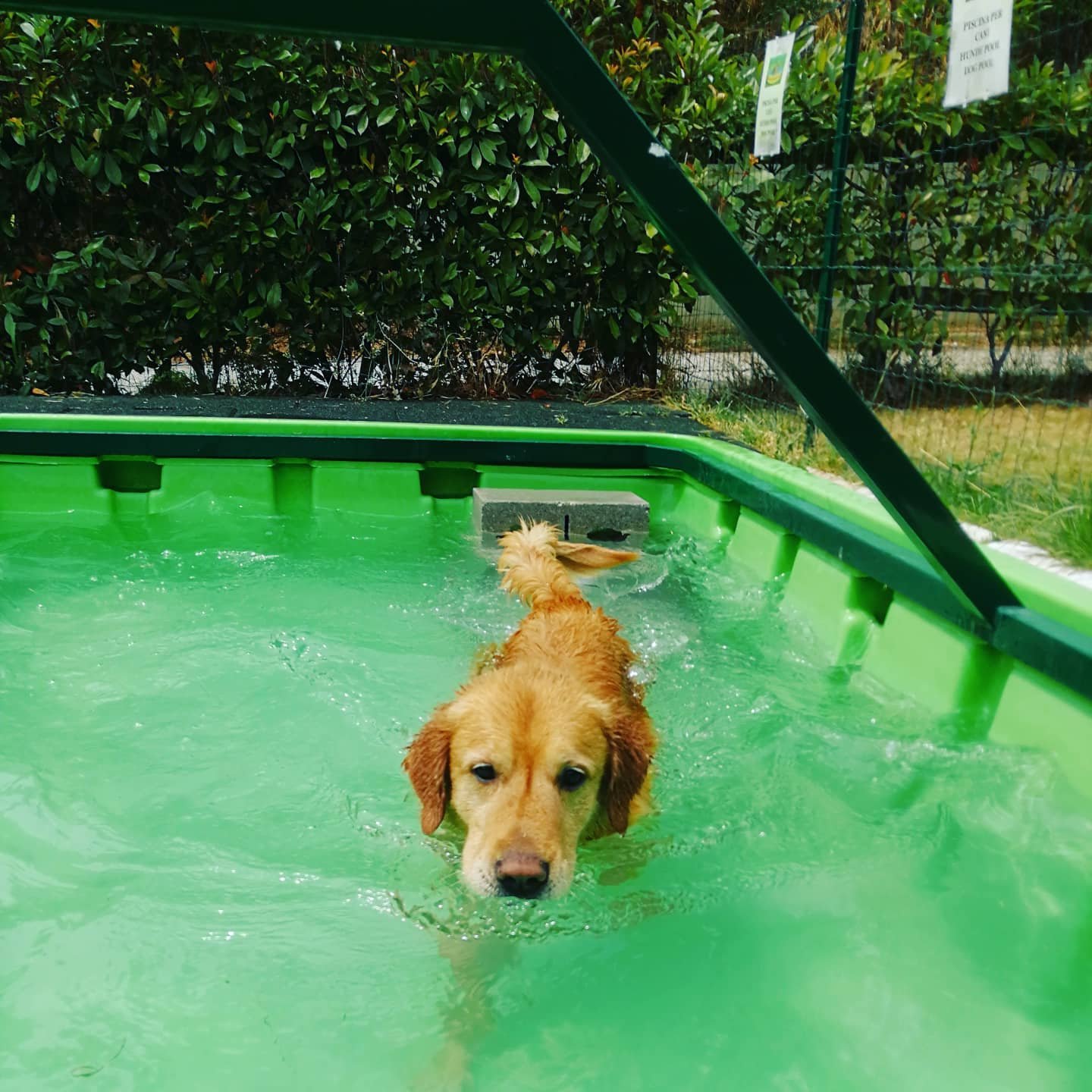
📸 Photo credit: Instagram @letorridelgarda
5. A Stock Tank With a Deck Surround
A low deck surround makes a stock tank tidier and entry safer. I keep the deck low, just a step or two high, with a wide, flat edge where my dog can pause before stepping in. The deck gives me a dry place to stand while I supervise.
I choose deck boards with a grippy texture, and I leave small gaps for drainage so water does not sit and turn slick. I check screws often, and I sand any rough spot right away. I keep the deck free of toys and bowls near the entry point, so my dog has a clear path in and out.
6. A Shaded Pool Corner
Direct sun heats shallow water fast, and a hot pool edge can burn paws. For that reason, I always give a pool a shaded corner. A large patio umbrella, a shade sail, or a leafy tree can cover part of the pool and the rest area beside it.
I anchor an umbrella or sail firmly so wind cannot tip it into the water. I check the shade at midday and move the pool a few feet if the shade has shifted. I take shade cues from dog house ideas with shade, because cool rest space matters just as much as cool water.
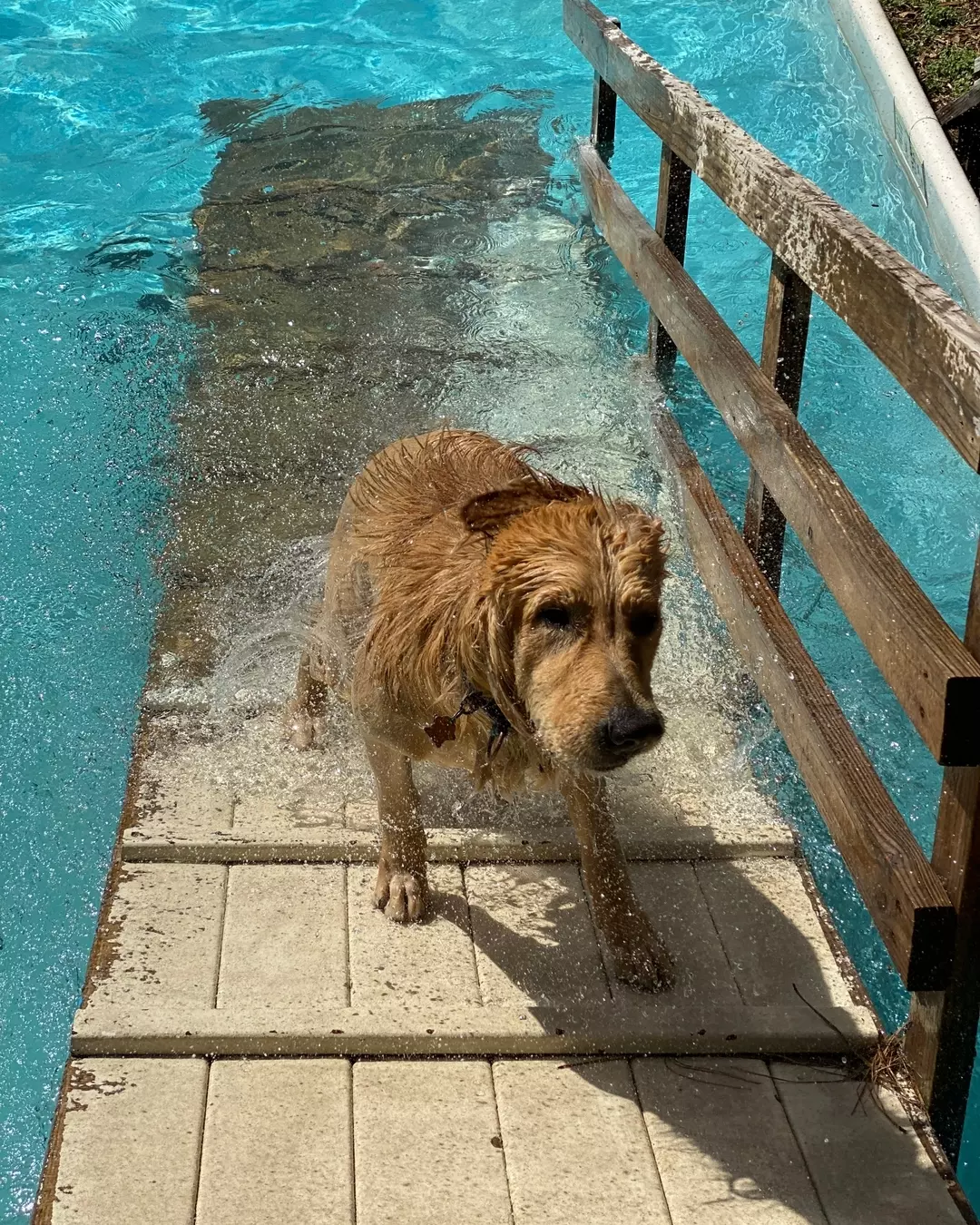
📸 Photo credit: Instagram @atlanta_dog_trainer
7. A Shallow Wading Setup for Small or Nervous Dogs
Some dogs love water but fear depth, and some small dogs simply cannot use a deep pool safely. For those dogs, I make a wading setup with only a few inches of water in a wide, low container. The goal is cool paws and a calm belly splash, not swimming.
I add a textured mat on the bottom, keep the water cool but not icy, and stay right beside my dog the whole time. If my dog tries to climb out, I stop and let my dog leave.
8. A Senior-Dog Friendly Entry With a Low Step and Ramp
An older dog may love a cool soak but struggle with stiff joints, weak back legs, or poor balance. For a senior dog, I keep everything low and slow: a low step, a gentle ramp, and a non-slip surface at every point of contact. I avoid steep drops, high walls, and slick plastic with no grip.
I fill the pool shallower than I would for a younger dog, often just to ankle or knee height, and I keep sessions short. I stay within arm’s reach and help my dog out at the first sign of fatigue. A towel and a dry mat beside the exit let my dog rest at once.
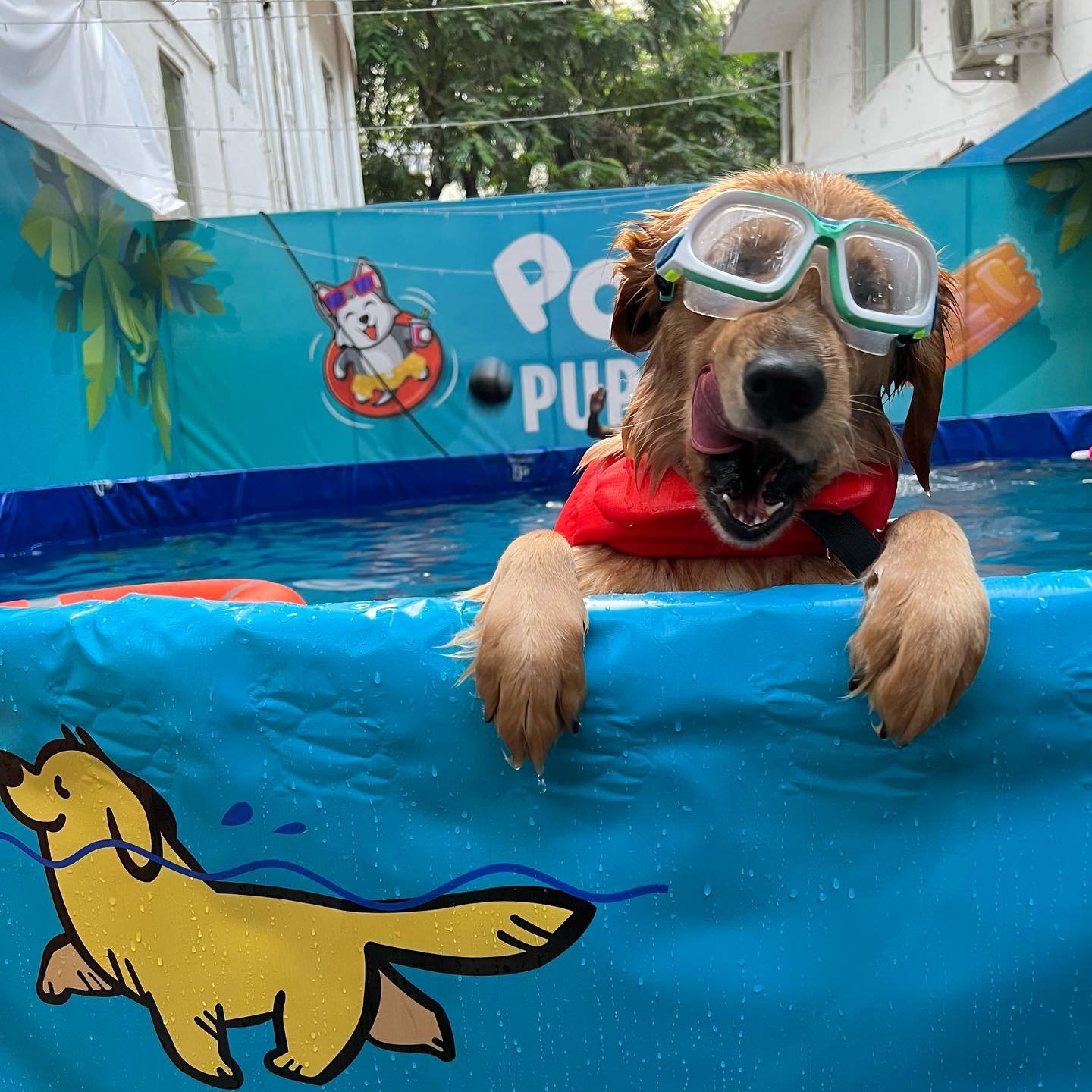
📸 Photo credit: Instagram @poolpupper_petpark
9. A Splash Zone With a Drying Station
A pool without a drying plan means wet paw prints through the house. I set up a splash zone on a surface that drains well, such as gravel or pavers with gaps, and I place a drying station right at the exit. The station holds a large absorbent mat, two towels, and a rinse jug or gentle hose spray.
I rinse my dog lightly after pool time, then I towel dry paws, belly, and ears. I keep spare towels in a lidded bin so they stay dry. I borrow the layout sense of a DIY dog bathing station layout for the rinse spot, and I use mud room ideas for towel storage.
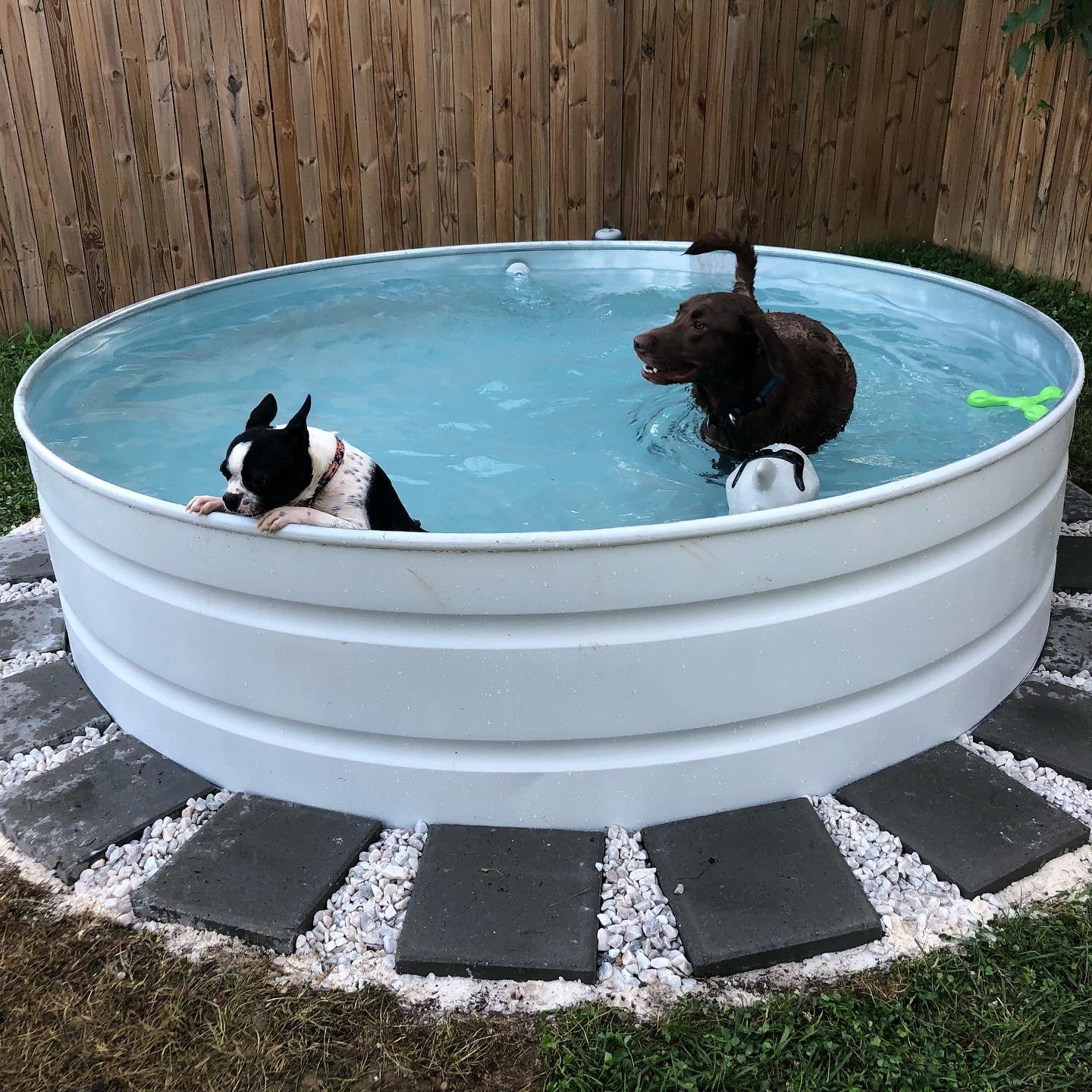
📸 Photo credit: Instagram @iwannalovelikejordyandjune
10. A Clean-Water Routine Setup
Clean water keeps a pool inviting and safer to use. I build my routine around three simple habits: drain often, scrub the pool, and refill with fresh water. In hot weather, I change the water every day or two, sooner if the water looks cloudy, smells off, or holds leaves and dirt.
I keep a stiff brush, a bucket, and a hose near the pool, so cleaning takes minutes. A small pump or filter can help in a larger setup, but I never rely on a filter alone, and I never add pool chemicals meant for human pools. I empty the pool through a hose to a garden bed or drain, away from paths.
Pool Safety Rules I Never Break
I treat every pool session as supervised time, with no exceptions. These rules shape each setup above.
- I stay beside the pool and watch my dog at all times. I never leave a dog alone at a pool, not even for a quick trip indoors.
- I block access when I cannot supervise. I use a barrier, a cover, or I empty the pool, so my dog cannot wander in alone.
- I keep an exit my dog can actually use. A ramp or low steps must stay in place, steady, and non-slip.
- I empty or cover the pool when it is not in use, so standing water never sits as a hidden hazard.
- I use a well-fitted life vest for a weak swimmer, a puppy, or a senior dog, and I still supervise closely.
- I rinse my dog after swimming, check ears and paws, and watch for tiredness or trouble getting out.
Frequently Asked Questions
How deep should a backyard dog pool be?
I keep most backyard pools shallow enough for my dog to stand with a head well clear of the water. For many dogs, that means belly height or lower. Deeper water suits only a strong swimmer with a ramp exit and constant supervision, and I still keep sessions short.
Can a puppy use a splash pad or pool?
Yes, with very shallow water, a flat entry, and close supervision. I start a puppy on a splash pad or a few inches of water, keep the first sessions brief, and let the puppy choose to step in. I dry the puppy well after.
How often should I change the water in a dog pool?
I change the water every day or two in hot weather, and sooner if it turns cloudy or dirty. I scrub the pool before refilling, and I rinse toys and mats too. Fresh water helps me spot damage to the pool or ramp.
Does my dog need a ramp if my dog can jump in?
Jumping in is easy, but getting out is the hard part, especially when a dog gets tired or the edge turns slick. I use a ramp or low steps for every pool, even for an athletic dog, because a safe exit matters more than a flashy entry.
What surface works best under a dog pool?
I use flat, level ground with good drainage. Grass, pavers, and a rubber mat all work if the pool sits steady and water can drain away from paths. I avoid slopes and soft, muddy ground.
Final Thoughts
A good dog pool setup does not need to be fancy. I look for steady footing, a safe way in and out, shade, clean water, and a dry place to rest after. When I get those basics right, pool time stays cool, calm, and fun.