How to Remove Yellow Pillow Stains
A printable checklist — bring yellowed pillows back to fresh and white, without damaging the fill.
Download Your Free Printable Checklist
Print this step-by-step checklist and keep it with your laundry supplies, so you can bring yellowed pillows back to fresh and white.
Want a Better-Trained, Happier Dog?
Get practical guidance for obedience, behavior, and everyday dog training with a collection of helpful training guides designed for dog owners.
This post may contain affiliate links. If you purchase through our link, we may earn a commission at no additional cost to you.
PDF • Print-friendly
Looking for more free printables? See all free printables on our Cleaning Resources page.
Why Pillows Turn Yellow
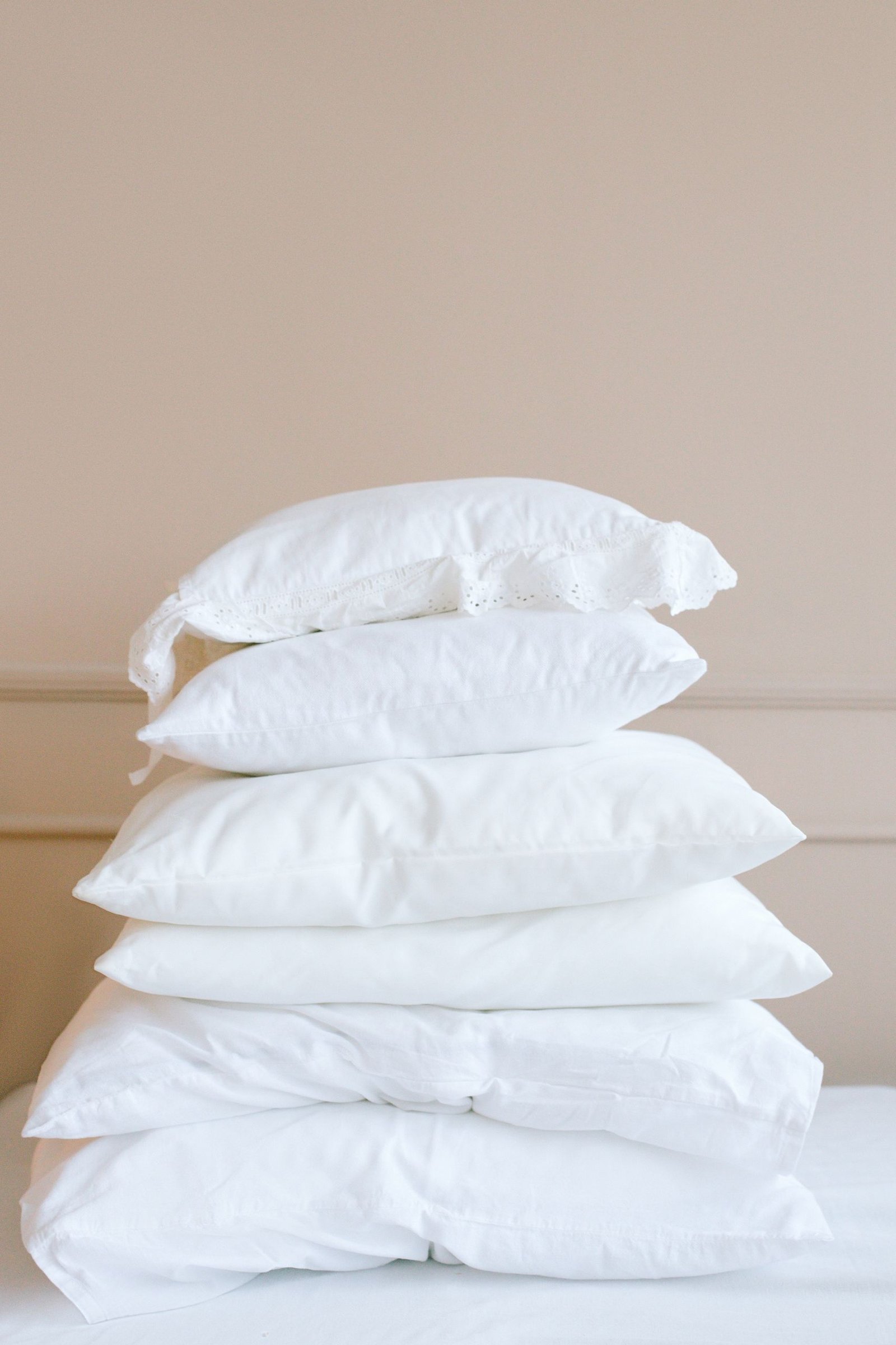
Over months of nightly use, sweat, body oils, saliva and moisture seep through the pillowcase and settle into the fill, leaving a dull yellow tint. Most yellow pillows can be rescued with a few pantry basics — work gentlest first.
Safety — Please Read First
Never use chlorine bleach on down or feather pillows — it strips the natural oils from the feathers, weakens them, and can leave the pillow lumpy and flat. Check the care label first. If it says “dry clean only”, do not machine wash it. Memory foam pillows cannot go in the washer — spot-clean those only (see Step 3). Never mix cleaners. Never mix vinegar with bleach, and never mix hydrogen peroxide with vinegar in the same solution. Use each method separately, with a rinse in between. Dry pillows completely. A pillow that feels dry outside can still be damp inside, and damp fill breeds mildew and musty smells. Never put a pillow back on the bed until it is fully dry all the way through. Test first. If trying hydrogen peroxide on a coloured pillow, test a hidden spot and wait 10 minutes to check for fading.
What You Will Need
- Baking soda (bicarbonate of soda) — 1 cup for soaking, plus 1/2 cup for the wash
- Distilled white vinegar (5%) — 1/2 cup
- Washing soda (sodium carbonate) — 1/2 cup (optional, for stubborn stains)
- 3% hydrogen peroxide (household grade) — 1/2 cup (optional, for stubborn stains only)
- Mild liquid laundry detergent — 1-2 tablespoons
- A bathtub, large basin, or top-loading washer
- 2 clean towels
- A zippered pillow protector (for afterwards)
Step 1 — Check the Pillow
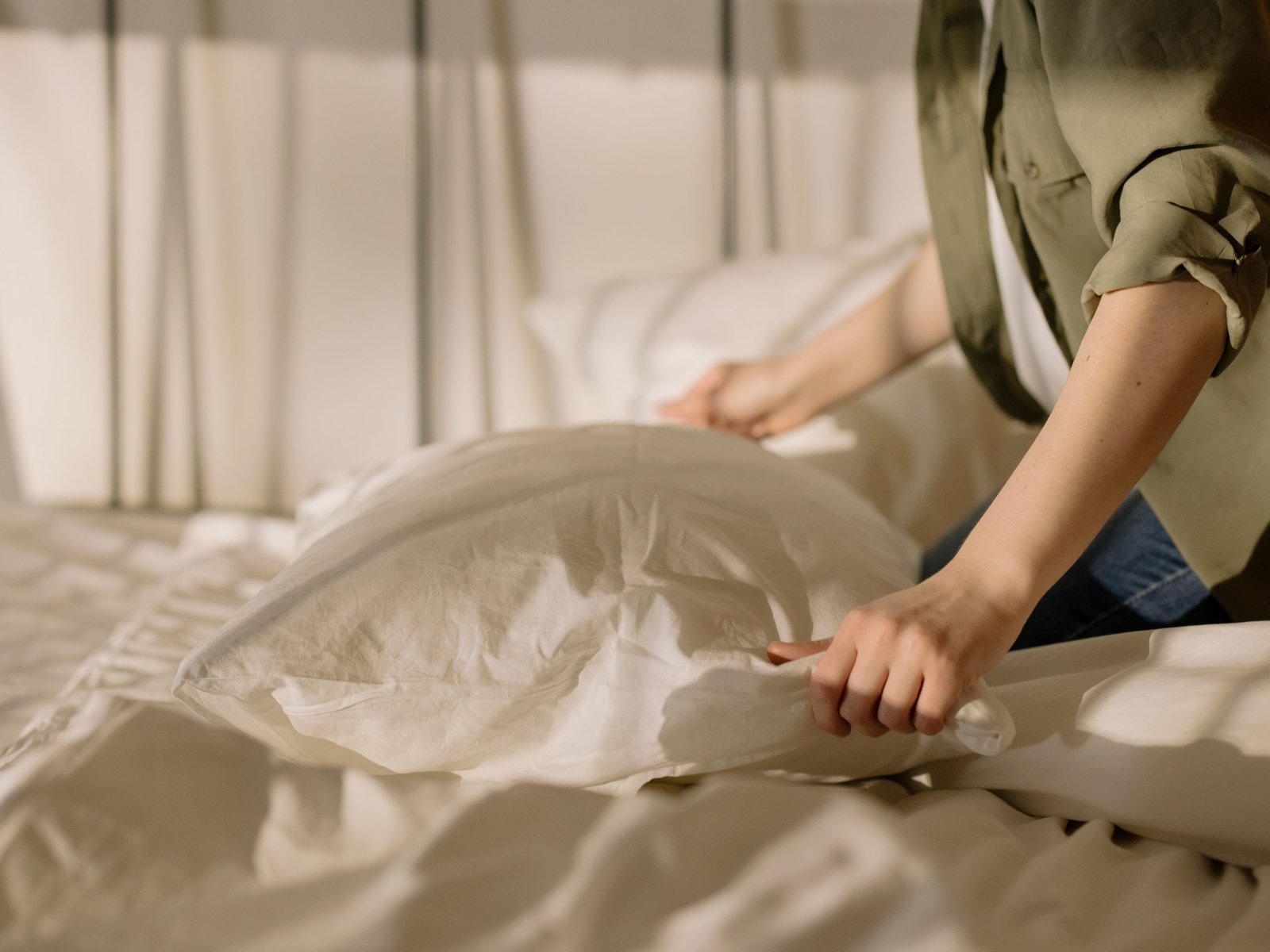
Read the care label and give the pillow a quick check. If the fill is clumped, flat, or smells musty even when dry, it may be past saving — most pillows need replacing every 1-2 years. If the pillow is just yellowed but still plump and springy, it is worth rescuing. Remove the pillowcase and any protector, and wash those separately with your normal laundry.
Step 2 — The Baking Soda Soak (Gentlest Method)
Fill a bathtub or large basin with warm water — not hot. Dissolve 1 cup of baking soda in the water and stir until it disappears. Submerge the pillow completely, pressing it down gently so the water soaks into the fill. Leave it to soak for 30 minutes (up to 1 hour for deeper yellowing). Drain the tub, then press the pillow gently to squeeze out the dirty water. Do not wring or twist it — that damages the fill. Rinse with clean warm water until the water runs clear.
Step 3 — Machine Wash with Vinegar and Baking Soda
Place the pillow in the washer with 2 clean towels — they balance the load and help the pillow tumble evenly. Washing two pillows at once also keeps the machine balanced. Use a gentle or delicate cycle with warm water (30-40°C). Hot water can damage some fills and set certain stains. Add 1-2 tablespoons of mild liquid detergent plus 1/2 cup of baking soda to the drum. Add 1/2 cup of white vinegar to the rinse cycle (or the fabric-softener dispenser) — never in the wash with the detergent, or the two cancel each other out. The vinegar softens the fill, dissolves mineral residue, and freshens the smell. Run an extra rinse cycle afterwards. Leftover detergent trapped in the fill is a common cause of that stiff, grey feeling in washed pillows. Memory foam pillows: do not machine wash. Spot-clean stains with a cloth dampened in warm water and a drop of mild detergent, dab (do not rub), blot dry with a clean towel, and let it air-dry fully.
Step 4 — Stubborn Yellowing (Use ONE Option Only, Not Both)
Option A — Hydrogen peroxide (white or light-coloured pillows only): mix 1/2 cup of 3% hydrogen peroxide into a basin of warm water, soak the pillow for 30 minutes, then rinse thoroughly and wash again on a gentle cycle. It is a mild oxygen bleach that lifts yellowing without the damage of chlorine bleach. Never use stronger concentrations, and never use it on coloured pillows without a hidden-spot test — it can fade colour.
Option B — Washing soda (synthetic and cotton pillows only): add 1/2 cup of washing soda to a warm-water soak for 30 minutes, then rinse and wash as in Step 3. Washing soda is stronger than baking soda and cuts through body oils well, but it is too harsh for down and feather — skip it for those. After either treatment, rinse very thoroughly. Residue left in the fill attracts dirt faster and can irritate skin.
Step 5 — Dry It Completely (This Step Matters Most)
Press out as much water as you can with clean towels. Lay the pillow flat on a towel, roll it up gently, and press. Tumble dry on low heat with 2-3 clean tennis balls or dryer balls. They break up clumps and keep the fill fluffy. This usually takes 60-90 minutes for a standard pillow — check every 20 minutes and fluff it by hand between checks. Or air-dry in sunlight: lay the pillow flat in direct sun, turning it every hour or two. Sunlight is a natural whitener and disinfectant. Allow a full day, or two in humid weather. Final check before it goes back on the bed: squeeze the centre firmly. If it feels cool or damp at all, keep drying. It must be completely dry inside and out.
Keep Pillows White Longer
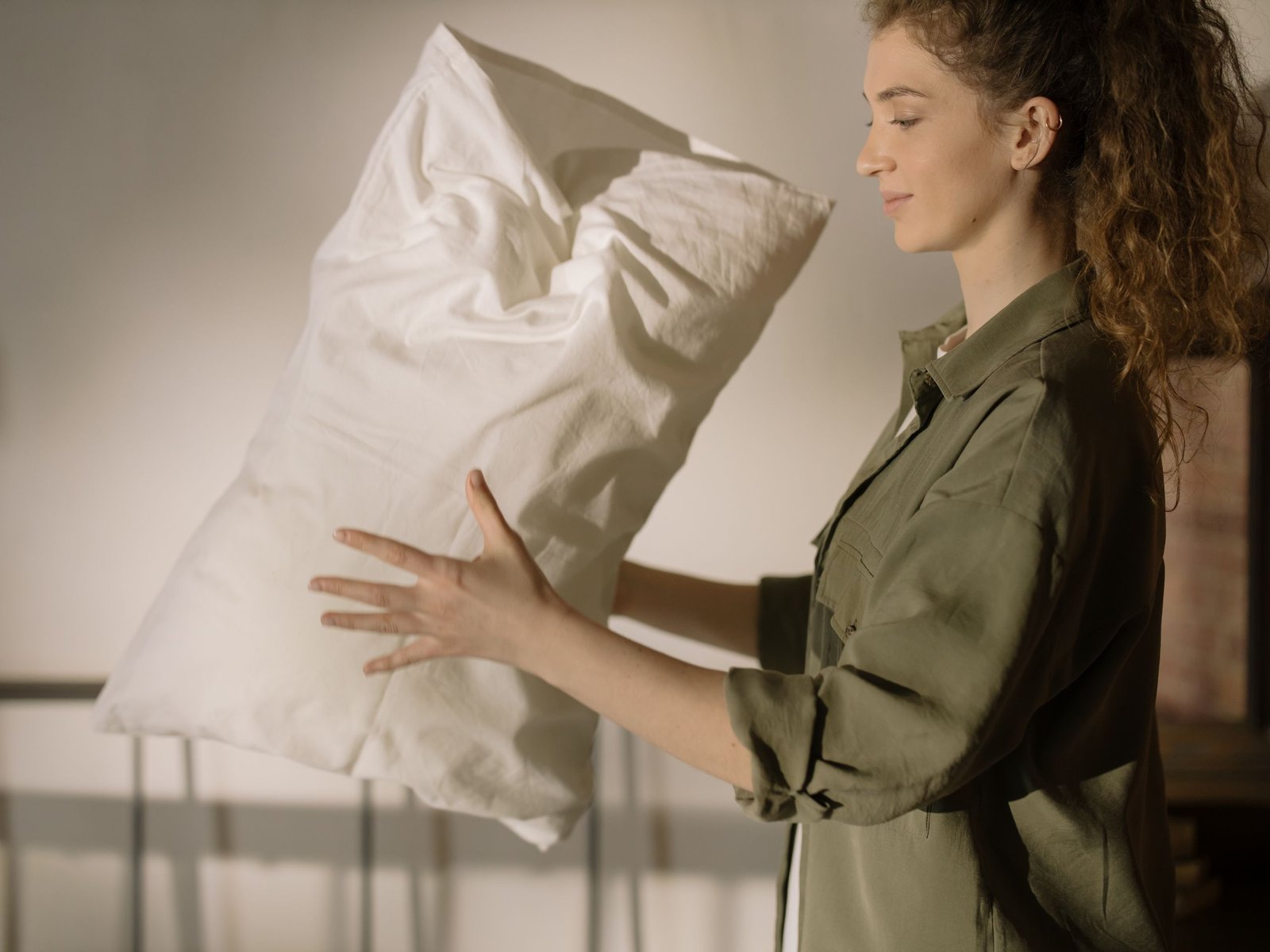
Use a zippered pillow protector under the pillowcase — wash it every 2-4 weeks. Wash pillows every 3-6 months, even if they do not look yellow yet. Change pillowcases weekly and let pillows air out in sunlight a few times a year. Keep the bedroom cool and dry — less night sweating means slower yellowing.
What NOT to Do
- Do not use chlorine bleach on down, feather, or coloured pillows — it damages fill and fades fabric
- Do not use hot water on down or memory foam — it can damage the fill and set stains
- Do not wring or twist a wet pillow — it breaks up the fill and leaves lumps
- Do not skip the extra rinse — detergent residue makes pillows stiff and attracts new dirt
- Do not put a damp pillow back on the bed — trapped moisture causes mildew and odour
- Do not mix vinegar and bleach, or peroxide and vinegar, in the same solution
Tick-Off Checklist
- Care label checked — pillow is washable (not dry-clean only)
- Pillowcase and protector removed and washed separately
- Pillow soaked in warm water with 1 cup baking soda, 30 minutes (up to 1 hour)
- Pillow machine washed on gentle, 30-40°C, with 2 towels, 1-2 tbsp detergent + 1/2 cup baking soda
- 1/2 cup white vinegar added to the rinse only
- Extra rinse cycle run
- Stubborn stains (if needed): 1/2 cup 3% hydrogen peroxide soak, 30 minutes, OR 1/2 cup washing soda soak, 30 minutes — rinsed thoroughly
- Pillow towel-pressed, then tumble dried on low with dryer balls (60-90 minutes) or sun-dried flat, turned regularly
- Pillow checked — completely dry inside and out before use
- Pillow protector fitted; next wash scheduled in 3-6 months