Snowproof Dog House Ideas
Heavy snow changes everything about shelter design. A house that works beautifully in October can become a trap in January — the door buried under a drift, the flat roof groaning under three feet of wet snow, the inside as cold as the outside. These twelve snowproof dog house ideas are built around one principle: let the snow do what it wants while your dog stays warm, dry, and reachable.
1. The Steep A-Frame Roof House

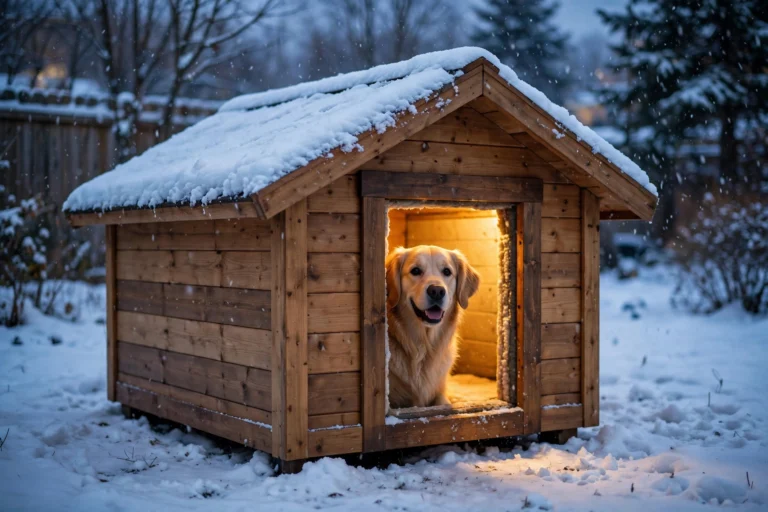
The classic A-frame is nature’s snow-shedding shape. With a roof pitch of 45 degrees or more, fresh snow slides right off instead of piling up, which means no midnight roof-clearing after a blizzard. Build it from exterior plywood with a waterproof membrane under the shingles, and the interior stays surprisingly warm since the steep walls cut down on dead air space. This is the simplest genuinely snowproof design you can build in a weekend.
Want a Better-Trained, Happier Dog?
Get practical guidance for obedience, behavior, and everyday dog training with a collection of helpful training guides designed for dog owners.
This post may contain affiliate links. If you purchase through our link, we may earn a commission at no additional cost to you.
2. The Elevated Cabin-Style House

Raising the floor six to eight inches off the ground solves the number-one winter problem: a door blocked by drifting snow. The air gap underneath also insulates the floor far better than a slab sitting on frozen earth, and it keeps meltwater from seeping in during freeze-thaw cycles. Add short steps or a low ramp so older dogs can climb in easily, and skirt the base with lattice to block wind while letting air circulate.
3. The Insulated Double-Wall Dome

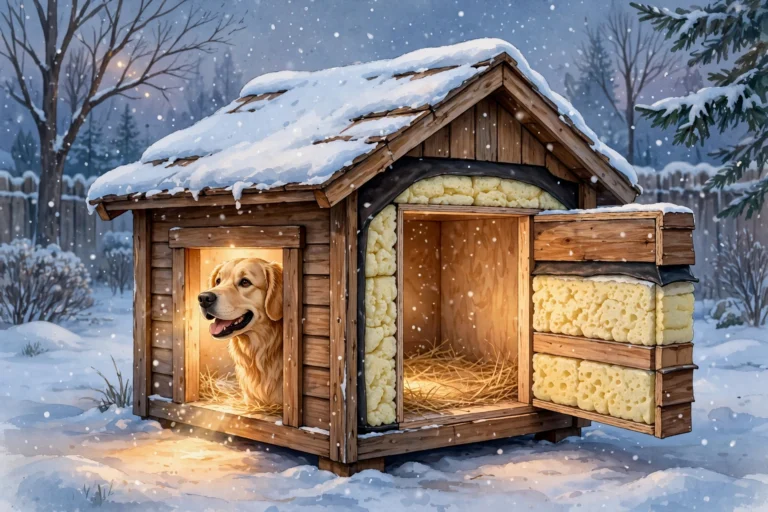
A dome or igloo profile has no flat surfaces for snow to grip, so even wet, heavy snow slides off in sheets. Build it with two shells — an outer weather skin and an inner living shell — and fill the cavity with rigid foam insulation or even packed straw for old-school warmth. If you love the insulation concept, our insulated dog house ideas go deeper into materials like reflective barriers and foam-board sandwiches.
4. The Ski-Lodge Chalet House
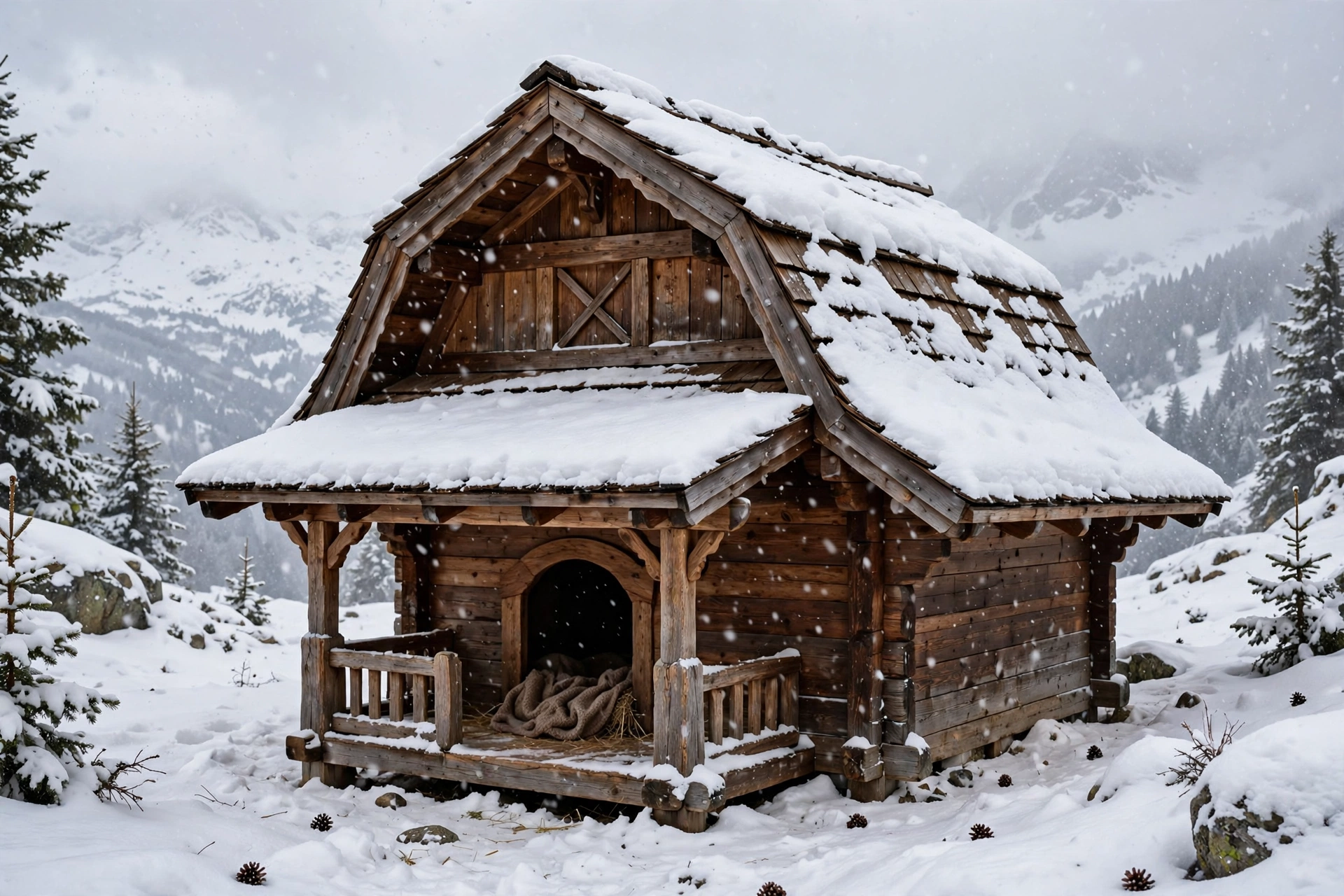
A gambrel or chalet roof looks charming and works hard: the steep upper slope sheds snow while the lower slope gives generous headroom inside. Deep eaves keep snowfall from dumping directly in front of the door, and a small covered porch gives your dog a dry spot to shake off before going in. Stain the wood dark and it will even absorb a little solar warmth on sunny winter days.
5. The Heated Floor Cabin
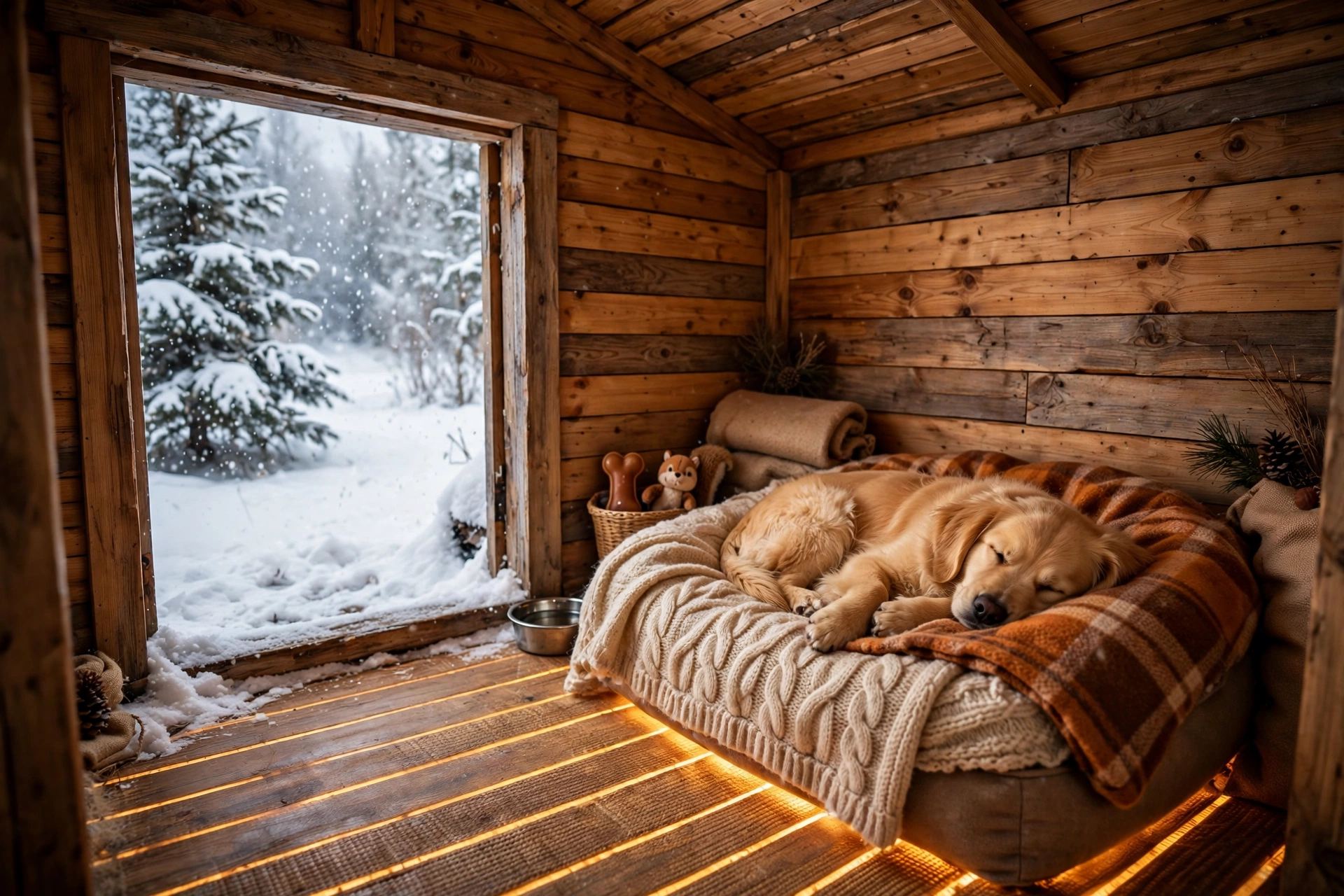
Sometimes the smartest snowproofing happens underfoot. A heated floor — either an electric radiant mat rated for outdoor use or a simple passive design with a dark floor over an insulated cavity — keeps the sleeping surface above freezing no matter what’s happening outside. Pair it with a raised threshold so windblown snow can’t skitter across the floor. For more warming options, see our heated dog house ideas.
6. The Arched Quonset Hut

Borrowed from farm architecture, the half-cylinder Quonset shape is nearly impossible for snow to accumulate on — it just slides off the curve. You can form the arch from bent plywood ribs or even a section of large culvert pipe, then insulate the inside with spray foam or rigid panels. The shape also resists high winds, which matters because blizzards bring both snow and brutal gusts.
7. The Mudroom-Entry Duplex House
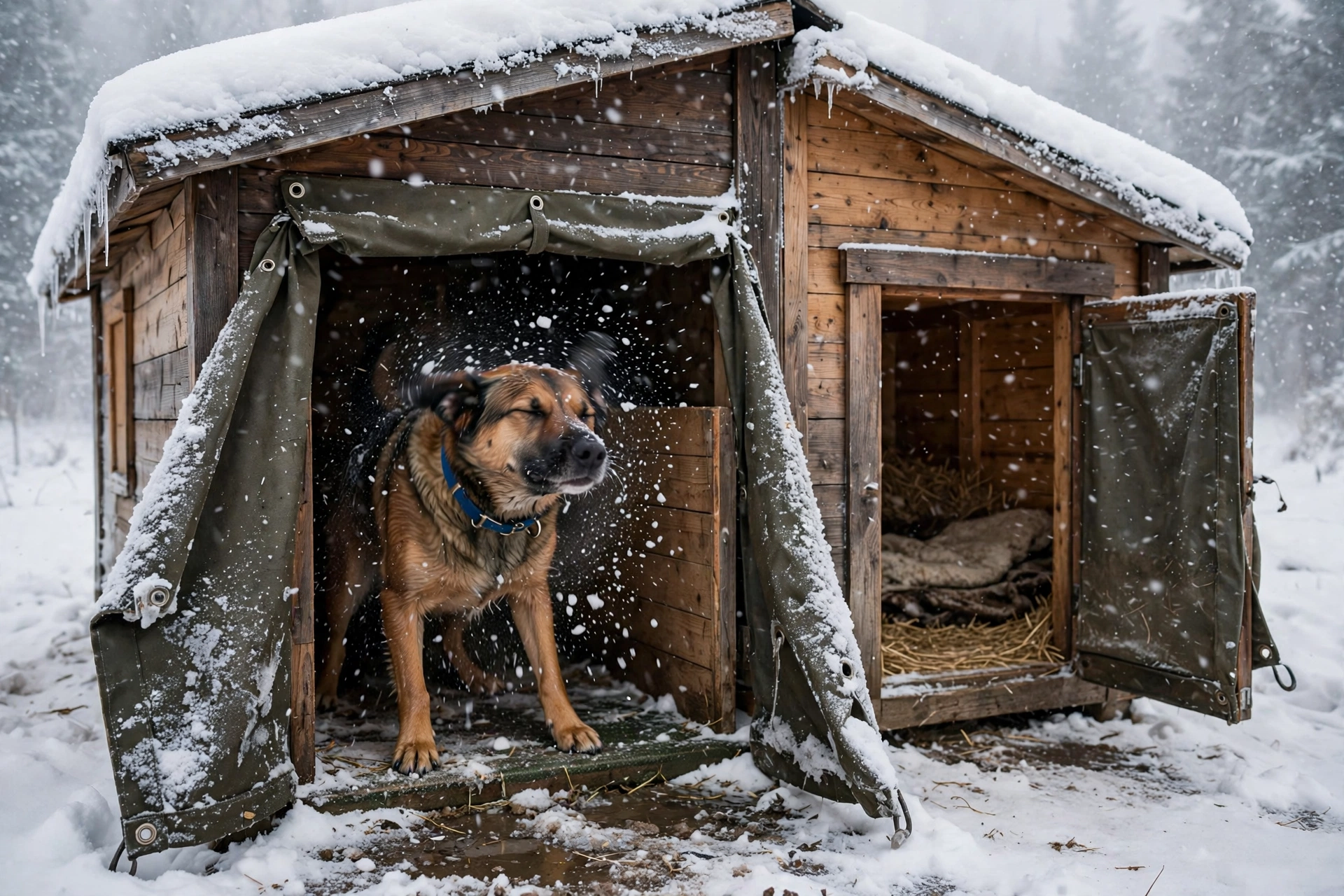
A two-chamber design with an enclosed entry vestibule is a game changer in snow country. Your dog steps through an outer door into a small “mudroom” where snow falls off, then through a second door flap into the warm sleeping chamber. The inner room barely notices the storm outside. Hang heavy door flaps on both openings and you’ll cut heat loss dramatically — for broader cold-weather strategies, check our winter dog house ideas.
8. The Windbreak Barn-Style House
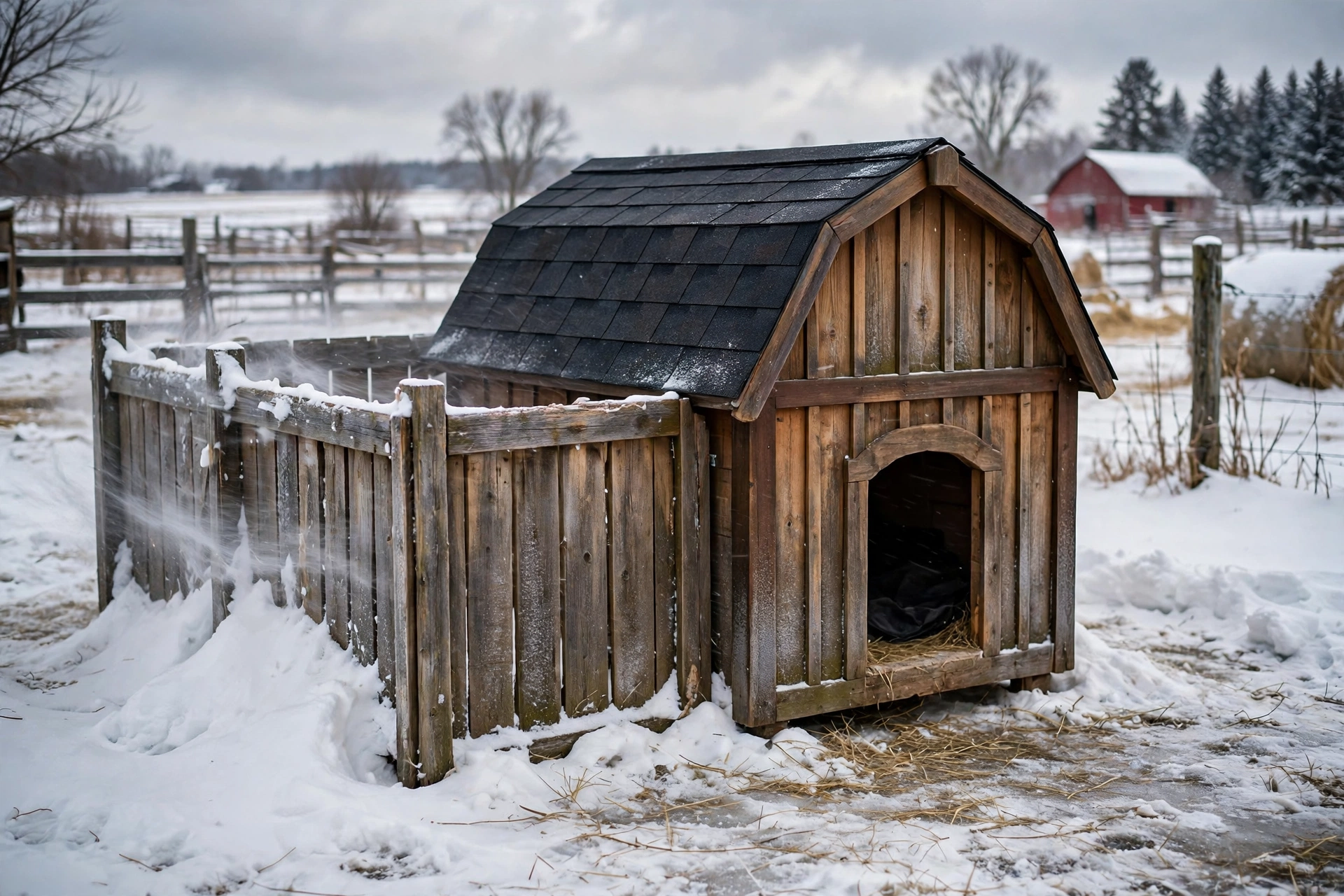
Snow is only half the battle; wind-driven snow is what finds every crack. A barn-style house with an attached windbreak wall or fence panel on the windward side keeps drifts from forming against the door. Position the entrance facing away from prevailing winds and add a small overhang above it. This approach works especially well for larger dogs that need a bigger door opening — and bigger openings leak more heat without a windbreak.
9. The Solar-Powered Heated Lodge
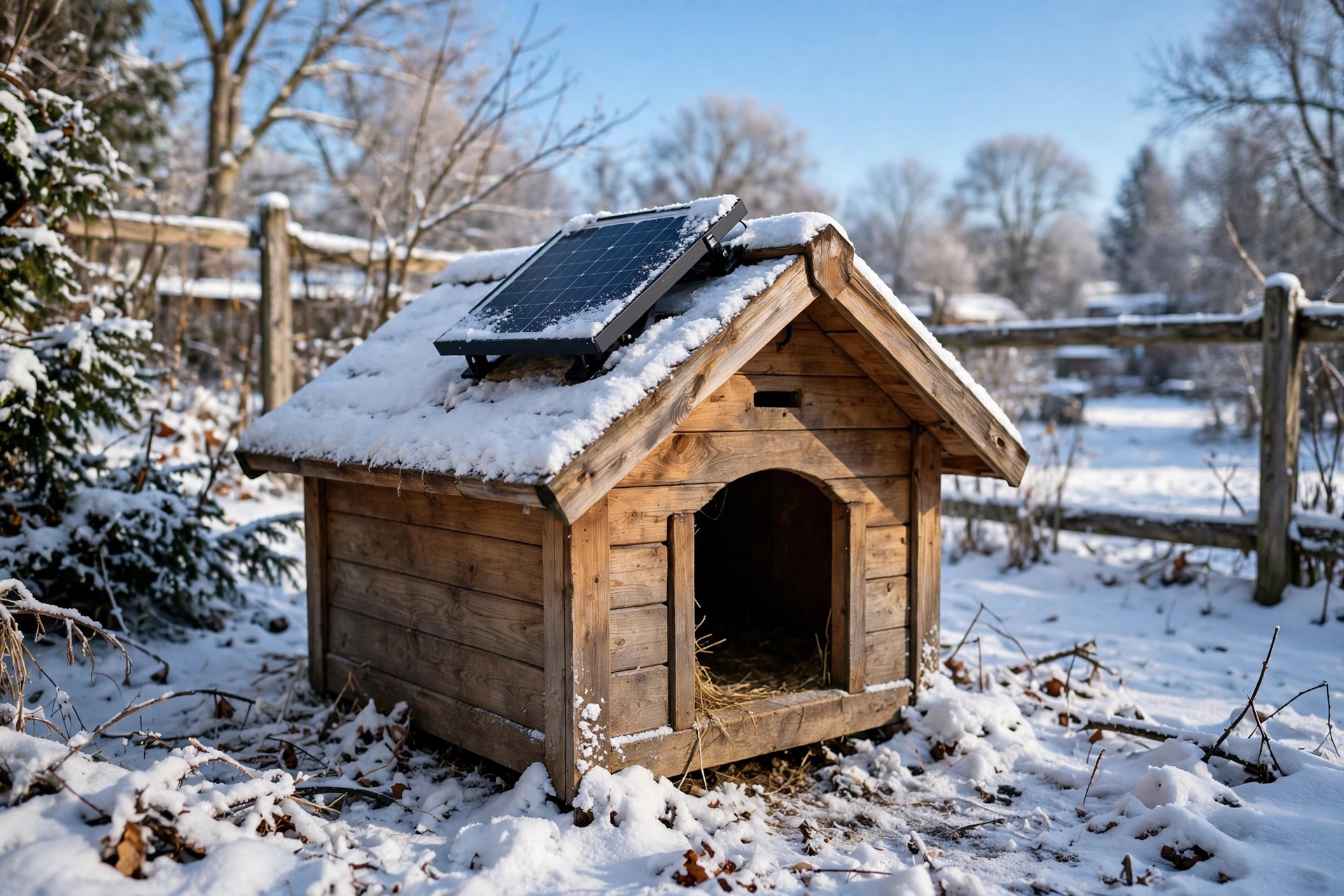
A small solar panel on the roof can power a low-wattage heating pad or a thermostatically controlled fan that circulates warm air, keeping the interior just above freezing without any wiring to the house. It’s a clean solution for houses placed far from outlets, and the panel’s dark surface even helps melt snow off the roof around it. Size the panel for your climate’s shortest winter days, and always use a battery buffer for cloudy stretches.
10. The Deep-Eave Timber House

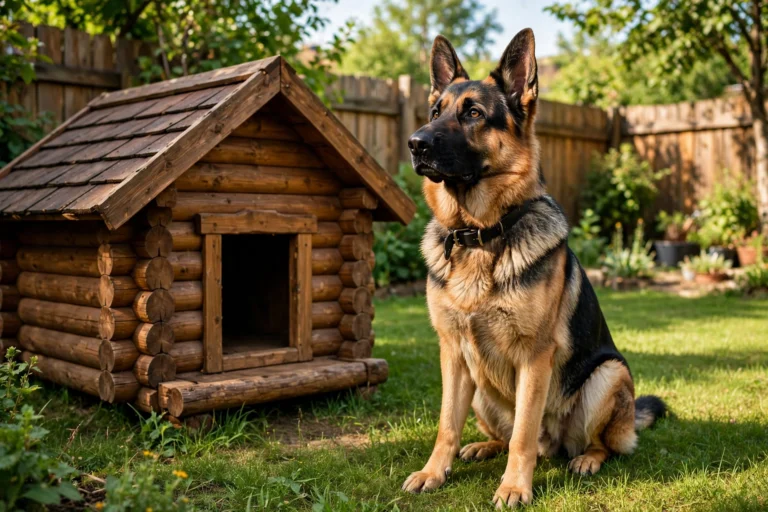
Wide roof overhangs — eighteen inches or more — are one of the simplest snowproofing tricks. They keep falling snow away from the walls and door, protect the siding from meltwater streaks, and create a dry perimeter where your dog can stand without being rained on by roof runoff. Build it chunky from rough-sawn timber for a look that belongs in a mountain cabin, and the mass of the wood itself adds thermal stability.
11. The Convertible Winter-Summer House

Why build two houses when one can transform? A convertible design uses removable insulated wall panels and a snow-shedding winter roof that swap in each November, then come off for a breezy open summer configuration. The winter panels can be rigid foam sandwiched in plywood — light enough to handle solo — and they store flat against a shed wall all summer. For year-round thinking, our all-weather dog house ideas cover designs that handle every season without a swap.
12. The Earth-Bermed Den House

Partially berming a dog house — piling earth or snow itself against three walls — uses the ground’s steady temperature as free insulation. Build a sturdy timber or concrete-block shell, berm soil up to the eaves on the north and sides, and leave the south face open with a small door. The earth mass keeps the interior remarkably stable, and snow piled against the berm only adds insulation. Just make sure drainage slopes away from the structure so spring melt doesn’t pool inside.
Final Thoughts
Snowproofing a dog house comes down to three moves: shed the snow with steep or curved roofs, block the wind and drifts from the door, and insulate the envelope so your dog’s own body heat does the rest. If your region gets serious lake-effect or mountain snow, pair these ideas with the storm-specific tips in our dog house for snowy weather guide. Build it right once, and winter becomes your dog’s favorite season.