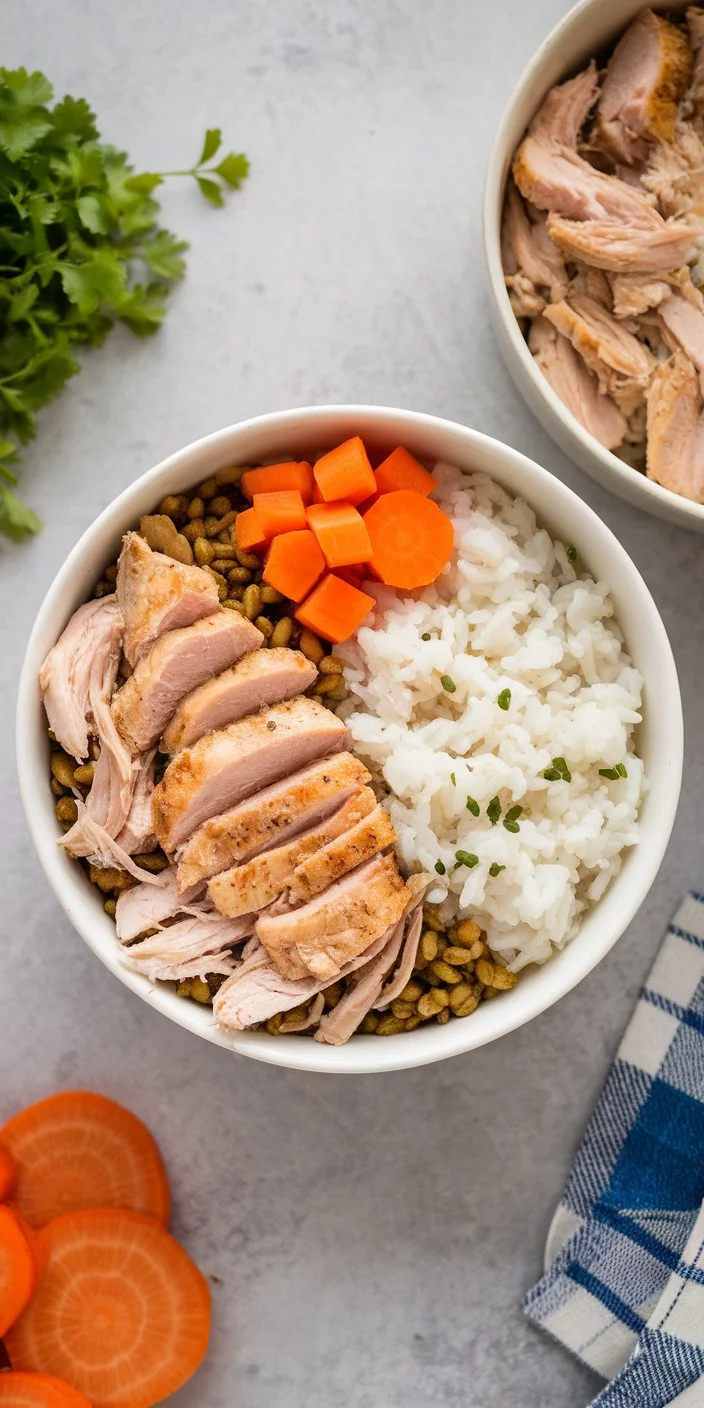
Chicken and Rice Bowls: A Warm Breakfast for You and Your Dog
There are days when you want a meal that doesn’t require a complicated ingredient list, three pans, and an hour of kitchen duty. Chicken and rice checks all those boxes.
It’s also one of those combinations that can work nicely as a simple homemade option for your dog when prepared without seasonings, sauces, or other unnecessary extras. For people, you can take the exact same basic ingredients and turn your serving into something much more flavorful.
The important part is keeping your dog’s portion separate before adding human-style toppings.
Why Chicken and Rice Is a Winner
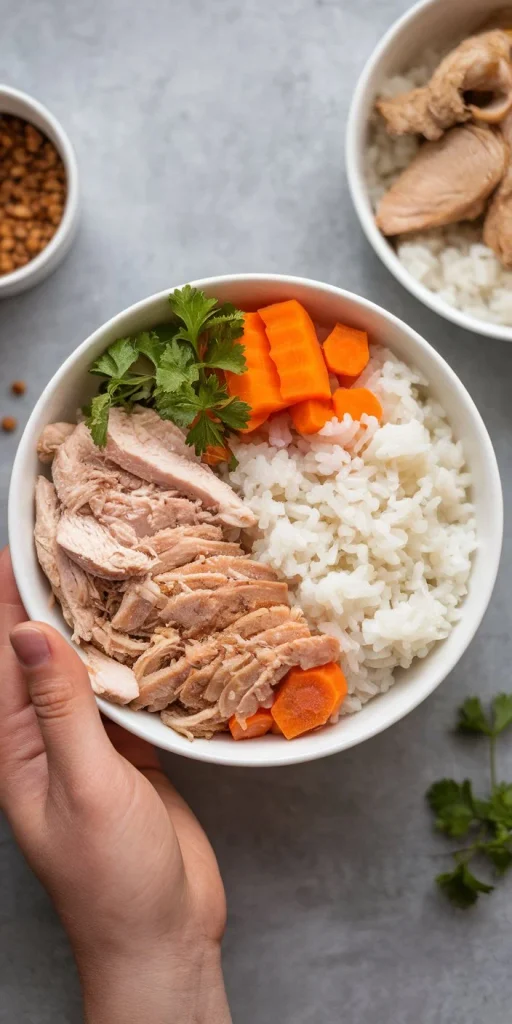
Chicken and rice have earned their place in many dog-owner kitchens for a reason: the ingredients are familiar, easy to prepare, and simple to portion.
Plain cooked chicken supplies animal-based protein, while cooked rice provides carbohydrates. Veterinarians may also recommend a simple chicken-and-white-rice combination for some dogs with temporary digestive upset, although modern veterinary guidance notes that homemade chicken and rice is not nutritionally complete and shouldn’t automatically be treated as a long-term diet.
For Humans:
- Simple fuel: Rice provides carbohydrates that can make a satisfying base for breakfast or lunch.
- Protein-rich: Cooked chicken adds a convenient source of protein.
- Easy to customize: Your serving can take on completely different flavors with vegetables, herbs, sauces, or an egg.
- Meal-prep friendly: Cook once and portion the ingredients for several meals.
For Dogs:
- Simple ingredients: Plain cooked chicken and rice are easy to understand and portion.
- Easy to prepare: You don’t need complicated cooking techniques or specialty ingredients.
- Useful as an occasional topper: A small amount can be mixed with a nutritionally complete dog food.
- Gentle when appropriate: Plain cooked chicken and white rice are sometimes used for short-term bland feeding under veterinary guidance.
One important note: chicken and rice alone should not replace your dog’s complete and balanced food long term. Homemade diets made from only a few ingredients can miss essential vitamins and minerals.
What You’ll Need
Dog-Friendly Base:
- 1/2 cup cooked white or brown rice, completely plain
- 1/2 cup cooked, shredded chicken with the skin and bones removed
- Fresh water as needed for cooking
The chicken should be fully cooked and free from salt, garlic, onion, sauces, butter, marinades, and seasoning blends.
White rice can be particularly useful when preparing a simple bland meal because it is easy to digest for many dogs. Brown rice is also an option for healthy dogs that tolerate it well.
Human Add-Ons:
Once your dog’s portion has been separated, your own bowl can become much more interesting.
Try:
- Soy sauce or tamari
- Steamed carrots or broccoli
- A fried or poached egg
- Fresh herbs
- A small drizzle of sesame oil
- Other toppings you normally enjoy with rice bowls
Keep all of these additions away from your dog’s portion unless you have specifically confirmed that an ingredient is appropriate for dogs.
How to Make It
The easiest way to make this recipe work for both you and your dog is to cook the shared ingredients plainly first, portion out the dog’s serving, and only then turn your portion into a more flavorful meal.
- Cook the Rice: Prepare the rice according to the package directions. If you’re making this specifically for a dog with digestive upset, plain white rice is commonly used in short-term bland feeding.
- Prep the Chicken: Cook boneless, skinless chicken thoroughly without seasoning. Once it has cooled enough to handle, shred or chop it into small pieces.
- Combine the Base: Mix the cooked rice and chicken together. Before adding anything else, remove the portion intended for your dog.
- Customize Your Bowl: Now you can season your own serving. Add vegetables, egg, soy sauce, herbs, or whatever fits your breakfast or lunch plans.
- Cool It Down: Give your dog’s portion time to cool before serving. Don’t serve freshly cooked food while it’s still hot.
For dogs with gastrointestinal problems, follow your veterinarian’s instructions about portions, duration, and when to transition back to their regular diet.
Common Mistakes to Avoid
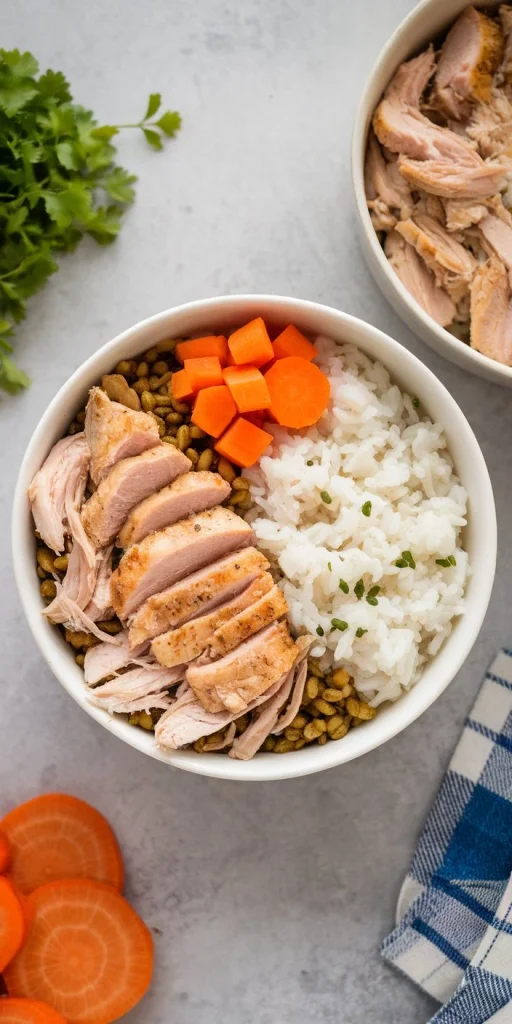
A recipe this simple doesn’t leave much room for cooking disasters—but there are a few mistakes worth avoiding when you’re sharing it with a dog.
- Seasoning the Base: Keep your dog’s chicken and rice completely plain. Salt, sauces, spice blends, and other human flavorings aren’t necessary.
- Serving It Hot: Let freshly cooked food cool to a comfortable temperature before giving it to your dog.
- Using Pre-Seasoned Chicken: Rotisserie chicken, deli chicken, marinated chicken, and heavily seasoned leftovers aren’t good substitutes for plain cooked chicken.
- Overloading on Rice: Don’t assume that more rice makes the meal healthier. Your dog still needs a nutritionally complete diet rather than a bowl dominated by one or two homemade ingredients.
- Treating Chicken and Rice as a Permanent Diet: This combination lacks the full nutrient balance dogs need for long-term feeding. If you want to feed homemade food as your dog’s primary diet, have the recipe formulated by a veterinary nutrition professional.
How to Make It Even Better
Once you’ve separated the plain dog portion, there are plenty of ways to make the recipe more interesting without complicating your dog’s meal.
- Add Veggies: Plain cooked carrots or green beans can be appropriate additions for many dogs. Keep portions modest and introduce new foods gradually.
- Switch Up the Protein: Plain cooked turkey can be used instead of chicken if your dog tolerates it.
- Go Gourmet for Yourself: Your bowl can take a completely different direction with sauce, herbs, sesame oil, chili flakes, or a cooked egg.
- Use It as a Topper: Instead of replacing your dog’s regular food, a small amount of plain chicken and rice can be used as an occasional addition to a complete and balanced diet.
If your dog has a diagnosed food allergy or is undergoing an elimination diet, don’t casually substitute proteins or add ingredients. Dietary trials need to be carefully controlled.
FAQs
Q: Can I use leftover rice?
Yes, provided the rice was stored safely and is plain. Avoid rice that has already been mixed with sauces, butter, heavily salted ingredients, onions, garlic, or seasoning.
Q: Is brown rice better for dogs?
Not necessarily. Both white and brown rice can be used depending on the dog and the purpose of the meal. White rice is commonly chosen for short-term bland feeding because it is easily digestible, while brown rice contains more fiber. If your dog has digestive problems, follow your veterinarian’s recommendation.
Q: Can I add broth for flavor?
For your dog’s portion, plain water is the simplest choice. If you use broth, check the ingredient list carefully and avoid products containing ingredients such as onion, garlic, excessive sodium, or other ingredients that aren’t appropriate for dogs.
Q: How often can I feed this to my dog?
There’s no universal once-or-twice-a-week rule that applies to every dog. As an occasional topper, small amounts can fit into a balanced feeding plan, but chicken and rice shouldn’t become your dog’s main long-term diet unless the entire recipe has been properly formulated to meet their nutritional requirements.
Q: Can I freeze portions for later?
Yes. Cooked chicken and rice can be portioned and frozen. Cool food promptly, store it in appropriate airtight containers, thaw it safely, and serve it at a comfortable temperature.
Q: Is this okay for puppies?
Plain cooked chicken and rice may be ingredients in certain short-term feeding situations, but puppies have particularly important nutritional requirements during growth. A simple chicken-and-rice mixture is not a complete puppy diet. Puppies should receive a nutritionally complete food formulated for their growth stage unless a veterinarian has prescribed a properly formulated homemade diet.
Q: Can I use instant rice?
Plain instant rice can work if it contains no added seasonings, sauces, or flavor packets. Skip flavored rice mixes, since the seasoning packet can contain ingredients your dog doesn’t need or shouldn’t have.
Final Thoughts
Chicken and rice doesn’t need to be complicated to be useful.
For your own bowl, you can turn the basic combination into a flavorful breakfast or lunch with vegetables, eggs, sauces, and seasonings. For your dog, the better approach is to keep their portion deliberately boring: plain cooked chicken, plain rice, and nothing unnecessary added to it.
Just remember that simple doesn’t automatically mean nutritionally complete. Chicken and rice can have a place as an occasional food or, when your veterinarian recommends it, a short-term bland option—but it shouldn’t replace a properly balanced canine diet on a routine basis.
Sometimes the best dog-friendly meal is the one that looks almost too simple to be special. 🐾🍚🍗