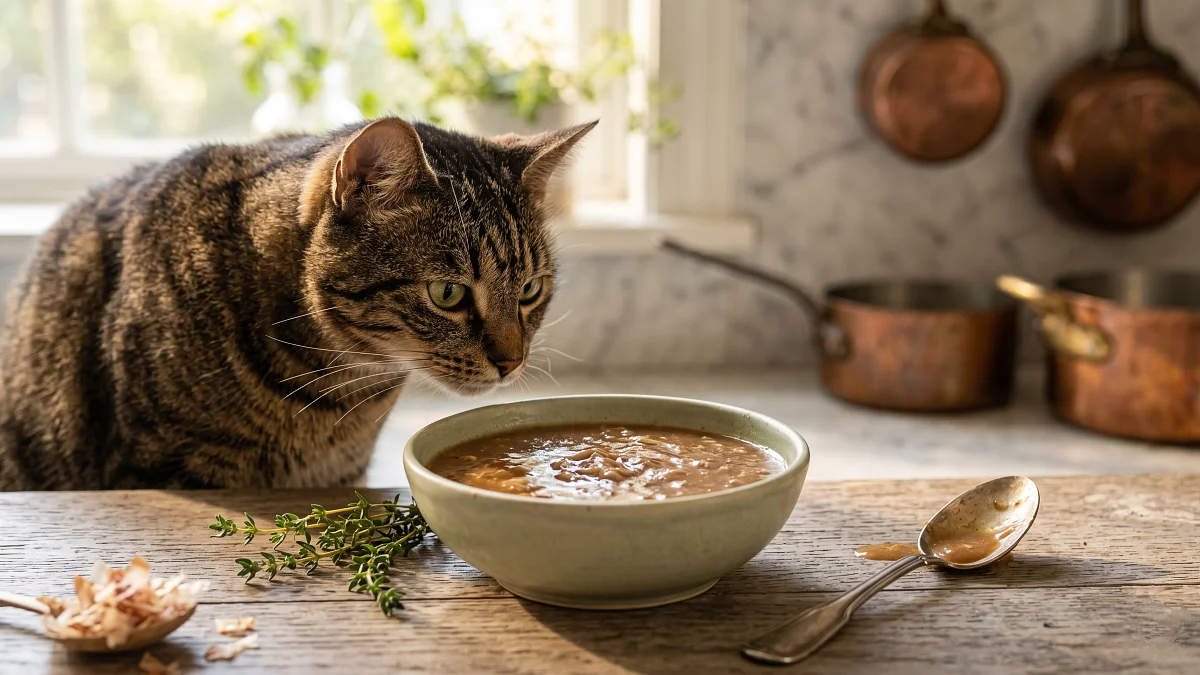
How To Make Cat Gravy (4 Delicious Recipes)
I’ve tested multiple ways to improve my cat’s meals, and homemade gravy consistently works. It adds moisture, improves taste, and helps picky eaters finish their food. In this guide.
I break down 4 practical recipes I personally rely on, along with safe ingredient rules, calorie awareness, and storage methods. These are not full meals—they’re toppers designed to support hydration and appetite safely.
Key Takeaways
- I keep gravy portions within 10% of daily calorie intake.
- Most recipes here range between 2–10 kcal per tablespoon.
- Hydration improves when I add broth-based toppers.
- I avoid toxic ingredients like onion, garlic, and added salt.
- Proper storage prevents bacterial growth and keeps food safe.
A Quick Guide to Safe Treat Ingredients
Before I prepare anything, I focus on ingredient safety because cats react differently than humans.
Chicken Broth
I always use plain, unsalted broth. Studies show cats on moisture-rich diets have lower urinary tract risks, so broth helps fill that gap.
Canned Tuna
I use tuna occasionally due to mercury levels. Once or twice a week is enough to avoid long-term buildup.
Cornstarch & Arrowroot
I use these only for texture. Too much can upset digestion, so I keep it under 1 tsp per batch.
Onions and Garlic
I completely avoid them. Even small exposure can cause anemia in cats.
Plain Pumpkin Puree
I use pumpkin when digestion needs support. Around 1–2 tablespoons per batch is enough to help with fiber balance.
1. The Whisker-Licking Chicken Nectar
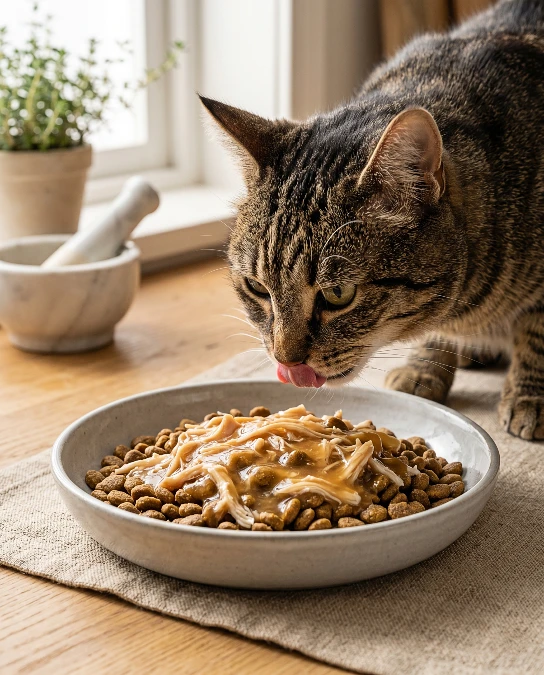
I rely on this recipe when my cat ignores dry food. It’s simple, mild, and works almost every time.
Ingredients
- 1 cup unsalted chicken broth (no onion/garlic)
- 1/4 cup cooked chicken breast (plain, shredded)
- 1 tablespoon water
- 1 teaspoon cornstarch
Instructions
- I heat the chicken broth on medium until it starts to simmer (not boil).
- In a separate bowl, I mix cornstarch with water to avoid lumps.
- I slowly whisk that mixture into the broth.
- I stir for about 2 minutes until it thickens slightly.
- I turn off heat, mix in shredded chicken, and let it cool fully.
Nutritional Estimate
- Total batch: ~80 kcal
- Per tablespoon: ~5 kcal
Why I Use It
I’ve noticed cats respond well to chicken because it’s neutral and easy to digest. It’s also low in fat, which makes it safe for regular use.
Pro Tip
I blend it into a smooth texture for better intake, especially for older cats.
2. The “Midnight Zoomies” Tuna Elixir
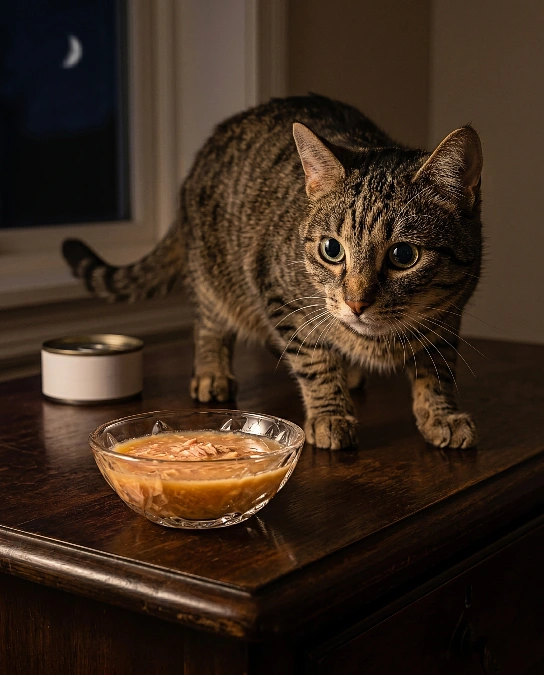
When nothing else works, I switch to tuna. The smell alone usually solves picky eating.
Ingredients
- 1/2 can tuna in water (no salt)
- 1/4 cup water or fish broth
- 1/2 teaspoon arrowroot powder
- 1 teaspoon tuna water
Instructions
- I drain tuna but keep a small amount of its liquid.
- I add tuna and water to a pan and heat gently.
- I mix arrowroot with tuna water separately.
- I stir it into the pan and cook for about 1 minute.
- I cool it completely before serving.
Nutritional Estimate
- Total batch: ~65 kcal
- Per tablespoon: ~8 kcal
Why I Use It
Tuna is high in omega-3 fatty acids, which support coat health. I’ve seen noticeable improvement in fur shine when used occasionally.
Pro Tip
I freeze small portions and use them during hot weather to encourage drinking.
3. The Senior Slurp Bone Broth Blend
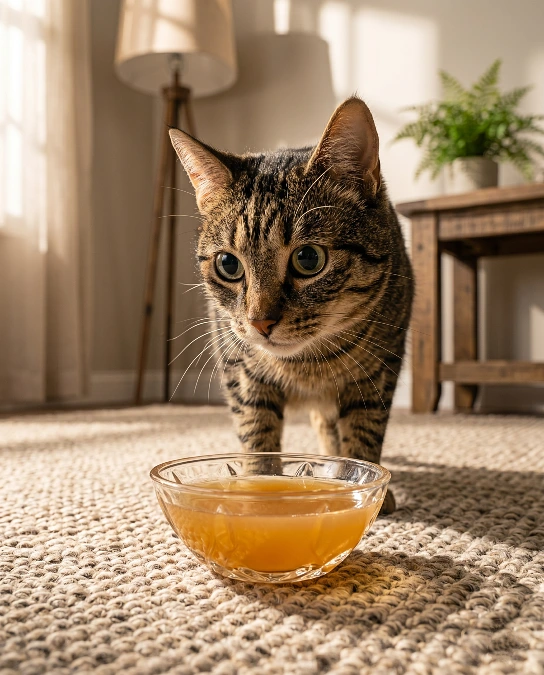
I use this mainly for older cats or when digestion needs extra care.
Ingredients
- 1 cup unsalted bone broth
- 2 tablespoons plain pumpkin puree
- 1/4 cup water
Instructions
- I heat broth and water on low heat.
- I add pumpkin puree and whisk thoroughly.
- I stir for 3–4 minutes until smooth.
- I remove from heat without boiling.
- I let it cool and slightly thicken naturally.
Nutritional Estimate
- Total batch: ~50 kcal
- Per tablespoon: ~2 kcal
Why I Use It
Bone broth contains collagen and gelatin, which may support joints. Pumpkin helps regulate digestion, especially in older cats.
Pro Tip
I warm it slightly before serving to improve smell and acceptance.
4. The “Picky Paws” Turkey and Egg Yolk Emulsion
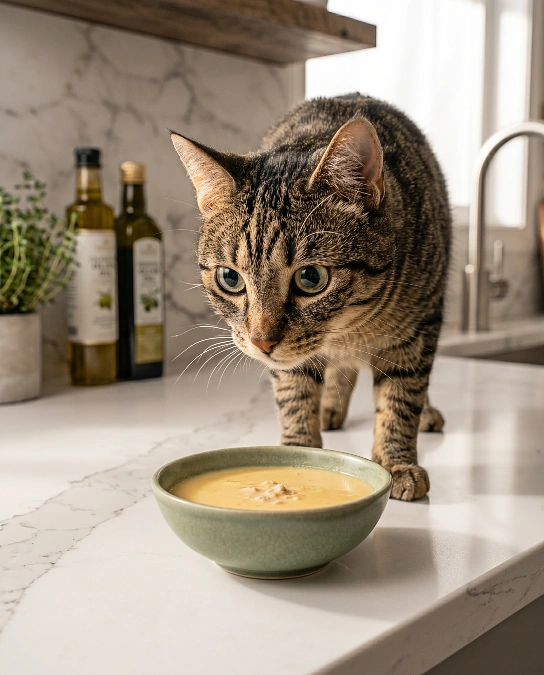
This is my richest recipe, so I use it as an occasional topper.
Ingredients
- 1/2 cup unsalted turkey broth
- 1/4 cup cooked ground turkey (plain)
- 1 egg yolk (boiled and mashed)
Instructions
- I warm the turkey broth on low heat.
- I add cooked turkey and stir gently.
- I mash the egg yolk separately until smooth.
- I mix a bit of broth into the yolk to form a paste.
- I combine everything and whisk for 1 minute.
- I cool it fully before serving.
Nutritional Estimate
- Total batch: ~123 kcal
- Per tablespoon: ~10 kcal
Why I Use It
Egg yolk provides healthy fats and biotin, which support skin and coat. Turkey is also easy to digest and high in protein.
Pro Tip
I prepare extra boiled eggs during my own meals and save the yolk for this recipe.
How to Store Your Homemade Gravies
I always treat storage seriously because homemade food spoils faster.
Refrigerator Storage
I store gravy in airtight containers and use it within 3–4 days.
Freezer Storage
I freeze in small cubes and keep them up to 2 months.
Safe Thawing
I thaw in the fridge overnight and serve lukewarm—not hot.
Signs of Spoilage
If I notice sour smell, mold, or unusual texture, I discard it immediately.
All content on this site is written and reviewed by our experienced team to ensure it is accurate, reliable, and helpful for our readers. Our Our Process page explains how we carefully research and create high-quality content, while our Team page introduces the professionals behind our work. We also provide clear guidelines for content or image concerns on our Image Removal page, so you can trust that we prioritize transparency, quality, and reader safety.