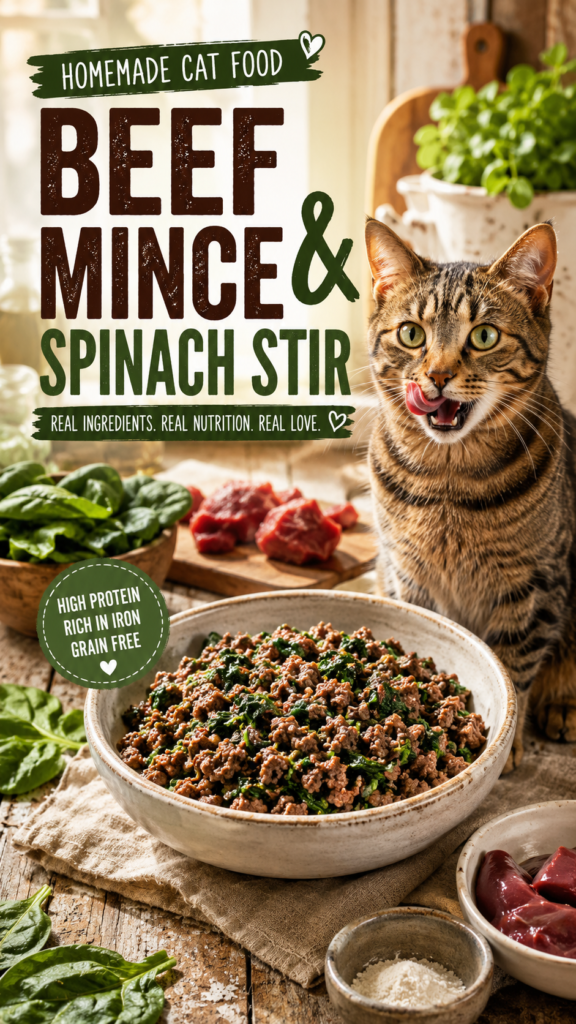
Beef Mince & Spinach Stir: Protein-Packed and Cat-Approved
Over the years of caring for cats with different personalities, appetites, and dietary needs, I’ve found that simple recipes often work best. This Beef Mince & Spinach Stir is one of those meals that consistently earns approval from even the pickiest cats in my home. It combines high-quality animal protein with a small amount of cat-safe vegetables while keeping the texture soft and easy to eat.
Many commercial foods contain ingredients that some cats ignore or leave behind. When I need a quick homemade option that provides moisture and a rich meaty aroma, this recipe is one I regularly prepare. It’s straightforward, budget-friendly, and fits nicely into a balanced feeding rotation.
Save For later
Key Takeaways
- Beef mince supplies essential protein that supports muscle maintenance.
- Lean beef is generally easier on a cat’s digestive system than fattier cuts.
- Cooked spinach can be offered in small amounts as part of a varied diet.
- Cats benefit from meals that contain plenty of natural moisture.
- Homemade cat food should never contain salt, garlic, onions, or seasonings.
- This recipe is best used as an occasional meal or nutritious topper.
Pro Tip
When I cook beef mince for my cats, I always break it into very small crumbles while it’s still in the pan. Larger chunks often get picked around, especially by senior cats or picky eaters. I also let the spinach cook until it becomes extremely soft before mixing it with the beef. If your cat is hesitant about vegetables, start with a tiny amount and gradually increase it over several meals. Adding a spoonful of warm water right before serving can improve the aroma and encourage better acceptance. I’ve found that cats usually prefer this meal slightly warm rather than straight from the refrigerator.
Other Posts
- Beef and Egg Cat Recipe for High-Protein Homemade Meals
- Ground Beef and Turkey Cat Food Recipe for Balanced Nutrition
- Beef and Sardine Cat Food Recipe for Omega-Rich Feeding
Why Your Cat Will Love This Recipe
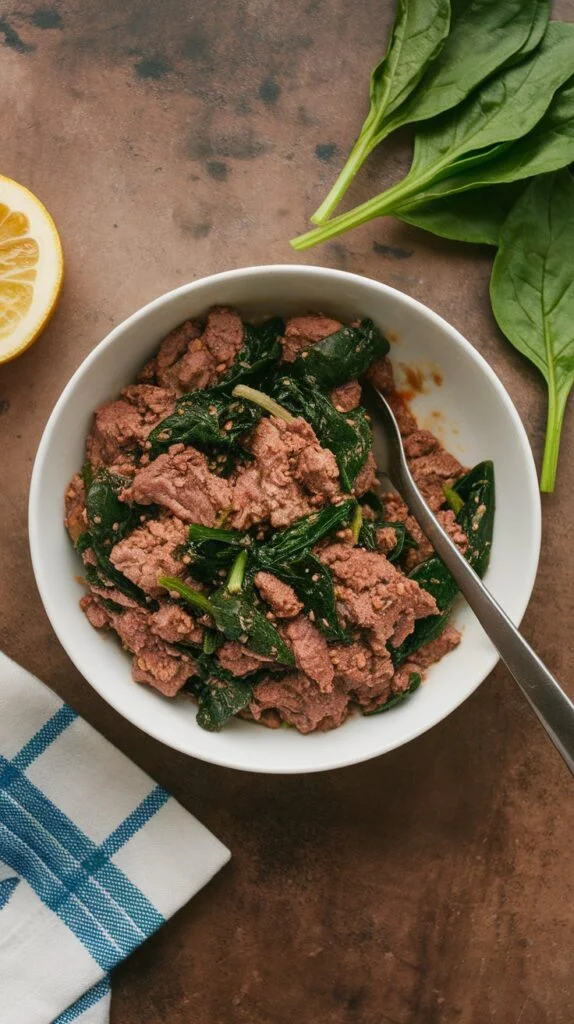
From experience, cats respond strongly to aroma and texture. Beef mince hits both. It’s rich in protein, iron, and B vitamins, which support muscle health and energy. According to feline nutrition data, cats require diets made up of at least 26% protein, and animal protein is the most biologically appropriate source.
Spinach, when lightly cooked, adds small amounts of vitamins A and K without altering flavor much. I’ve found that finely chopped greens blended into meat are far more accepted than visible chunks. Most cats don’t even notice it’s there—they just know the bowl is empty five minutes later.
Ingredients
Here’s what I use when making this dish at home:
- 1/4 pound lean ground beef
- 1/4 cup fresh spinach, lightly steamed or boiled and finely chopped
- 1–2 tablespoons water or low-sodium beef broth
That’s it—simple ingredients, minimal prep, and no stress.
How to Make It
Cook the beef mince
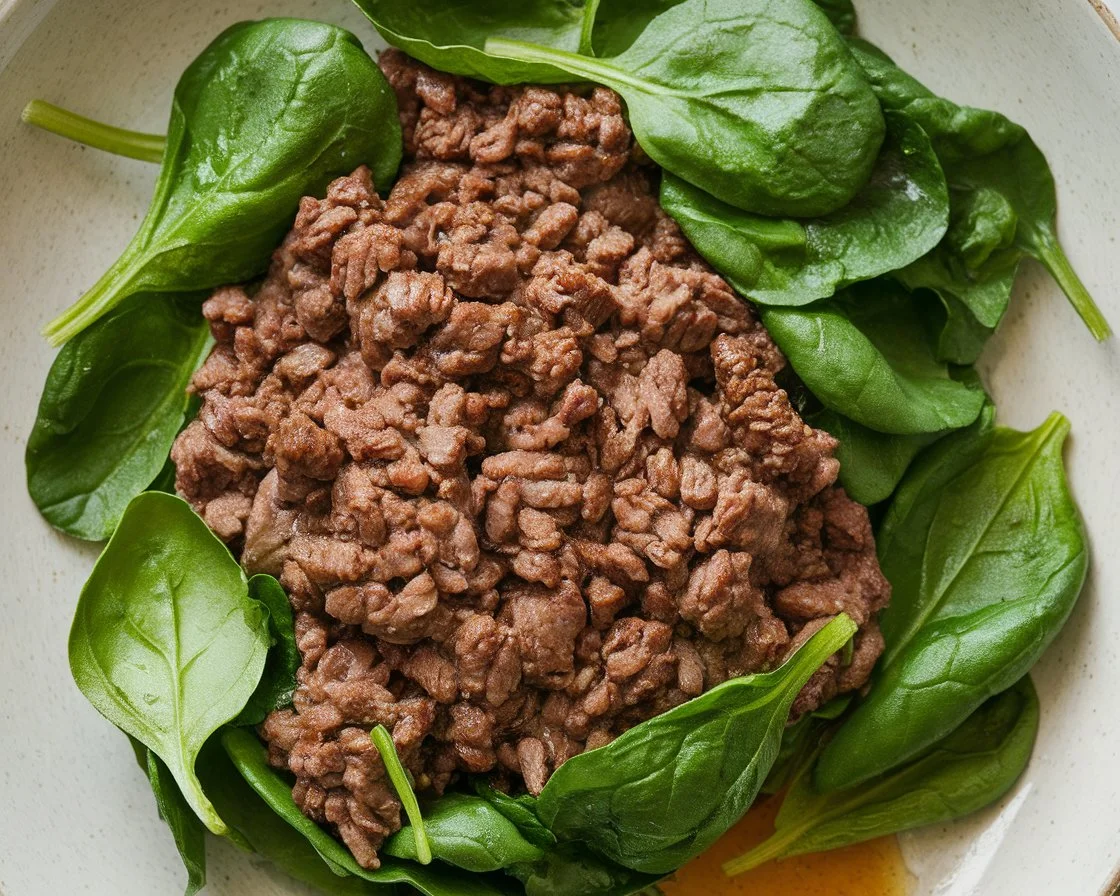
I cook the ground beef in a non-stick pan over medium heat until fully browned, breaking it into very small pieces. I never add oil, salt, or seasoning—cats don’t need it, and some seasonings are dangerous.
Steam or boil the spinach
While the beef cooks, I steam or boil the spinach for about 1–2 minutes until it’s soft. Raw spinach is harder for cats to digest, so this step matters. After cooking, I drain and chop it very finely.
Combine the ingredients
I mix the cooked beef and spinach together in a bowl, then add water or broth to create a soft, moist texture. Cats naturally get most of their hydration from food, so moisture is important.
Cool it down
I always let the food cool to room temperature. Cats are sensitive to heat, and serving food too hot often results in rejection.
Serve and watch the magic
Once it’s in the bowl, I step back. In my experience, most cats dig in immediately—no encouragement required.
Can Dogs Eat This Too?
Yes, they can.
Beef and cooked spinach are safe for dogs as well. The main difference is portion size and texture. Dogs don’t require food to be as finely chopped, and their nutritional needs differ slightly. I never feed this as a primary diet for dogs—just an occasional fresh meal or topper.
Common Mistakes to Avoid
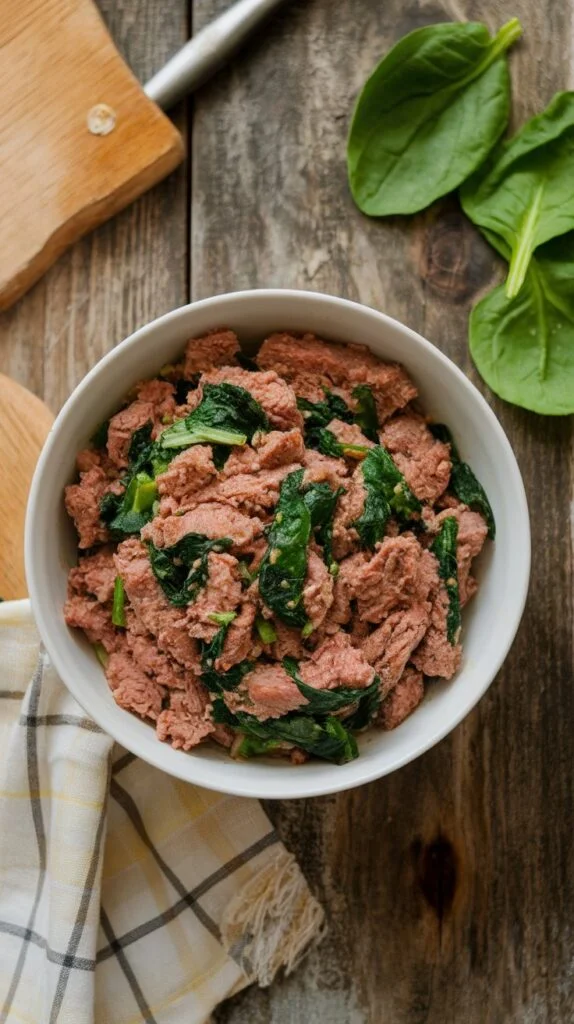
Using fatty ground beef
I always choose lean beef. High fat content can cause digestive upset in cats and lead to unnecessary weight gain.
Skipping the spinach prep
Raw spinach is tougher to digest. Cooking it lightly makes a big difference in tolerance.
Adding seasoning
Garlic, onion, salt, and spices are toxic or harmful to cats. Plain food is non-negotiable.
Serving it too cold or too hot
Room temperature is ideal. Anything else often gets ignored.
Storing Leftovers
When I make extra, here’s how I store it safely:
Fridge:
Airtight container for up to 3 days. I gently rewarm and cool before serving.
Freezer:
Portioned servings freeze well for up to 1 month. I thaw overnight in the fridge.
Small containers make feeding easier and reduce waste.
Variations to Try
Substitute turkey mince for beef
I’ve used turkey successfully for cats that need leaner protein or variety.
Try kale instead of spinach
Kale is also cat-safe when cooked and fed in small amounts.
Add a touch of pumpkin puree
A teaspoon of plain pumpkin can help cats prone to constipation or hairballs.
FAQs
Can I use raw beef for this recipe?
No. I don’t recommend it. Cooked beef is safer and easier to digest, and it reduces bacterial risk.
Is this a complete meal?
No. This is a supplemental or rotation meal. Cats require balanced nutrition, including taurine and calcium, which homemade meals alone usually lack.
What if my cat doesn’t like spinach?
That’s common. You can reduce the amount, swap it for another safe green, or skip it entirely and serve plain beef.
Final Thoughts
After years of feeding cats with wildly different preferences and sensitivities, I’ve learned that simple, fresh meals like this one often get the best response. The Beef Mince & Spinach Stir proves that homemade cat food doesn’t need to be complicated to be effective.
Used thoughtfully, this recipe adds variety, moisture, and real nutrition to your cat’s diet—without turning your kitchen into a full-time pet café. And if your cat approves? That’s the highest rating you’ll ever get.
All content on this site is written and reviewed by our experienced team to ensure it is accurate, reliable, and helpful for our readers. Our Our Process page explains how we carefully research and create high-quality content, while our Team page introduces the professionals behind our work. We also provide clear guidelines for content or image concerns on our Image Removal page, so you can trust that we prioritize transparency, quality, and reader safety.