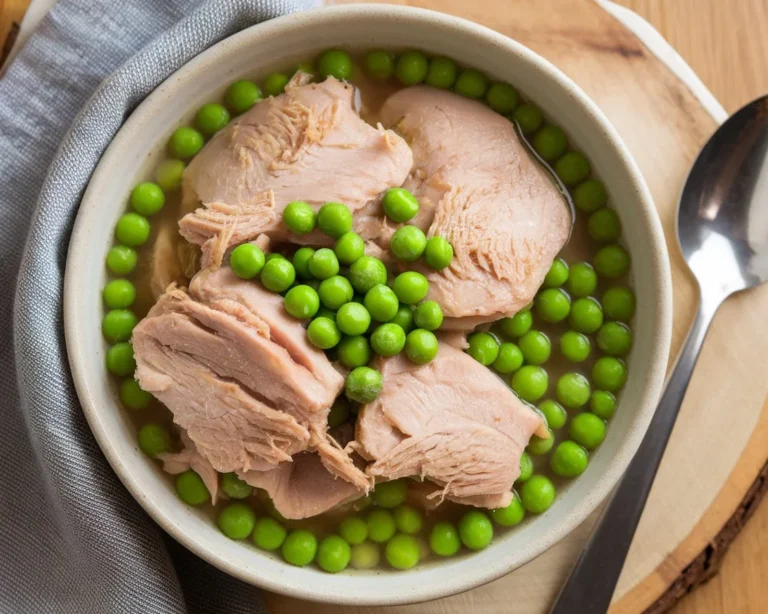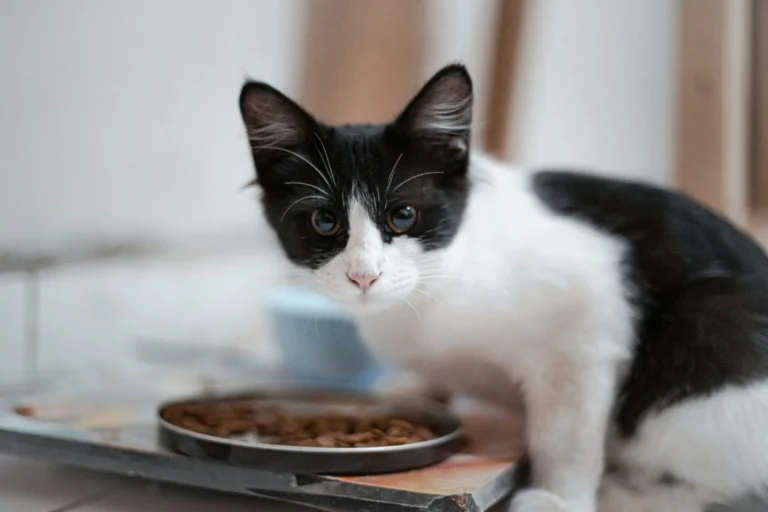
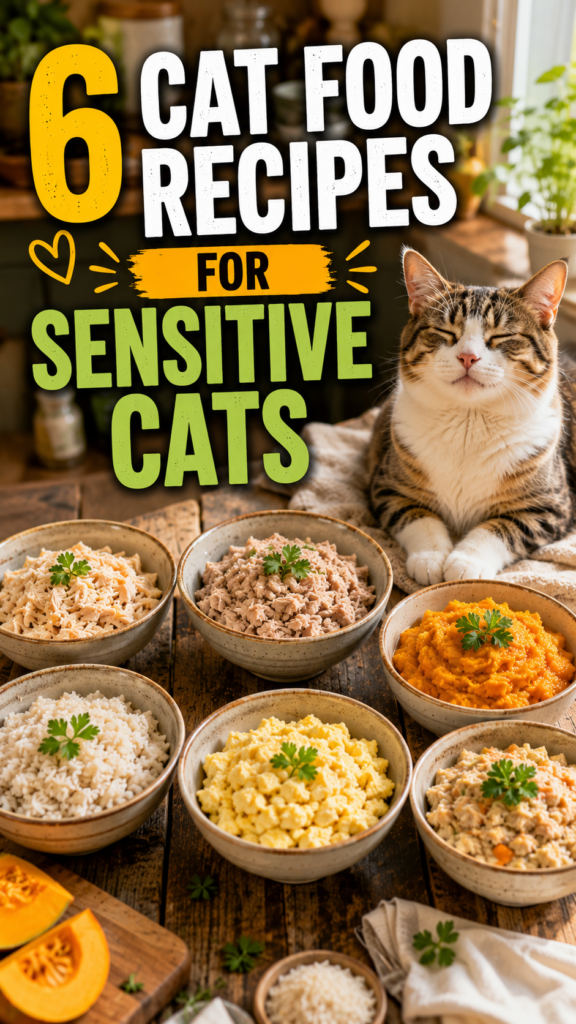
6 Cat Food Recipes For Sensitive Cats
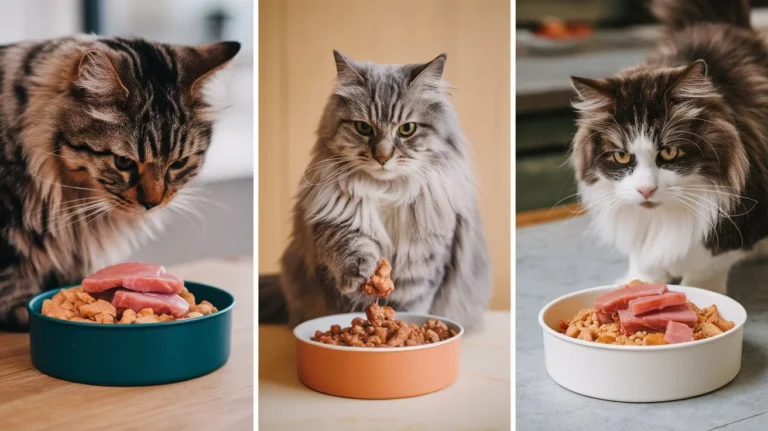
Finding the right cat food recipes for sensitive cats can feel frustrating when every meal seems to cause a new problem. I’ve cared for cats with delicate digestion for years, and I know how quickly a simple feeding mistake can lead to upset stomachs, poor appetite, or messy litter box surprises.
My experience with sensitive cats taught me that keeping ingredients simple often works best. After working closely with veterinarians and testing different feeding approaches, I found that gentle homemade meals made with easy-to-digest ingredients can help many cats feel more comfortable while supporting healthy digestion.
Save For Later
Key Takeaways
- Sensitive cats often do better with limited-ingredient meals.
- Easily digestible proteins such as chicken and turkey are commonly well tolerated.
- Moisture-rich foods may help support digestive health and hydration.
- Gradual food transitions can reduce stomach upset.
- Pumpkin and other gentle fiber sources may help maintain normal digestion.
- Homemade meals should be part of a balanced feline nutrition plan.
Pro Tip
When introducing a new recipe to a sensitive cat, I start with a portion no larger than a teaspoon mixed into their regular food. I watch stool quality, appetite, and energy levels for several days before increasing the amount. One mistake I made early on was changing too many ingredients at once, which made it impossible to identify the problem food. Now I only test one new ingredient at a time. Keeping a simple feeding journal has helped me spot patterns that I would have otherwise missed.
Other Posts
- Soft Cat Food Recipes Cats Love
- Shredded Chicken Thigh And Pumpkin Cat Food Recipe
- Ground Beef And Turkey Cat Food Recipe
1. Chicken and Pumpkin Puree
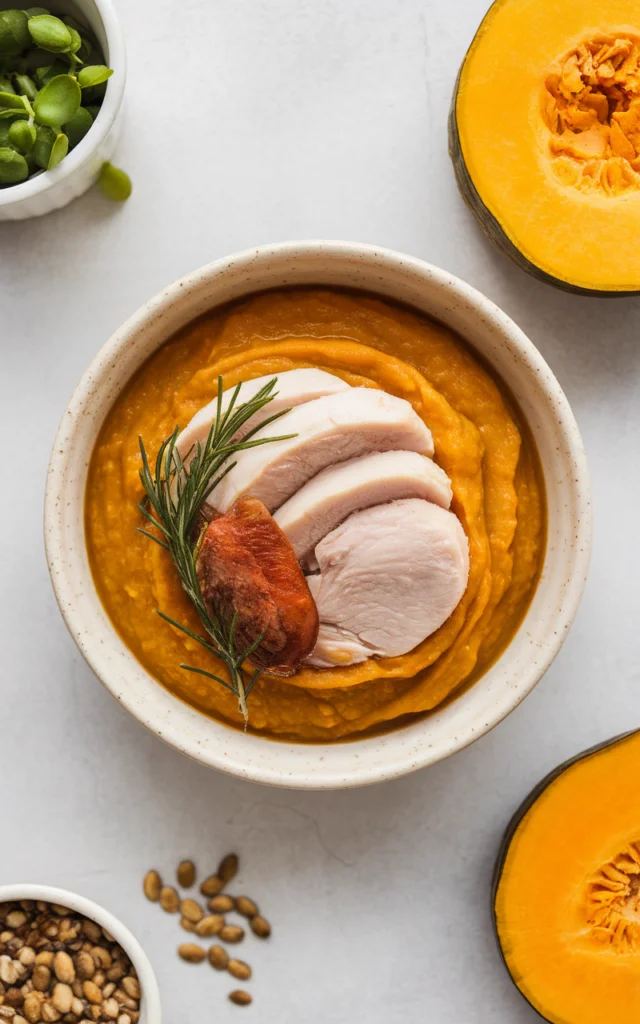
This recipe has been a lifesaver in my house, especially during bouts of diarrhea or after a round of medication. Chicken is one of the most digestible proteins for cats, and pumpkin provides soluble fiber that helps normalize digestion—whether stools are too loose or too firm.
Ingredients
- 1 cup cooked chicken (shredded, no bones or skin)
- 1/4 cup canned pumpkin (plain, no sugar or spices)
- 1/4 cup low-sodium chicken broth
Instructions
- Cook the chicken thoroughly and shred it into small, manageable pieces
- Mix the chicken with the pumpkin until evenly combined
- Add broth gradually to create a smooth, puree-like texture
- Serve at room temperature and refrigerate leftovers for up to 3 days
From experience, cats can be suspicious of pumpkin at first. When that happens, I add a little extra broth and warm it slightly to enhance the aroma.
2. Turkey and Rice Delight
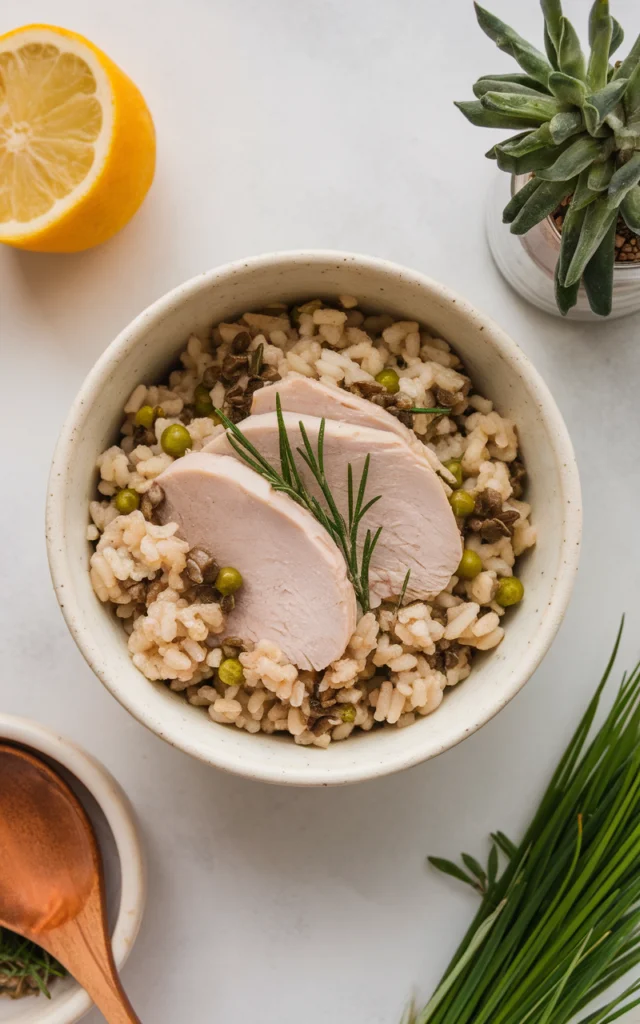
I often turn to this recipe when a cat is recovering from vomiting or stress-related stomach upset. Lean turkey is gentle on digestion, and white rice is widely recommended by veterinarians for short-term digestive support.
Ingredients
- 1/2 cup cooked ground turkey (lean, no seasoning)
- 1/4 cup cooked white rice
- 1 tablespoon olive oil (optional)
Instructions
- Cook the turkey thoroughly and drain excess fat
- Prepare the rice separately until soft
- Mix turkey and rice together, adding olive oil if your cat prefers more moisture
- Serve warm or at room temperature and refrigerate leftovers for up to 3 days
White rice is commonly used in veterinary bland diets, and I’ve personally seen it help calm irritated stomachs within 24–48 hours.
3. Salmon and Sweet Potato Mash
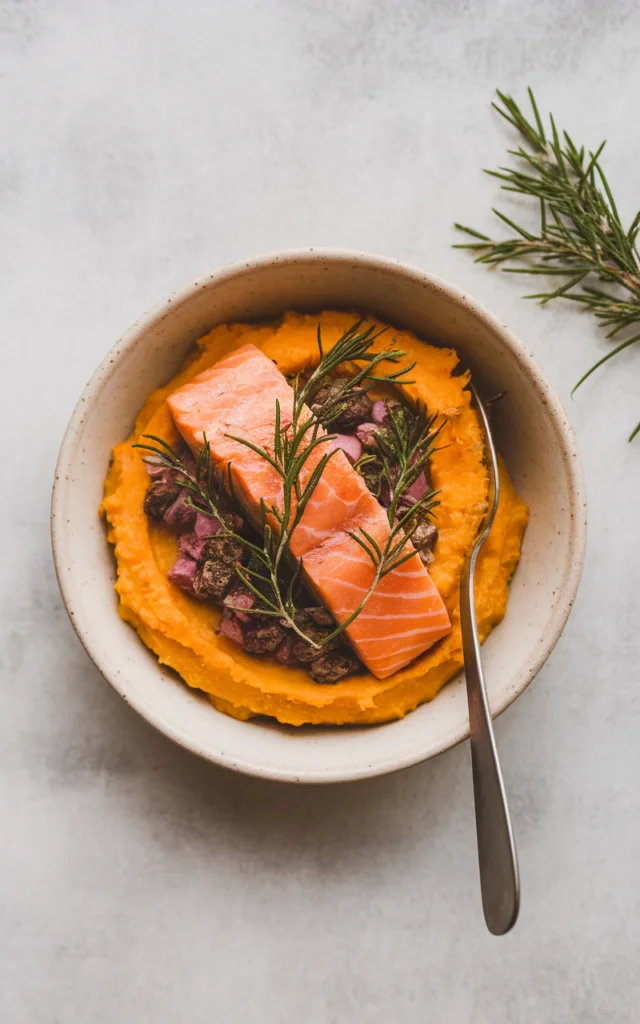
This recipe works well for cats with dry skin or dull coats, thanks to the omega-3s in salmon. I only use this occasionally, since fish shouldn’t dominate a cat’s diet.
Ingredients
- 1/2 cup cooked salmon (boneless, skinless)
- 1/4 cup cooked sweet potato (mashed)
- 1 tablespoon water or low-sodium chicken broth
Instructions
- Cook salmon thoroughly and remove all bones and skin
- Cook sweet potato until soft and mash
- Flake salmon and combine with sweet potato
- Add liquid to reach desired consistency
- Serve at room temperature and refrigerate leftovers for up to 3 days
Too much fish can interfere with vitamin absorption in cats, so I keep this as a rotation meal rather than a staple.
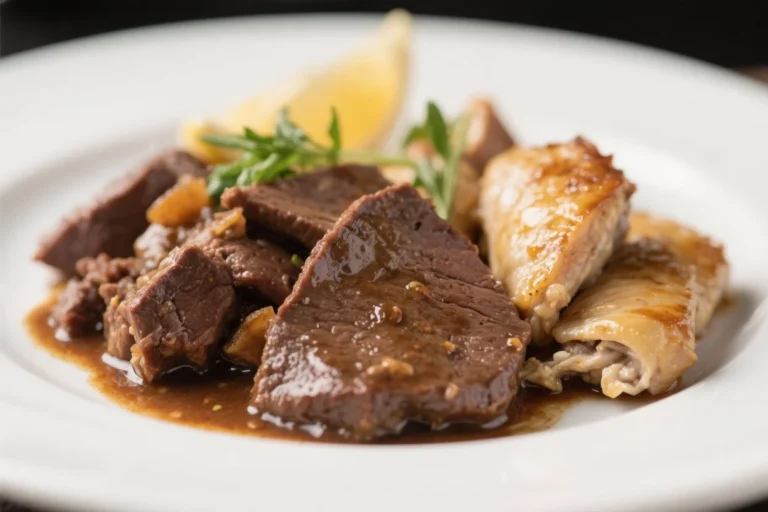
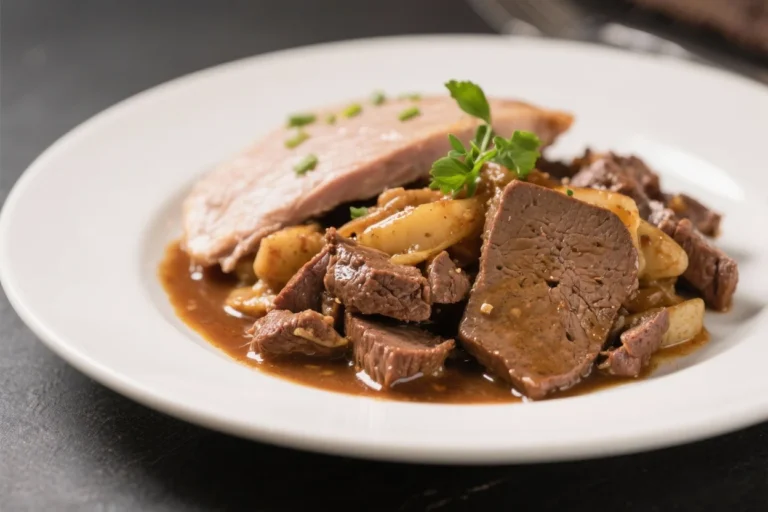
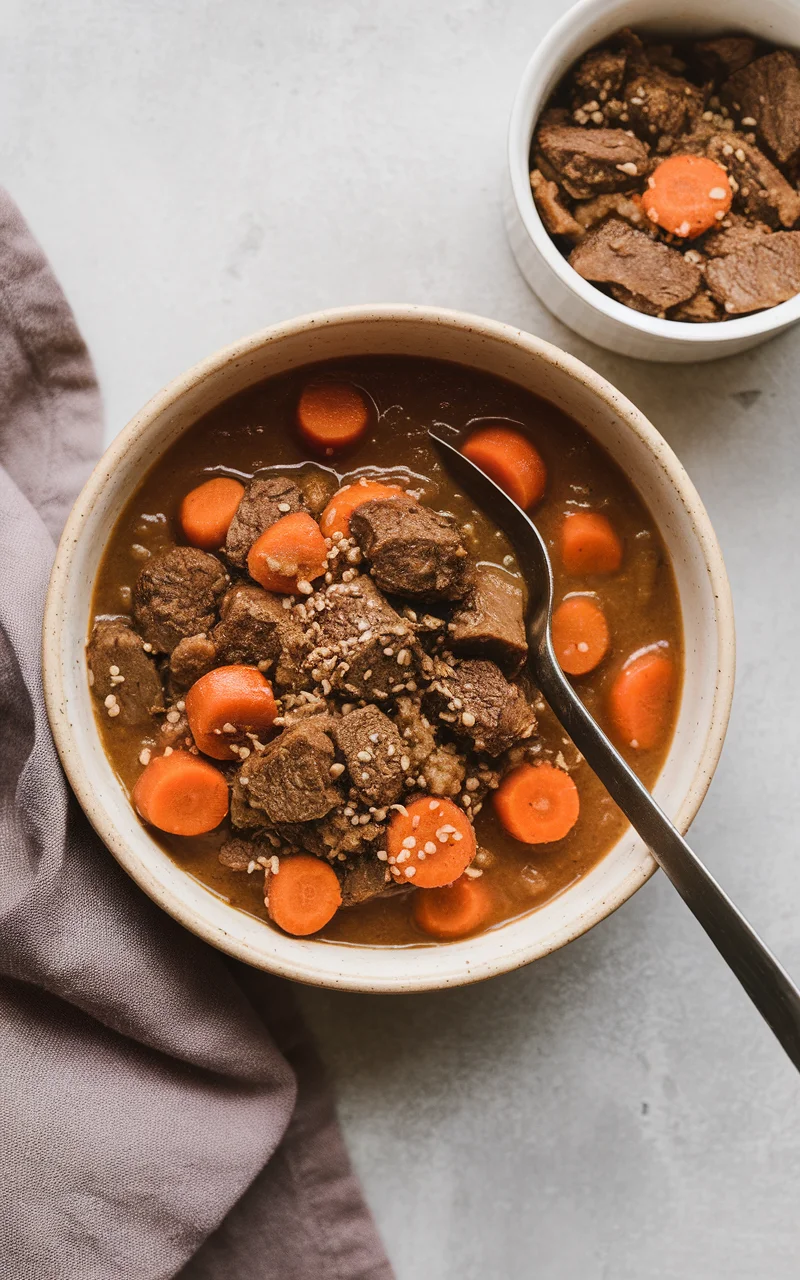
4. Beef and Carrot Stew
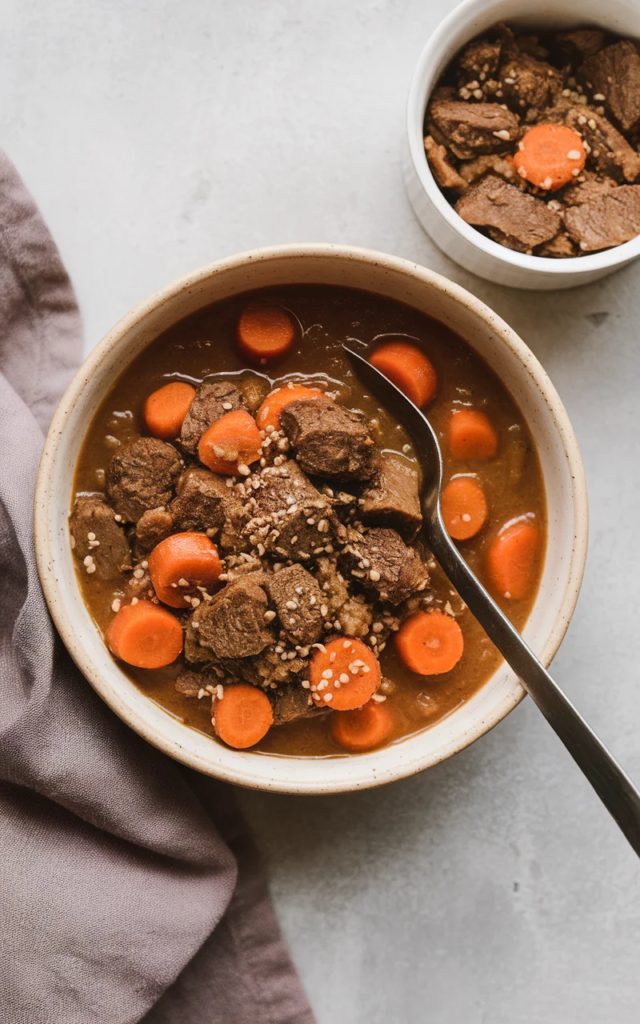
Some cats do better on red meat, especially those needing extra calories or muscle support. Beef offers dense protein, while carrots add beta-carotene and mild sweetness.
Ingredients
- 1/2 cup cooked ground beef (lean, no seasoning)
- 1/4 cup cooked carrots (mashed or finely chopped)
- 1/4 cup low-sodium beef broth
Instructions
- Cook beef thoroughly and drain excess fat
- Cook carrots until soft, then mash or finely chop
- Combine beef and carrots, adding broth for moisture
- Serve warm or at room temperature and refrigerate leftovers for up to 3 days
If carrots are a no-go, I’ve successfully substituted zucchini for several cats with texture sensitivities.
5. Tuna and Quinoa Bowl
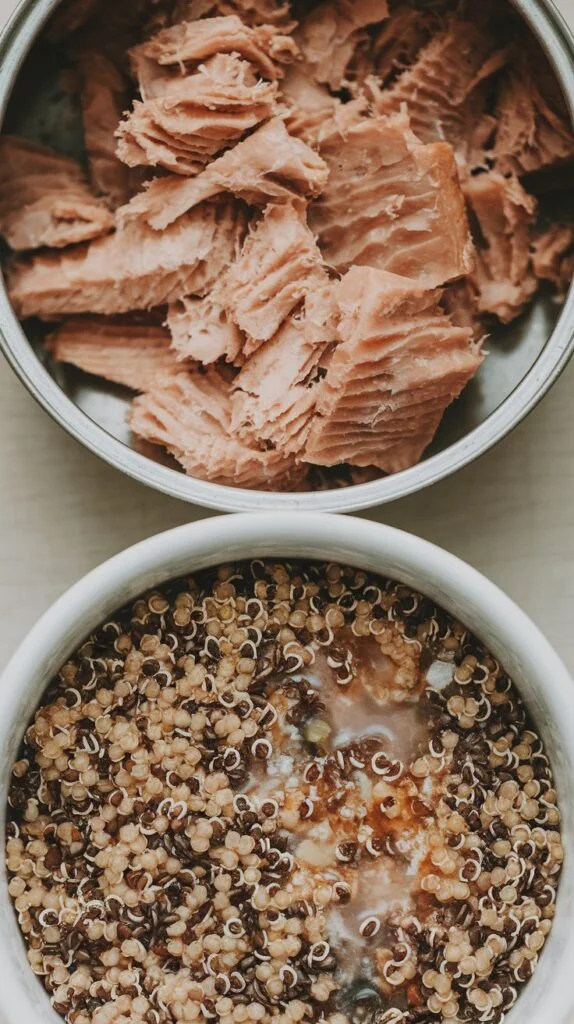
Tuna is almost universally loved, but I treat it carefully. This recipe is best as an occasional option, not a daily meal.
Ingredients
- 1/2 cup canned tuna (in water, no salt added)
- 1/4 cup cooked quinoa
- 1 tablespoon water or low-sodium chicken broth
Instructions
- Drain tuna thoroughly and flake into small pieces
- Cook quinoa until soft
- Mix tuna and quinoa together, adding liquid for moisture
- Serve at room temperature and refrigerate leftovers for up to 3 days
Excess tuna can contribute to mercury buildup, which is why I limit this recipe to once a week at most.
6. Egg and Spinach Scramble
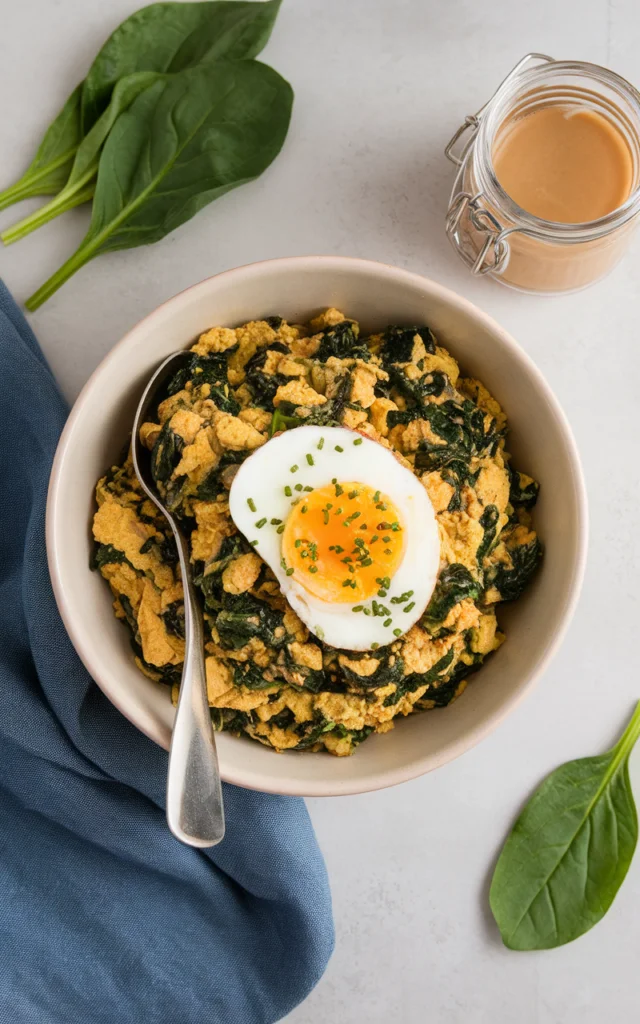
When I need a light, gentle meal that’s quick to prepare, this is my go-to. Eggs are highly digestible, and spinach adds trace nutrients when used sparingly.
Ingredients
- 1 large egg (fully cooked, no seasoning)
- 1 tablespoon cooked spinach (chopped)
- 1 teaspoon olive oil (optional)
Instructions
- Scramble the egg fully in a non-stick pan
- Cook spinach until soft and chop finely
- Mix egg and spinach together, adding olive oil if needed
- Serve warm or at room temperature and refrigerate leftovers for up to 2 days
Cats are obligate carnivores, so I keep vegetables minimal and always meat-forward.
FAQs
1. Can I feed my cat these recipes every day?
These meals are best used as supplements or rotation meals. Long-term feeding requires complete nutritional balance, including taurine.
2. How do I know if my cat has a sensitive stomach?
Frequent vomiting, loose stools, gas, or food refusal are common signs. A vet diagnosis is always recommended.
3. Can I freeze these recipes?
Yes. I regularly freeze individual portions for up to 2 months and thaw them in the fridge.
4. Are there any ingredients I should avoid?
Onions, garlic, added salt, sugar, and seasonings are unsafe for cats and should never be included.
5. Can I use raw meat in these recipes?
No. Raw meat increases the risk of bacterial infection for both cats and humans.
6. How much should I feed my cat?
A general guideline is 20–30 calories per pound of body weight per day, adjusted for age and activity.
7. What if my cat refuses homemade food?
I’ve found slow transitions work best—mixing small amounts into familiar food over 5–7 days.
Final Thoughts
Caring for a cat with a sensitive stomach takes patience, observation, and flexibility. These six recipes are meals I’ve personally relied on over years of cat ownership, especially during digestive flare-ups or recovery periods. Every cat is different, so pay attention to what works, adjust gradually, and always loop in your vet when needed.
All content on this site is written and reviewed by our experienced team to ensure it is accurate, reliable, and helpful for our readers. Our Our Process page explains how we carefully research and create high-quality content, while our Team page introduces the professionals behind our work. We also provide clear guidelines for content or image concerns on our Image Removal page, so you can trust that we prioritize transparency, quality, and reader safety.