DIY Dog Perfume: Make Your Pup Smell Like a Spa Day
Let’s be honest—our dogs can be absolutely adorable and still come home smelling like they’ve rolled in something questionable. Whether it’s after a rainy walk, a muddy backyard adventure, or simply a few days between baths, sometimes your pup could use a little freshening up.
But reaching for a heavily fragranced household spray isn’t the answer. Dogs have much more sensitive noses than we do, and products designed for people or household surfaces aren’t automatically appropriate for pets.
That’s where a simple DIY approach can come in handy. The key is keeping it gentle, minimal, and free from concentrated essential oils. If your dog has allergies, irritated skin, a diagnosed skin condition, or a persistent odor, check with your veterinarian before experimenting with any new topical product.
Disclosure: As Amazon Associates, we earn from qualifying purchases at no extra cost to you.
Note: If your dog has allergies, sensitive skin, or any existing skin conditions, consult your veterinarian before trying any new recipes.
Why Go DIY? (AKA, Why Not Just Use Febreze? 🤨)
Your dog’s coat is not the place to experiment with household fragrance sprays.
Dogs can be exposed to products through their skin, inhalation, and licking their fur afterward. Some fragrance and essential-oil products can cause irritation or more serious problems depending on the ingredients and concentration. Veterinary guidance specifically warns against applying concentrated essential oils directly to pets.
And household air fresheners are designed for your home—not for spraying onto your dog.
A homemade freshening mist can be useful when you want something simple, but DIY does not automatically mean safer. The fewer ingredients you use, the easier it is to know exactly what is touching your dog’s coat.
A gentle DIY dog freshener can be:
- Simple enough to make with a few ingredients.
- Free from concentrated fragrance oils.
- Easy to apply lightly to the coat.
- Inexpensive compared with specialty grooming products.
- Useful between regular baths when your dog simply needs a quick refresh.
The goal isn’t to make your dog smell strongly perfumed. It’s to keep things light and comfortable.
The Basics of DIY Dog Perfume
What You’ll Need
For the safest simple version, keep your ingredient list short.
- Distilled water – Use fresh distilled water as the base for a simple homemade mist.
- A clean spray bottle – Choose a small bottle that can be thoroughly cleaned before use.
- Measuring spoon – Helpful for keeping the recipe consistent.
- Optional dog-safe grooming product – If you want more than a water mist, a veterinarian-approved dog grooming spray is generally a better choice than experimenting with essential oils.
One important change from many DIY recipes: skip concentrated essential oils unless your veterinarian specifically recommends a particular product and formulation for your dog. ASPCA guidance notes that direct application of essential oils to pets is best avoided because concentration, formulation, and individual sensitivity can change the risk.
Ingredients List (For the “Fancy” Version)
For a very simple homemade refresh mist, try:
- 1 cup distilled water
- A clean spray bottle
That’s it.
It may sound almost too simple, but when you’re making something that will land on your dog’s fur and potentially be licked during grooming, avoiding unnecessary ingredients has real advantages.
If you’re looking for deodorizing or skin-care benefits beyond a basic water mist, a commercial dog-formulated grooming spray is usually a better option than adding essential oils or household fragrance ingredients yourself.
Let’s Get Mixing!
Ready to make your pup a quick between-bath refresher? Here’s the easy version:
- Start with the water. Pour 1 cup of distilled water into a freshly cleaned spray bottle.
- Leave some room at the top. This makes it easier to shake and use the bottle without spilling.
- Close the bottle securely. Make sure the spray mechanism is properly attached.
- Give it a gentle shake. Even with a simple formula, shaking before use is a good habit.
- Label the bottle. Write the date you made it on the bottle so you don’t forget how long it has been sitting around.
Don’t add essential oils simply because a recipe says they’re “dog-safe.” Veterinary sources caution that essential-oil safety depends on the specific oil, concentration, formulation, and route of exposure.
How to Use Your DIY Dog Perfume
Don’t treat a dog freshening mist like human perfume. Your goal is a very light refresh, not a strong fragrance.
Before using anything new:
- Start with a small area. Lightly mist a small section of fur first and watch for redness, itching, rubbing, or other signs of irritation.
- Keep it away from the face. Avoid the eyes, nose, mouth, ears, and any irritated or broken skin.
- Use only a tiny amount. A light mist over the outer coat is plenty.
- Let the coat dry naturally. Don’t saturate the fur.
- Watch your dog afterward. If your dog seems uncomfortable, starts rubbing, licking excessively, coughing, sneezing, or develops skin irritation, stop using the product.
And remember: if your dog suddenly smells unusually bad, perfume isn’t really solving the problem. Persistent odor can sometimes be associated with skin, ear, dental, or other health issues that deserve veterinary attention.
Pro Tips for Perfect Dog Perfume
1. Less is More
Your dog experiences scents very differently from you. A fragrance that seems subtle to you can be much more noticeable to your pup.
That’s why a barely-there freshening mist is preferable to trying to make your dog smell strongly scented.
You don’t need your dog to smell like a perfume counter. Clean, comfortable, and natural is the goal.
2. Know Your Dog’s Allergies
If your dog has a history of allergies, itching, hot spots, dermatitis, or other skin problems, be especially cautious about homemade topical products.
When your dog already has a skin problem, adding new ingredients can make it harder to determine what’s causing an irritation.
For dogs with sensitive skin, ask your veterinarian what type of grooming product is appropriate instead of relying on essential oils or homemade fragrance blends.
3. Keep It Fresh
A homemade water-based spray doesn’t contain the preservatives found in many commercial grooming products.
For that reason, don’t make a huge batch and leave it sitting around indefinitely.
Make a small amount, keep the bottle clean, and discard it if the liquid becomes cloudy, develops an unusual odor, or appears contaminated. When in doubt, make a fresh batch.
Safe Essential Oils for Dogs (And Ones to Avoid Like the Plague)
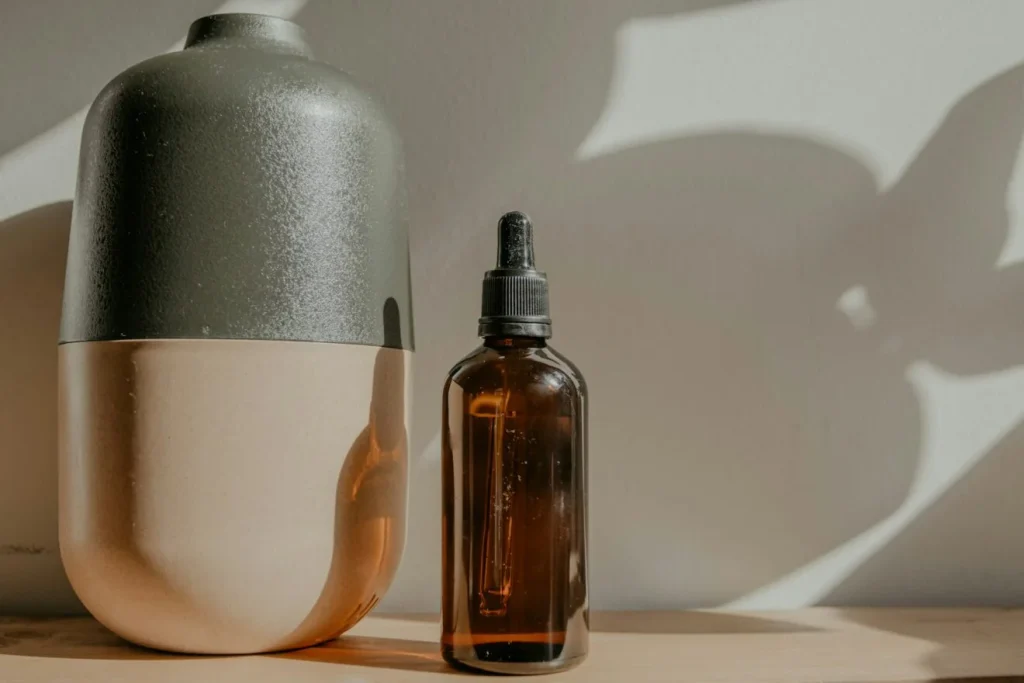
This is one section where it’s important to be cautious.
You may see DIY recipes online recommending lavender, chamomile, cedarwood, or other essential oils for dogs. However, “natural” does not automatically mean safe for direct application.
ASPCA guidance recommends avoiding direct application of essential oils to pets because the risk can vary according to the oil, concentration, formulation, and individual animal.
Dog-Safe Oils:
Rather than labeling particular essential oils as universally “dog-safe,” it’s better to say:
- Don’t assume an essential oil is safe because it’s commonly recommended online.
- Don’t apply concentrated essential oils directly to your dog’s coat or skin.
- Ask your veterinarian before using any essential-oil product on your dog.
- Keep essential-oil bottles securely away from curious pets.
Even lavender isn’t something I’d recommend casually adding to a homemade dog perfume. ASPCA lists lavender as toxic to dogs if ingested, and veterinary sources emphasize that essential-oil risks depend heavily on concentration and exposure.
Oils to Avoid:
Particularly concerning examples include:
- Tea tree oil – Concentrated tea tree oil can be highly toxic to dogs.
- Citrus oils – Citrus essential oils can pose risks through ingestion or skin exposure.
- Eucalyptus oil – Eucalyptus is toxic to dogs when ingested.
- Peppermint oil – Listed among essential oils that can be poisonous to dogs.
- Pine oil – Another oil veterinary sources identify as potentially toxic.
VCA specifically lists citrus, tea tree, peppermint, pine, and several other essential oils among products that can be poisonous to dogs through ingestion or skin exposure.
So instead of trying to create a heavily scented DIY perfume, an unscented mist is the safer homemade direction.
When NOT to Use Dog Perfume
There are plenty of situations where perfume—or even a homemade freshening mist—isn’t the right solution.
- If your dog has a skin condition. Itching, redness, sores, scaling, or persistent odor should be evaluated rather than covered up.
- If the odor is unusually strong or persistent. A new unpleasant smell can sometimes point to an underlying grooming or health issue.
- If your dog dislikes fragrances. If your pup walks away, rubs against furniture, sneezes, or seems bothered after application, stop using it.
- If your dog has respiratory problems. Strong fragrances and airborne oils can be particularly problematic for sensitive pets.
- If you’re trying to treat fleas or another parasite. Perfume isn’t a flea treatment and shouldn’t replace an appropriate veterinary-approved product.
Most importantly, don’t use fragrance to mask a smell that keeps returning. Find the cause instead.
Quick FAQs
Q: Can I use this on myself?
A basic water mist isn’t really a perfume, so there isn’t much reason to use it as one. If you want a personal fragrance, choose a product formulated specifically for human use rather than adapting a pet recipe.
Q: What if my dog hates the spray?
Don’t force it.
You can skip the spray entirely and focus on regular brushing, bathing when appropriate, washing bedding, and keeping your dog’s living areas clean.
If you want to try a freshening product, spray it onto your hands or a brush first rather than spraying directly toward your dog. Keep it away from the face and stop immediately if your dog seems uncomfortable.
Q: Is this safe for puppies?
Puppies deserve extra caution because they’re still developing and may be more sensitive to certain exposures.
For a young puppy, I’d skip essential oils and unnecessary fragrances altogether. If your puppy needs grooming help, ask your veterinarian which puppy-safe shampoo or grooming product is appropriate.
Final Sniff (Pun Totally Intended)
A good dog freshener shouldn’t try to turn your pup into a walking perfume bottle.
The safest DIY approach is often the simplest one: keep the ingredients minimal, avoid concentrated essential oils, use only a light amount, and pay attention to how your dog responds.
If your dog has a persistent odor, itchy skin, redness, ear problems, or another unusual symptom, don’t cover it up with fragrance. That’s a situation where figuring out the underlying cause with your veterinarian is much more useful.
Your dog doesn’t need to smell like lavender, citrus, or a fancy cologne. A clean, comfortable pup is already pretty fabulous. 🐕✨