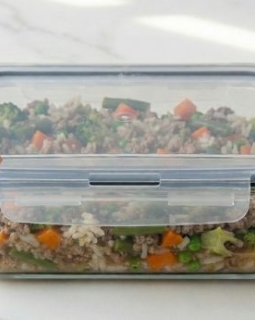

How To Prepare Allergy-Friendly Dog Food Without Common Allergens
Feeding a dog with suspected food allergies can feel like playing detective at dinnertime. One ingredient seems fine, another causes itching, and suddenly the food bowl has become the most carefully investigated object in the house.
The good news is that you can simplify your dog’s meals by paying close attention to ingredients and choosing foods based on your dog’s individual history. But there’s an important distinction: a food that seems “gentle” or has fewer ingredients isn’t automatically allergy-friendly for every dog.
If your dog regularly scratches, licks their paws, develops recurring ear problems, vomits, or has persistent digestive trouble, talk with your veterinarian before assuming food is responsible. Dogs can have environmental allergies, parasites, infections, and other conditions that look similar to food reactions.
For confirmed or strongly suspected food allergies, an elimination diet is generally the most reliable way to identify a dietary trigger. That means the diet needs to be carefully selected and followed consistently—not simply swapping chicken for turkey and hoping for the best.

Spot the Culprits: Common Allergens to Dodge
Dogs can develop reactions to many different ingredients, but food allergies most often involve proteins. Beef, dairy, and chicken are among the commonly reported allergens, while eggs, soy, wheat, lamb, pork, and other ingredients can also cause problems in individual dogs. Importantly, any dietary protein can potentially become an allergen.
That means there’s no universal list of foods that every allergic dog needs to avoid.
For example, turkey isn’t automatically safer than chicken, and duck isn’t automatically safer than beef. If your dog has eaten an ingredient regularly in the past, it may not qualify as a truly novel protein for an elimination trial.
A better approach is to make a list of everything your dog has eaten—including previous foods, treats, table scraps, chews, supplements, and flavored medications—and give that history to your veterinarian. This helps determine which ingredients may actually be novel.
Red Flags Your Dog Might Have Food Allergies
Possible signs of an adverse food reaction can include:
- Persistent itching or chewing at the paws
- Recurrent ear inflammation or infections
- Red, irritated skin
- Excessive licking or scratching
- Vomiting or diarrhea
- Repeated digestive upset
- Changes in stool quality
These symptoms don’t automatically mean your dog has a food allergy. Environmental allergies, fleas, infections, parasites, and gastrointestinal disorders can cause similar problems.
That’s why changing food repeatedly without investigating the underlying cause can make the situation more confusing rather than less.
Pick Your Safe Staples: Proteins, Carbs, and Fats
Once your veterinarian has helped determine which ingredients are appropriate, you can build meals around a small number of carefully selected foods.
For an actual elimination trial, the goal isn’t simply to pick foods that are generally considered “healthy.” The ingredients need to be appropriate based on your dog’s dietary history and the plan recommended by your veterinary team.
Protein Options (Choose One)
Potential protein choices may include:
- Turkey or duck — but only if they are genuinely appropriate for your dog’s dietary history
- Pork — another option when it hasn’t previously been fed and your veterinarian considers it suitable
- Venison or rabbit — sometimes used as novel proteins
- Other veterinary-selected proteins — the best choice depends on what your dog has eaten previously
A novel protein isn’t automatically novel simply because it sounds unusual. If your dog has already eaten rabbit-based treats, for example, rabbit may no longer be a useful novel choice.
Hydrolyzed-protein veterinary diets are another option. In these diets, proteins are broken into smaller fragments designed to reduce the likelihood of triggering an immune response.
Carb and Fiber Options (Pick One or Two)
Depending on your dog’s needs and the dietary plan you’re following, carbohydrate ingredients may include:
- White rice
- Sweet potato
- Oats
- Quinoa
- Plain pumpkin
However, don’t automatically remove grains because you suspect an allergy. Dogs can react to wheat and other ingredients, but grains aren’t universally problematic.
For an elimination diet, the important question is whether the ingredient fits the specific trial—not whether it’s considered fashionable or “clean.”
Healthy Fats
Dietary fat is important, but adding oils simply because they’re marketed for skin and coat health isn’t always appropriate.
Depending on your dog’s complete diet and health status, your veterinarian may recommend an appropriate source of essential fatty acids.
Possible options include:
- A properly selected algal oil
- A veterinary-recommended omega-3 supplement
- The natural fat already present in the selected protein
Be particularly careful with supplements during an elimination diet. Flavored supplements can contain additional proteins or ingredients that interfere with the trial.
The simpler the ingredient list, the easier it is to understand what your dog is actually eating.
Must-Have Add-Ons: Vitamins and Minerals

This is where many homemade dog-food recipes go wrong.
Meat, rice, vegetables, and a little oil may look like a nutritious dinner, but appearance doesn’t tell you whether the meal contains the correct amounts of calcium, phosphorus, zinc, copper, iodine, vitamins, essential fatty acids, and other nutrients.
A homemade diet can be appropriate when it is properly formulated, but simply adding a generic multivitamin doesn’t guarantee nutritional completeness. Veterinary nutrition guidance recommends using a properly formulated recipe for dogs eating homemade food long term.
If your dog is undergoing an elimination diet, supplements require extra attention because flavored products can introduce ingredients that aren’t part of the trial.
- Calcium: A boneless homemade diet usually needs a carefully calculated calcium source.
- Essential fatty acids: Your dog’s complete recipe should provide appropriate fatty acids.
- Vitamins and minerals: These need to be calculated as part of the entire recipe rather than added randomly.
- Fiber: Ingredients such as pumpkin or certain vegetables may provide fiber, but more isn’t necessarily better.
How Much Calcium?
There isn’t one safe calcium amount that can simply be added to every homemade dog-food recipe.
The appropriate amount depends on the complete recipe, the dog’s size, life stage, energy needs, and the amounts of other nutrients in the food.
That’s why I would not use a generic “milligrams of calcium per pound of meat” rule as a substitute for a properly formulated recipe.
If you’re feeding homemade food regularly, ask your veterinarian for a recipe from a veterinary nutrition professional or have your existing recipe evaluated. An unbalanced meat-and-rice diet can cause serious nutritional deficiencies over time.
Simple, Allergen-Friendly Recipes to Try
The recipes below are best viewed as ingredient combinations and cooking ideas, not complete long-term elimination diets.
If your veterinarian has prescribed an elimination diet, use the exact recipe or therapeutic food they recommend. Don’t add ingredients simply because they appear on a general list of “allergy-friendly” foods.
Recipe 1: Turkey + Sweet Potato Bowl
Ingredients
- Plain cooked ground turkey, using an amount appropriate for your dog’s individual meal plan
- Cooked sweet potato
- Soft-cooked green beans
- Any veterinary-prescribed balancing supplement
Instructions:
- Cook the turkey thoroughly without onion, garlic, heavy seasoning, or sauces.
- Cook the sweet potato until soft and mash it.
- Steam the green beans until tender and chop them into manageable pieces.
- Combine the ingredients after they have cooled.
- Add any supplement exactly according to the formulation provided by your veterinarian or veterinary nutritionist.
- Divide into the portions appropriate for your dog’s calorie requirements.
Don’t use this combination as a complete long-term diet simply because it contains meat and vegetables. The nutritional balance needs to be calculated.
Recipe 2: Pork + Pumpkin Comfort Mix
Ingredients
- Plain, thoroughly cooked lean pork
- Cooked white rice
- Plain pumpkin puree
- A veterinarian-formulated balancing supplement, if required
Instructions:
- Cook the pork completely and drain excess fat when appropriate.
- Prepare the rice until soft.
- Add plain pumpkin puree without spices, sugar, or pie-filling ingredients.
- Combine the ingredients once they have cooled.
- Add required supplements according to the complete recipe rather than guessing at quantities.
Pumpkin can contribute fiber, but it isn’t a treatment for food allergy and shouldn’t be used in large quantities simply because a dog has digestive problems.
Recipe 3: Duck + Quinoa Power Bowl
Ingredients
- Plain cooked duck
- Fully cooked quinoa
- Cooked zucchini
- A properly formulated balancing supplement when required
Instructions:
- Cook the duck thoroughly and remove bones, skin, and excess fat when appropriate.
- Rinse and cook the quinoa according to package directions.
- Cook the zucchini until tender.
- Combine the ingredients after cooling.
- Add any required nutritional supplement according to the complete recipe.
Duck can be a useful protein for some dogs, but it isn’t automatically appropriate for an elimination diet. If your dog has eaten duck previously, it may not be novel.
Portioning tip: Avoid relying on a universal percentage of body weight to determine how much homemade food every dog should receive. Calorie requirements vary significantly between dogs based on size, age, activity, body condition, neuter status, and health. Your veterinarian can help determine an appropriate daily calorie target.
Avoid Cross-Contamination Like a Pro
When you’re trying to determine whether a particular food is triggering a reaction, consistency matters.
A dog may eat the carefully selected trial diet all week and then receive a flavored chew, table scrap, or treat containing another protein. Suddenly, you don’t know whether the diet worked—or whether the extra food caused another reaction.
During a strict elimination trial:
- Keep preparation surfaces clean.
- Wash bowls and utensils thoroughly.
- Store trial-diet ingredients separately from other pet foods.
- Don’t allow pets to share food bowls.
- Check chew ingredients carefully.
- Avoid table scraps.
- Ask your veterinarian before giving flavored medications or supplements.
- Don’t reward your dog with random treats during the trial.
Even seemingly insignificant food sources can complicate an elimination trial. Veterinary guidance specifically warns about treats, chews, supplements, flavored medications, and other food-containing products.
Transition the Right Way (Because Tummy Drama Is Not Fun)
For a normal diet change, gradually introducing the new food can help reduce digestive upset.
But there’s an important exception: a veterinarian-directed elimination diet isn’t necessarily something you should blend with the old diet for 7–10 days.
If the purpose of the new diet is to determine whether your dog’s previous food is contributing to the problem, mixing the old food into the new diet defeats the purpose of the trial.
For an ordinary food change, your veterinarian may recommend a gradual transition such as:
7–10 Day Transition Plan
- Days 1–3: Begin with a smaller proportion of the new food alongside the current food.
- Days 4–6: Gradually increase the new food while reducing the old food.
- Days 7–9: Move toward mostly new food.
- Day 10+: Complete the transition if your dog is tolerating it well.
The exact pace can be adjusted if your dog has a sensitive digestive system.
For an elimination-challenge diet, follow your veterinarian’s specific instructions instead. The trial needs to be nutritionally appropriate and exclusive for the recommended period.
Track Results and Tweak Smartly
Keeping notes can make a complicated food investigation much easier.
Instead of simply writing “better” or “worse,” record what you actually observe.
- Skin: Note scratching, redness, licking, or chewing.
- Ears: Record recurring redness, odor, discharge, or infections.
- Paws: Note excessive licking or chewing.
- Stool: Record consistency and frequency.
- Digestive signs: Note vomiting, gas, or appetite changes.
- Diet: Record every food, treat, chew, supplement, and flavored medication.
- Dates: Write down when symptoms appear or improve.
Try not to change several things at once. If you introduce three new ingredients and your dog improves or worsens, you won’t know which change mattered.
When to Call the Vet
Contact your veterinarian if your dog has:
- Persistent vomiting or diarrhea
- Blood in the stool or vomit
- Significant weight loss
- Loss of appetite
- Marked lethargy
- Repeated ear or skin infections
- Severe or worsening itching
- Pain or other concerning changes
A veterinary visit is especially important when symptoms are persistent because food allergy isn’t the only possible explanation.
If a homemade elimination diet is being considered, a veterinary nutritionist can help formulate a nutritionally complete recipe rather than relying on a collection of ingredients found online.
FAQ
How do I know which ingredient my dog is allergic to?
The most reliable approach is a properly managed elimination diet followed by a controlled dietary challenge.
Your veterinarian will typically review your dog’s previous diet and select an appropriate novel-protein or hydrolyzed diet. The trial must be followed strictly, with no unauthorized treats, table food, chews, or flavored supplements.
If your dog’s signs improve, previously eaten foods can then be reintroduced under veterinary guidance to determine whether symptoms return. Improvement alone doesn’t prove a food allergy; the controlled challenge is an important part of confirming the diagnosis.
Can I use fish oil if my dog reacts to fish?
Don’t make that decision based on the label alone.
Fish oil is different from feeding whole fish, but supplements can contain additional ingredients and aren’t automatically appropriate for every dog undergoing an elimination trial.
If your dog is currently being tested for a food allergy, ask your veterinarian whether an omega-3 supplement should be included. An algal-derived omega-3 product may be an alternative in some situations, but it still needs to fit the dietary plan.
Is raw food better for allergies?
No. Raw food isn’t inherently better for diagnosing or managing food allergies.
The relevant issue is which ingredients and proteins your dog is exposed to—not whether those ingredients are raw or cooked.
For homemade food, thoroughly cooking ingredients can also make preparation safer by reducing exposure to foodborne pathogens. If your dog has a suspected food allergy, concentrate on identifying the appropriate ingredients and maintaining a consistent diet rather than assuming raw food will solve the problem.
Do I need a supplement if I cook at home?
Often, yes—but the answer depends on the complete recipe.
A homemade meal made from meat, rice, and vegetables isn’t automatically nutritionally complete. Dogs need a carefully balanced combination of essential nutrients, and deficiencies may develop when homemade diets are improvised or fed long term.
Rather than adding a random multivitamin, use a recipe formulated for your individual dog and follow its specified supplement amounts.
What treats can I give during an elimination diet?
If your dog is undergoing a strict elimination trial, the safest answer is usually only treats specifically approved as part of the trial.
Even a small biscuit, chew, flavored supplement, or table scrap can introduce a protein that wasn’t part of the test diet.
If your veterinarian has approved a homemade trial using a particular ingredient, a treat made from the exact approved ingredients may sometimes be incorporated—but don’t assume that any single-ingredient treat is automatically acceptable.
Wrap-Up: You’ve Got This
Preparing food for a dog with suspected food allergies is less about finding one magical “allergy-friendly” recipe and more about being methodical.
Start by figuring out what your dog has actually eaten before. Work with your veterinarian to choose an appropriate diet, keep the ingredient list controlled, and avoid sneaky extras that can interfere with the process.
If you’re cooking at home long term, don’t stop at meat and vegetables. Nutritional balance matters just as much as ingredient selection.
And remember: a dog with itchy paws or an upset stomach doesn’t necessarily have a food allergy. The right diagnosis can save you from months of unnecessary ingredient swapping—and help you build a feeding routine that is genuinely appropriate for your pup.