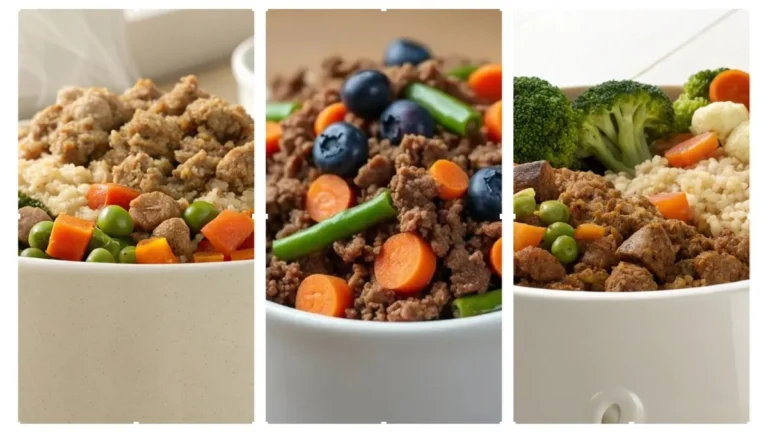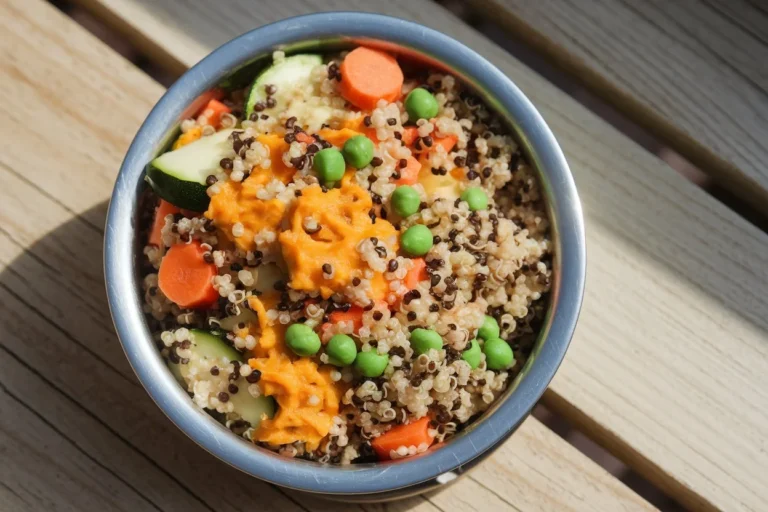
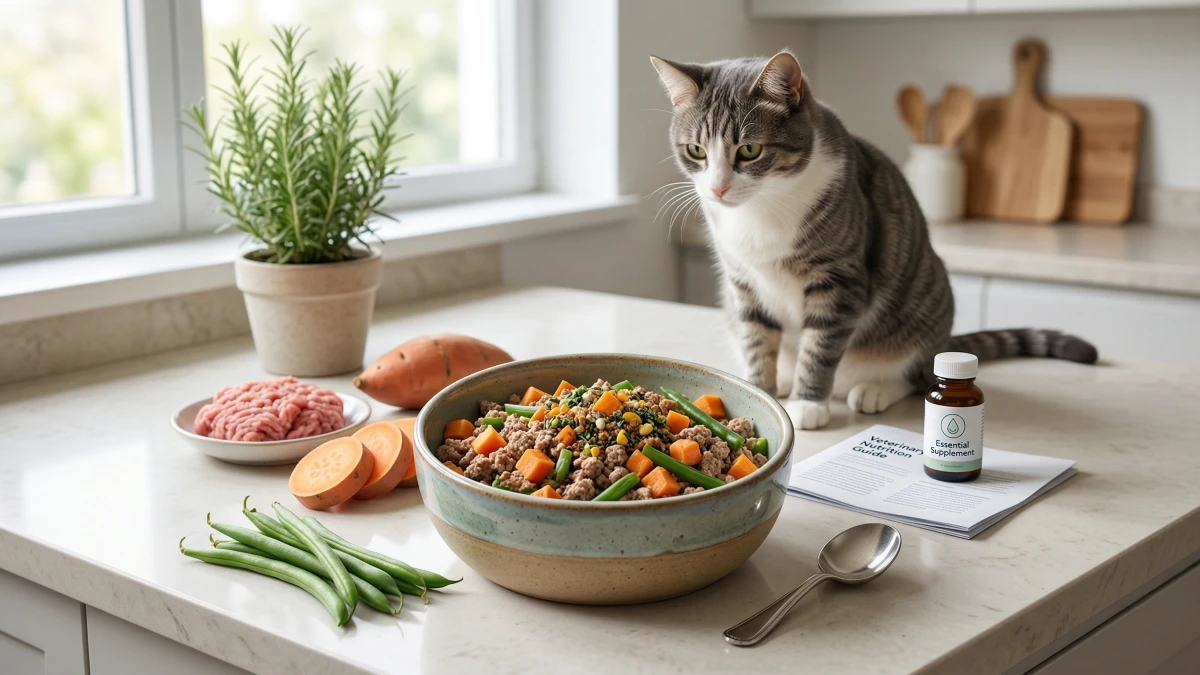
Vet-Approved Homemade Cat Food Recipes for Balanced Nutrition
When I first explored homemade cat food, I realized it’s not just about cooking meat—it’s about getting nutrition right. I’ve seen cases where cats improved quickly after switching to simple, balanced homemade meals. This guide shares 8 practical recipes I trust, along with feeding tips and storage methods that actually work in daily life.
Key Takeaways:
I focus on balanced protein, healthy fats, and essential nutrients in every recipe. Each meal uses simple ingredients but follows vet-approved principles. I always add supplements after cooling to protect nutrients. Portion control matters—most cats need 20–25 kcal per pound daily. Batch cooking saves time and keeps meals consistent.
1. Feline Favorite Chicken & Quinoa
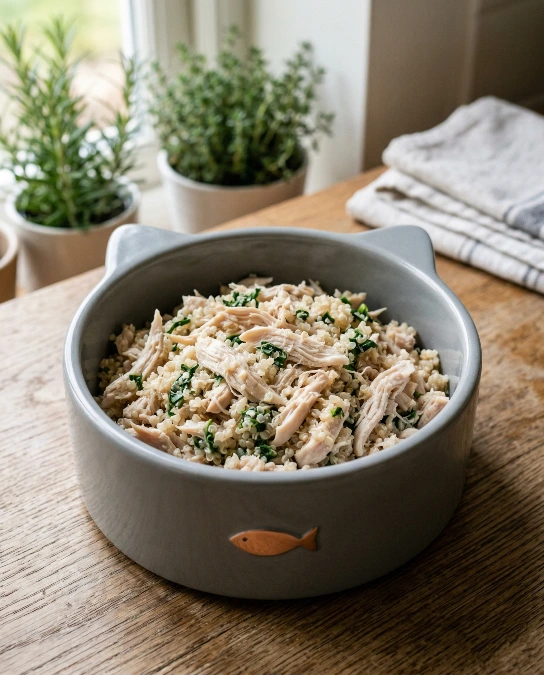
I like this recipe because it works well for picky eaters. Chicken thighs provide enough fat and flavor, which many cats prefer over dry meat.
Ingredients:
- 2 lbs chicken thighs
- 1/2 cup cooked quinoa
- 1/2 cup steamed spinach
- 1 tbsp salmon oil
- Feline vitamin/mineral premix
Instructions:
I cook the chicken fully, then shred it into small pieces. I mix it with quinoa, spinach, and oil. Once it cools, I add the supplement and mix well.
Nutrition Insight:
- ~166 kcal per ½ cup
- High protein (~23g)
- Good omega-3 fats
Pro Tip:
I never add supplements to hot food because heat destroys nutrients like taurine.
2. The “Sensitive Stomach” Turkey & Pumpkin
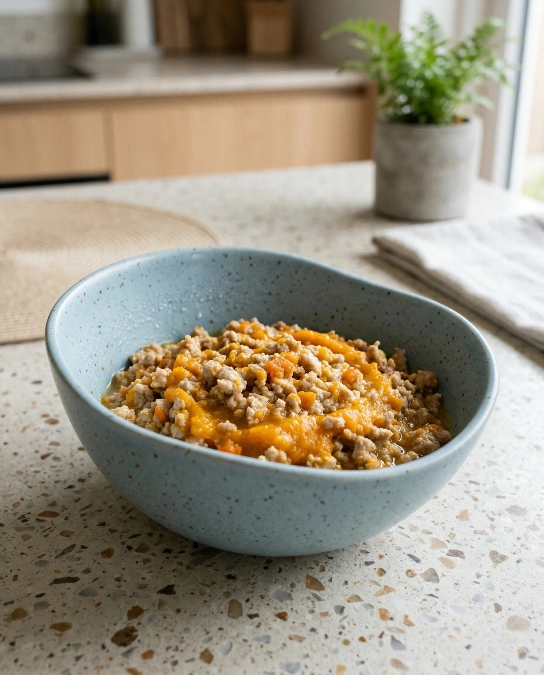
I use this when a cat has digestion issues. Pumpkin helps firm stool and supports gut health.
Ingredients:
- 2 lbs ground turkey
- 1/2 cup pumpkin puree
- 1/4 cup mashed carrots
- 1 tbsp olive oil
- Nutritional premix
Instructions:
I cook turkey fully, let it cool, then mix in pumpkin, carrots, and oil. I add supplements at room temperature.
Nutrition Insight:
- ~190 kcal per ½ cup
- Easy-to-digest protein
- Fiber supports digestion
Pro Tip:
If texture matters, I blend it into a smooth pâté. Many cats prefer that.
3. Beef & Butternut Squash Feast
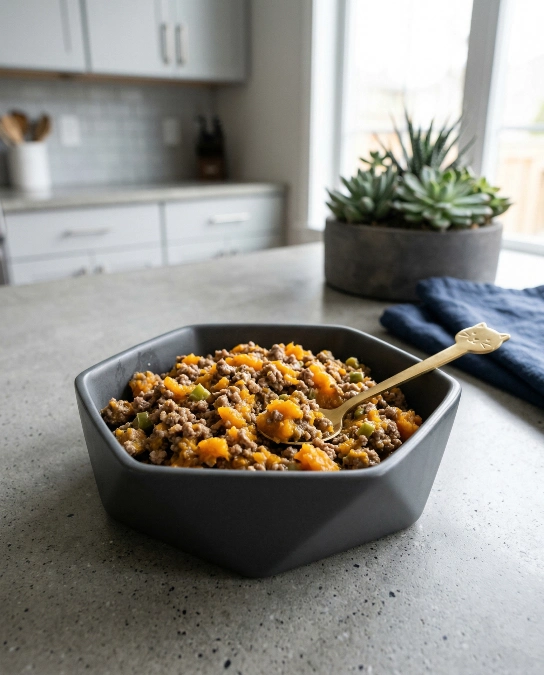
I’ve found beef works well for cats needing more iron and energy.
Ingredients:
- 2 lbs ground beef
- 1/2 cup mashed squash
- 1/4 cup green beans
- 1 tbsp fish oil
- Premix
Instructions:
I cook beef, prepare vegetables until soft, then combine everything after cooling.
Nutrition Insight:
- ~221 kcal per ½ cup
- High iron content
- Balanced fat and protein
Pro Tip:
If fat is too high, I rinse cooked beef lightly with warm water.
4. Omega-Rich Salmon & Sweet Potato
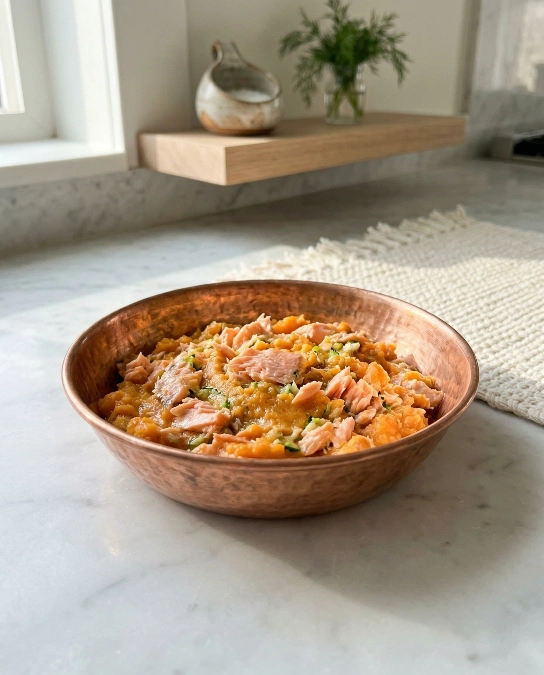
I use this for skin and coat health. Fish-based meals add strong omega-3 benefits.
Ingredients:
- 1.5 lbs salmon
- 1/2 cup sweet potato
- 1/4 cup zucchini
- 1/2 tbsp coconut oil
- Premix
Instructions:
I bake salmon, remove bones, then mix with vegetables and oil after cooling.
Nutrition Insight:
- ~217 kcal per ½ cup
- Great for coat shine
- Supports joints
Pro Tip:
I don’t feed fish daily. Rotation prevents nutrient imbalance.
5. Lean Pork & Apple Medley
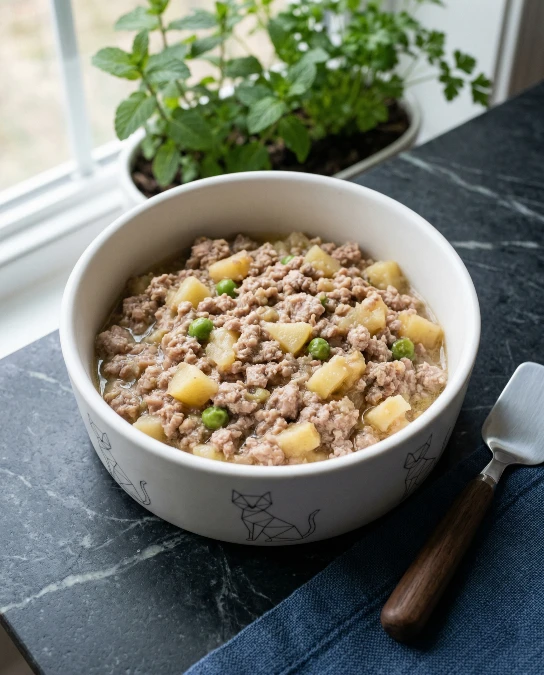
I like this as a different protein option when cats get bored.
Ingredients:
- 2 lbs pork loin
- 1/4 cup applesauce
- 1/4 cup peas
- 1 tbsp oil
- Premix
Instructions:
I cook pork fully, cool it, then mix with other ingredients.
Nutrition Insight:
- ~184 kcal per ½ cup
- High protein (~24g)
- Mild flavor variation
Pro Tip:
I always cook pork fully—never raw due to parasite risk.
6. Duck & Green Pea Delight
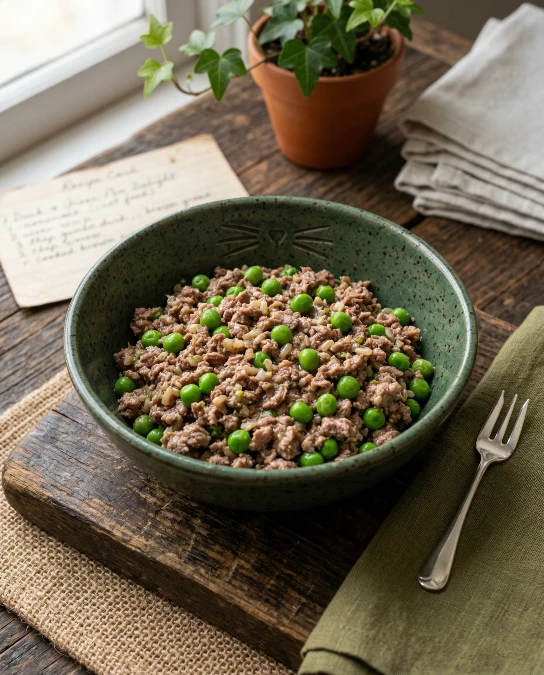
This is useful for cats with food allergies. Duck is less common and easier on some cats.
Ingredients:
- 2 lbs duck breast
- 1/2 cup peas
- 1/4 cup rice
- 1 tbsp salmon oil
- Premix
Instructions:
I cook duck, chop it finely, and mix with mashed peas and rice.
Nutrition Insight:
- ~179 kcal per ½ cup
- Good alternative protein
- Moderate fat
Pro Tip:
I mash peas well so cats don’t pick them out.
7. Venison & Carrot Stew
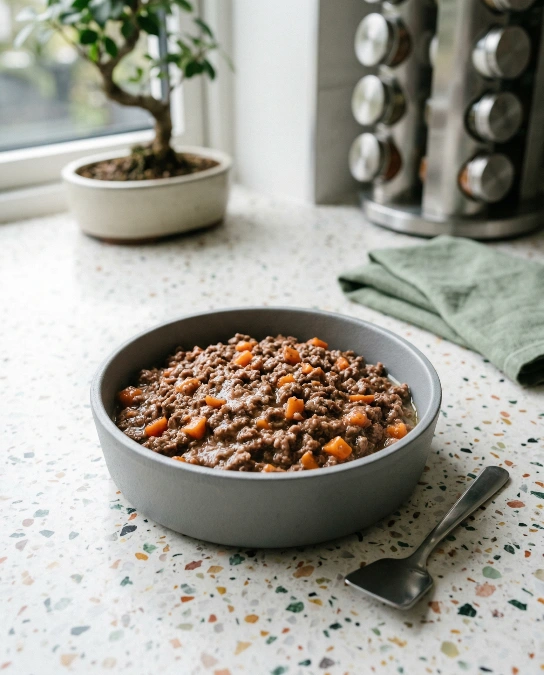
I use venison for lean diets or weight control.
Ingredients:
- 2 lbs venison
- 1/2 cup carrots
- 1/4 cup oatmeal
- 2 tbsp olive oil
- Premix
Instructions:
I cook venison, then mix with carrots, oats, and oil after cooling.
Nutrition Insight:
- ~206 kcal per ½ cup
- Very lean protein
- Needs added fat
Pro Tip:
I never skip added oil—cats need fat for energy.
8. Gentle Lamb & Brown Rice Bowl
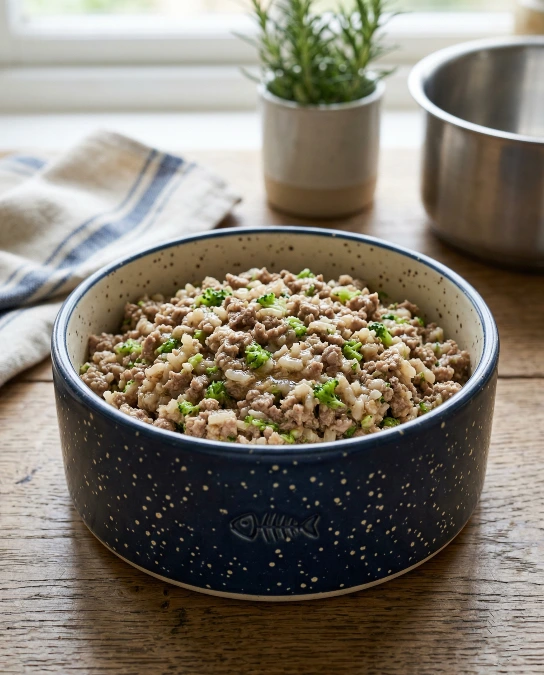
This works well for active cats needing more calories.
Ingredients:
- 2 lbs lamb
- 1/2 cup rice
- 1/4 cup broccoli
- 1 tbsp fish oil
- Premix
Instructions:
I cook lamb, drain some fat, then mix with rice and vegetables.
Nutrition Insight:
- ~255 kcal per ½ cup
- Higher calorie meal
- Rich in zinc and iron
Pro Tip:
I steam broccoli until very soft for easy digestion.
General Feeding Guidelines (A Starting Point)
From my experience, most adult cats need around 20–25 calories per pound daily. A 10-pound cat usually needs 200–250 kcal, split into 2–3 meals. I always adjust based on activity level, age, and weight changes.
Bulk Storage & Freezing Guide (The Method)
I rely on batch cooking to save time.
Refrigeration:
I store food in airtight containers for up to 3–4 days.
Freezing:
I portion meals into small servings and freeze them flat to save space.
Serving:
I thaw overnight and slightly warm before serving. Cats prefer food close to body temperature.
Final Insight:
From what I’ve learned, homemade cat food works best when it’s consistent, balanced, and vet-guided. I don’t guess portions or skip supplements. That’s what keeps the diet safe and effective long term.